When Organized Spaces Start to Feel Like a Chore
Storage systems built for daily patterns, not just looks, make access faster and keep categories clear, preventing clutter from returning.
It’s easy to be drawn in by a perfectly organized shelf: every bin sits flush, labels face forward, and the whole space feels briefly under control. That particular kind of calm can feel very satisfying—until weeks pass, and those bins begin to overflow, or you find yourself shifting stacks just to get at what you need.
You don’t really notice storage—until you do. The feeling arrives quietly at first, maybe when you’re hunting for gym clothes buried behind out-of-season coats, or when you spot the beginnings of a pile forming in the corner. Suddenly, the system that looked so promising starts feeling less like help and more like another small frustration.
What Looks Organized Isn’t Always What Works
It’s a reliable illusion: The tidy “after” photo, everything sorted into neat rectangles, gives a sense of control. But the real test isn’t how it looks on the day you finish. It’s the morning after, and the week after that.
You don’t notice it immediately.
But you feel it.
There’s a kind of friction that appears when bins don’t match your patterns. Closed containers with lids require an extra bit of effort—one that repeats endlessly. Open baskets offer quick reach, but often turn into a jumble of blended categories.
Months down the line, a system that was meant to make life easier can quietly invite daily workarounds and, sometimes, annoyance.
Where the System Breaks Down
I see this play out often in my own hallway closet. What begins as order—bags on one side, coats on the other—slowly shifts. One morning, running late, I end up pushing past an awkward stack of bins to reach my gym bag. Another week, the hats lose their “spot” and end up scattered wherever there’s space.
What should be a ten-second grab becomes a small ritual of negotiation with the shelves.
Here’s an observation: The longer the friction goes ignored, the more clutter returns. Resetting the entire closet becomes a task I avoid, until a random weekend when I have no choice.
It’s never about the containers themselves—it’s whether the system matches the rhythm of daily life.
The Quiet Power of Adjusting As You Go
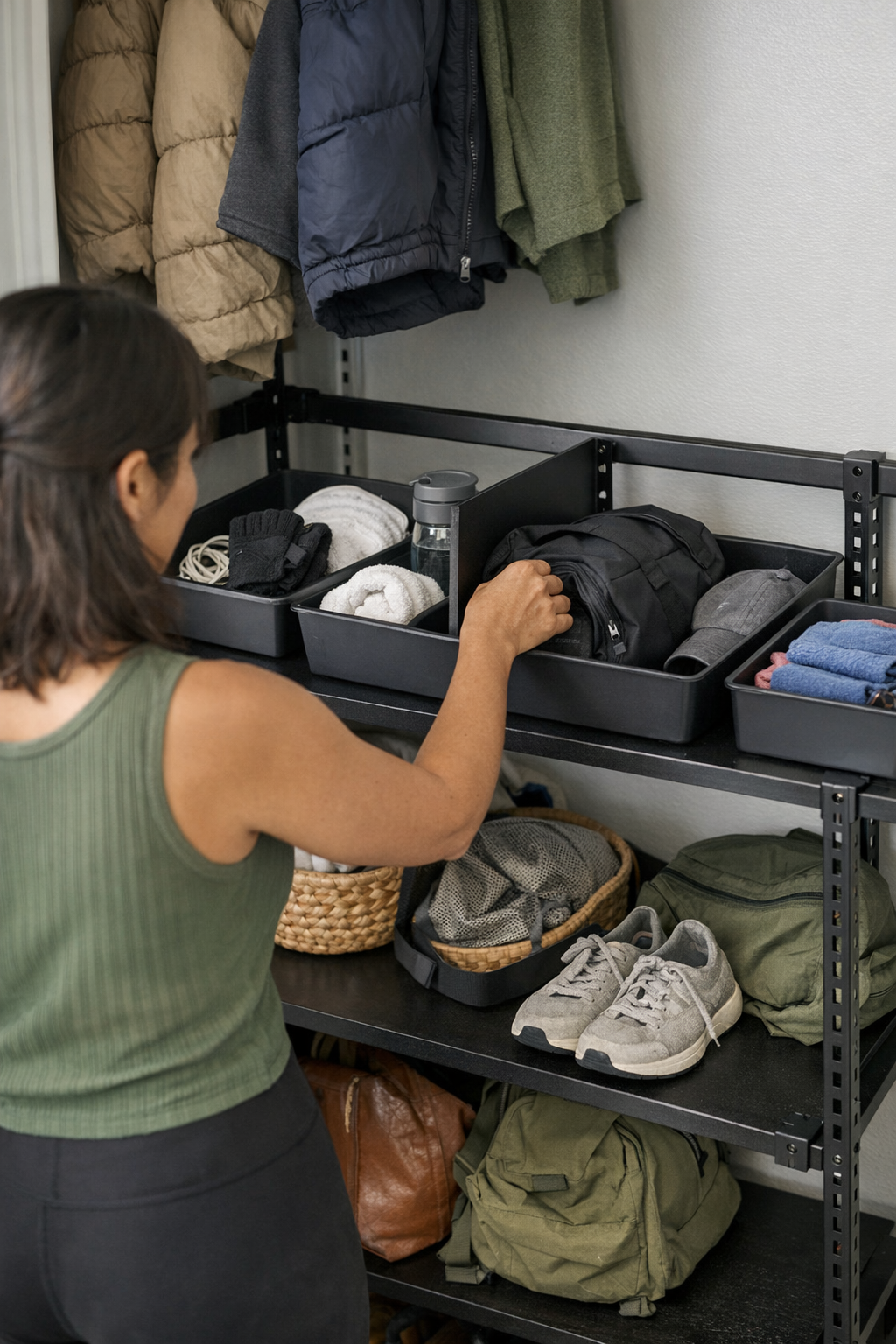
One day, I replaced the deep, lidded bins with shallow trays, adding one vertical divider. Suddenly, everything was visible at a glance. Categories stopped drifting. A task that once created small frustration each morning now took just a few seconds.
It was a subtle shift. But the difference lingered: fewer things ended up on the floor; items actually returned to their places.
Most of the time, it’s not about organizing harder, but about making systems that start small and feel easy to stick with. A tray instead of a bin. One divider to stop the slow creep of category-blending.
It’s less glamorous than a “big reveal,” but far more sustainable.
Real organization feels less like a finished project and more like something that floats quietly in the background, reshaped a little at a time. There’s not always a perfect answer—just a gentle return to what works, every time things begin to drift.
These thoughts came together after a quiet morning of adjusting my own shelves.