When Organized Spaces Start to Slow You Down
Repeated use exposes weak points in storage setups. Adaptable systems with clear paths and overflow buffers prevent reshuffling and save time.
When Order Falls Short of Ease
(And why it matters more than people think)
There’s a small, quiet satisfaction in seeing a row of neatly stacked bins against the wall. For a moment, everything is labeled and in place, as if organization can promise a kind of peace. But it’s only when the day begins—when hands reach for tools and wheels roll across the floor—that the system’s true nature reveals itself. What felt organized in stillness can become tangled in motion.
Surface Order and Real Life
You don’t notice it immediately.
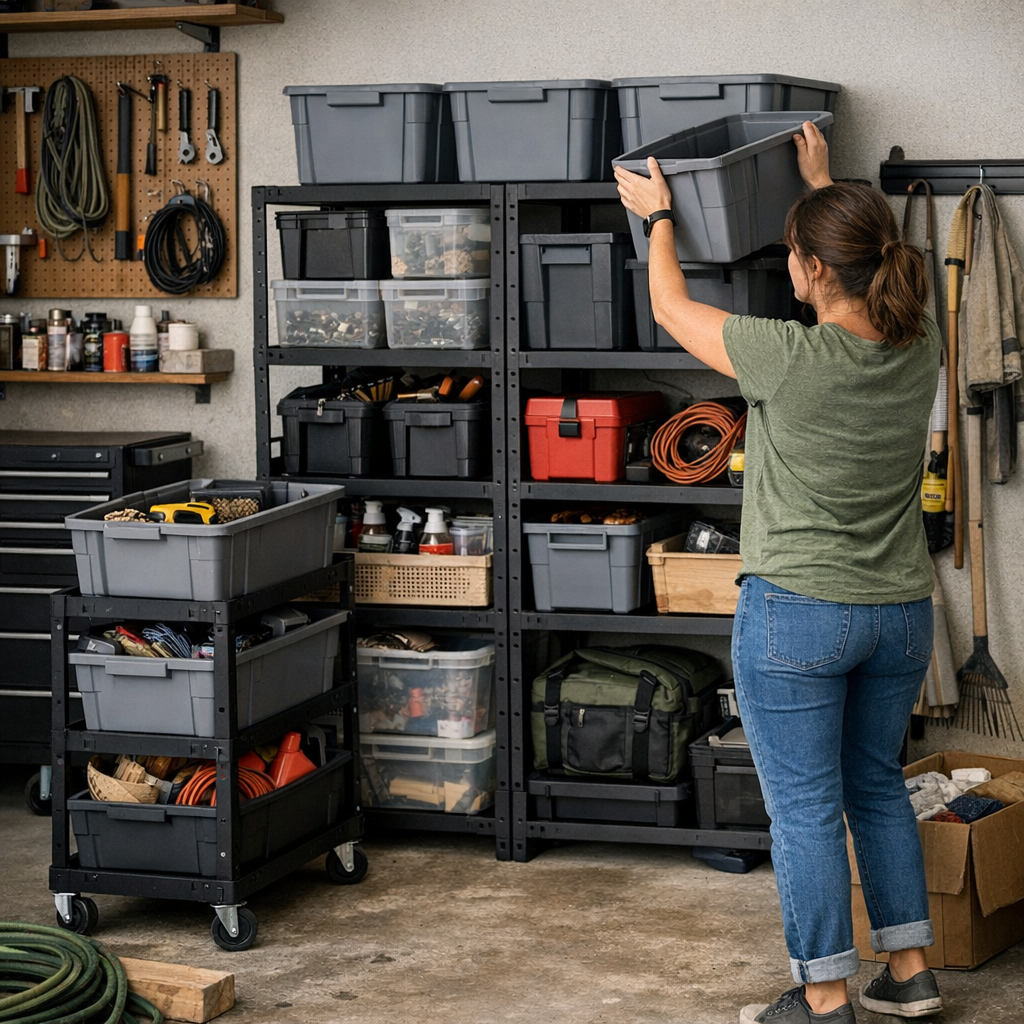
At first, the modular floor rack looks like a triumph of logic. Everything is visible, accessible, and assigned to a category. But as routines settle in, subtle friction surfaces: the bin you need is under two others, or returning something means awkward shuffling. This inconvenience slips in quietly and grows louder over time. You find yourself re-stacking, circling back, bumping into corners that seemed harmless before.
But you do feel it.
Where Efficiency Hides (and Slows Us Down)
There’s a temptation to equate visual order with true efficiency.
It took a while to notice which moments got interrupted. Sometimes, putting one tool away means moving three others first—small tasks that add up invisibly. Overflow gathers in the easiest empty spot, even when the whole system was measured to the inch. What looks perfect on paper creates a strange kind of bottleneck in real use.
It’s not chaos, but it’s not ease either.
This pause reveals something important: no matter how ideal a storage setup looks, its success depends on the rhythm of real movement, not just its initial arrangement. Sometimes, the cost is lost seconds and minor hassles that drain energy by midday.
A Small Shift, and a Refresh
One afternoon, nudging a modular section just a foot to the left changed everything. Suddenly, wheel paths opened up, and the shelf became a natural drop-off spot instead of a blockade. Clean-up turned into a smooth flow instead of another reset. There were fewer micro-negotiations with the space—less time spent asking permission from the storage just to do what you came to do.
A little space left unplanned became the most useful feature.
What seemed inefficient on the drawing board ended up creating a buffer: a margin that could flex with the pace of a project, letting order and action exist together without stepping on each other’s toes.
Not every change requires sweeping overhauls. Sometimes, it’s the subtle shift that clears the way for something easier, softer.
—
These thoughts came together while quietly reworking a garage corner for a small project.