When Organized Walls Hide Everyday Frustrations
Wall rail systems start neat but cause friction in use; adjusting hooks for actual movement prevents shuffling and keeps returns easy.
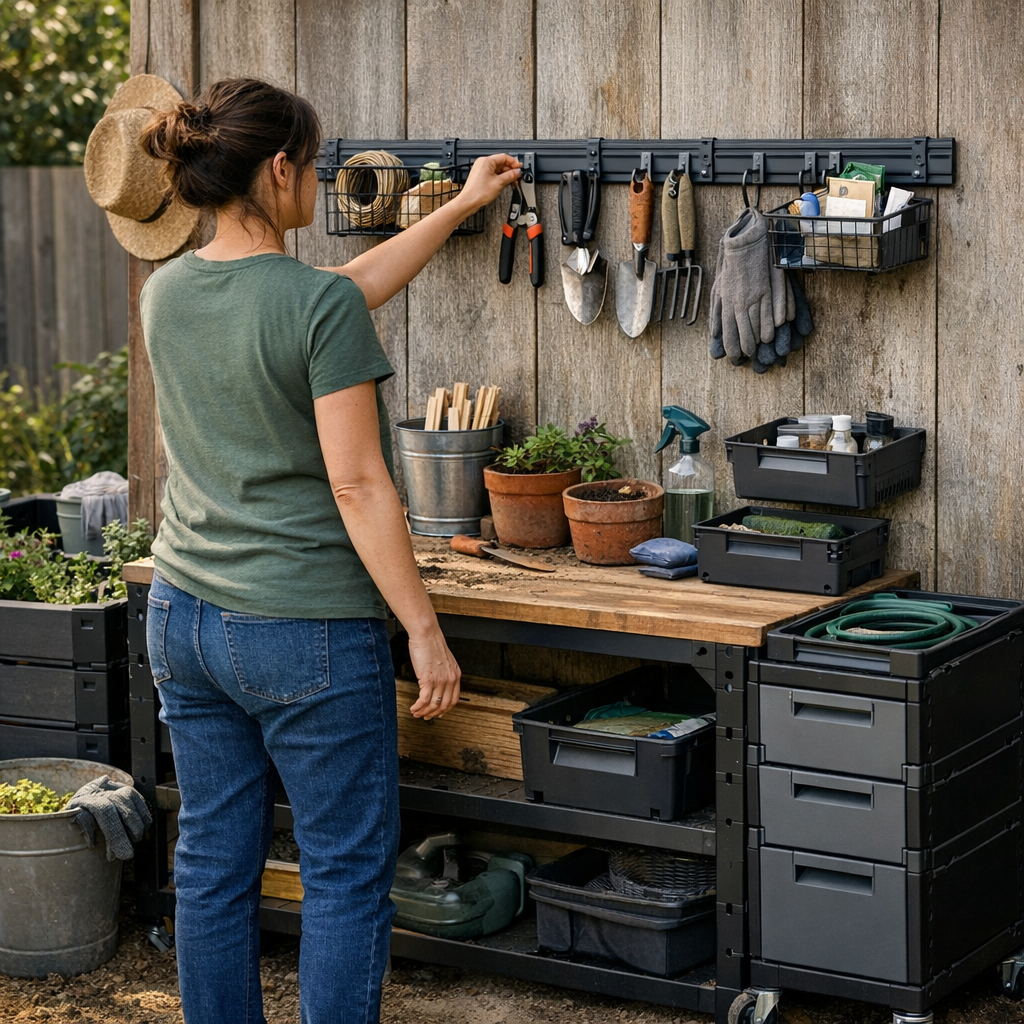
There’s a certain pride in seeing your garage or workshop lined with neatly spaced wall rails. For a moment, everything looks under control: the room feels generous and curated, every tool standing ready in its place. But that feeling doesn’t last. Once the busyness of daily life returns, small frustrations start to appear in the gaps.
You don’t notice it immediately.
But you feel it.
The Hidden Costs of Symmetry
At first glance, a wall rail system promises order. Hooks are aligned, baskets look purposeful, and the space projects a clear efficiency. But the illusion fades surprisingly fast. What seems organized at rest doesn’t always survive real use.
You reach for a tool and find another clinging just a little too close. Gloves hang over pruners, twine wraps around a trowel. Over days and weeks, the busiest zone gets crowded while other hooks sit half-empty. Sometimes, just finding an open spot feels awkward—a subtle friction that builds over time.
This pattern doesn’t announce itself loudly. But the low-level drag steals bits of energy with every small shuffle, showing that the logic behind the layout was made for how things look, not how they move.
Where Real Flow Happens
Watching your own routines reveals a lot. I noticed the flaw in my setup after losing patience one Saturday. The rail above my potting bench was full, but it didn’t feel easy.
Every return or grab involved a minor adjustment—nudging, overlapping, or wedging something in. The hooks were evenly spaced, but my routines were anything but even. Most use clustered in one corner while dead space crept in elsewhere. Each minor interruption was a quiet reminder: even a tidy system becomes cluttered if it doesn’t match how you work.
The moment I started shifting hooks—closing some gaps, concentrating high-turnover items—things felt subtly different. The tug-of-war between order and convenience eased, and putting tools away became less of a negotiation.
A Different Kind of Order
The change wasn’t about more storage or new accessories, but about adjusting how the space met my habits. Narrowing overflow zones and making sure every frequently used item lived within a soft reach quietly reduced the back-and-forth.
Over time, I noticed less reshuffling and no more “missing” gloves or stray tools drifting to odd corners. Effortless resets became the norm, not the exception. It was a small adjustment but one that leaned into reality: what matters isn’t how good a system looks after installation, but how invisible it feels after months of daily use.
I don’t think I’ll ever see a finished rail as truly finished again.
These thoughts came together while reworking my own garden shed and can apply to any modular storage, mobile storage, or wall-mounted system in a garage, workshop, or backyard utility setup. Real-use flow, footprint management, and reset ease matter more than neat rows or symmetrical placement.