When Organized Walls Start to Feel Like Obstacles
Initial order from modular or wall-mounted rail systems only lasts if rails stay stable under repeated use, ensuring smooth access and return flow.
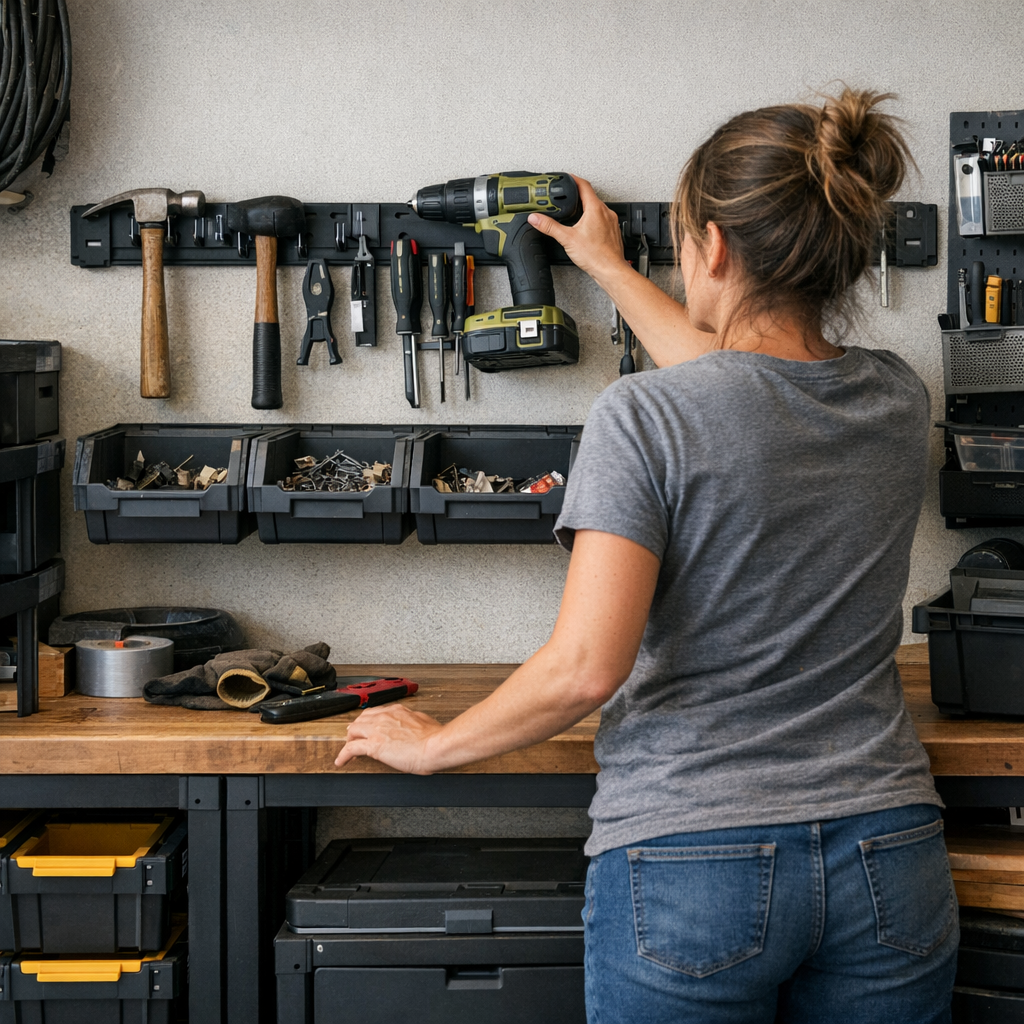
There’s a quiet satisfaction in seeing a freshly installed wall rail—each bin and hook perfectly aligned, promising order. For a moment, it feels like the mess and delay of misplaced tools will be a thing of the past. But over time, something subtler starts to happen, and it rarely announces itself with a bang. You don’t notice it immediately. But you feel it.
The subtle shifts that creep in
On the first day, everything looks the way it should. Hammers nestle beside screwdrivers, and every bin has its place. But routine has a way of testing our setups—each grab, each hurried return, even the occasional neighbor propping up a ladder nearby. It’s these little things that challenge not just how much a shelf or rail can hold, but whether the whole system really stays where we intended.
You see, it’s not the weight that’s the problem. It’s the sideways nudges, the repetitive use, and those near-invisible movements where rails flex just a touch. The next thing you know, hooks overlap, bins migrate, and the whole intention of “easy access” slowly slides toward clutter. You won’t catch it in photos, but you feel it in every fumbled reach.
A realization from real life
In my own garage setup, the rail above my workbench seemed unshakeable at first. I trusted it with my most-used tools—a sort of silent ritual, each tool returning to its slot. But by the end of the week, something had shifted. Bins squeezed together. Hooks caught on one another. A rail, just slightly out of place, made every motion awkward enough to slow me down.
That’s when the illusion cracks: when “organized” doesn’t quite function. I realized my fasteners were built for static weight, not for the push and pull of daily use. Swapping in sturdier anchors stopped the drift. Suddenly, the old rhythm returned—grab, use, return, all in one fluid motion.
Looking beyond the first impression
It’s easy to judge a system by how it looks on day one, but the real story emerges during the quiet repetitions of everyday use. The difference between “organized in theory” and “organized in use” is a gap you only notice as routines set in. What appears meticulous at first can easily become friction—unless you address the causes of creeping disorder before they build.
Sometimes, all it takes is a change in how we fix things—fasteners chosen for real life, not just for showroom stillness. Sometimes, it’s a gentle realignment, a willingness to pause and check for the little movements before they become habits of inconvenience. Most of the time, it’s remembering that form needs to serve the flow of activity, not just the memory of a perfect starting line.
Stability, it turns out, isn’t just about holding things up—it’s about holding things in their place through whatever the day brings.
These thoughts came together while tinkering in the garage with a system like this. You will receive a blog body draft.