When Outdoor Clutter Creeps In Quietly at Day’s End
Outdoor storage fails due to return friction; easy, open, reachable storage prevents clutter and keeps zones usable longer.
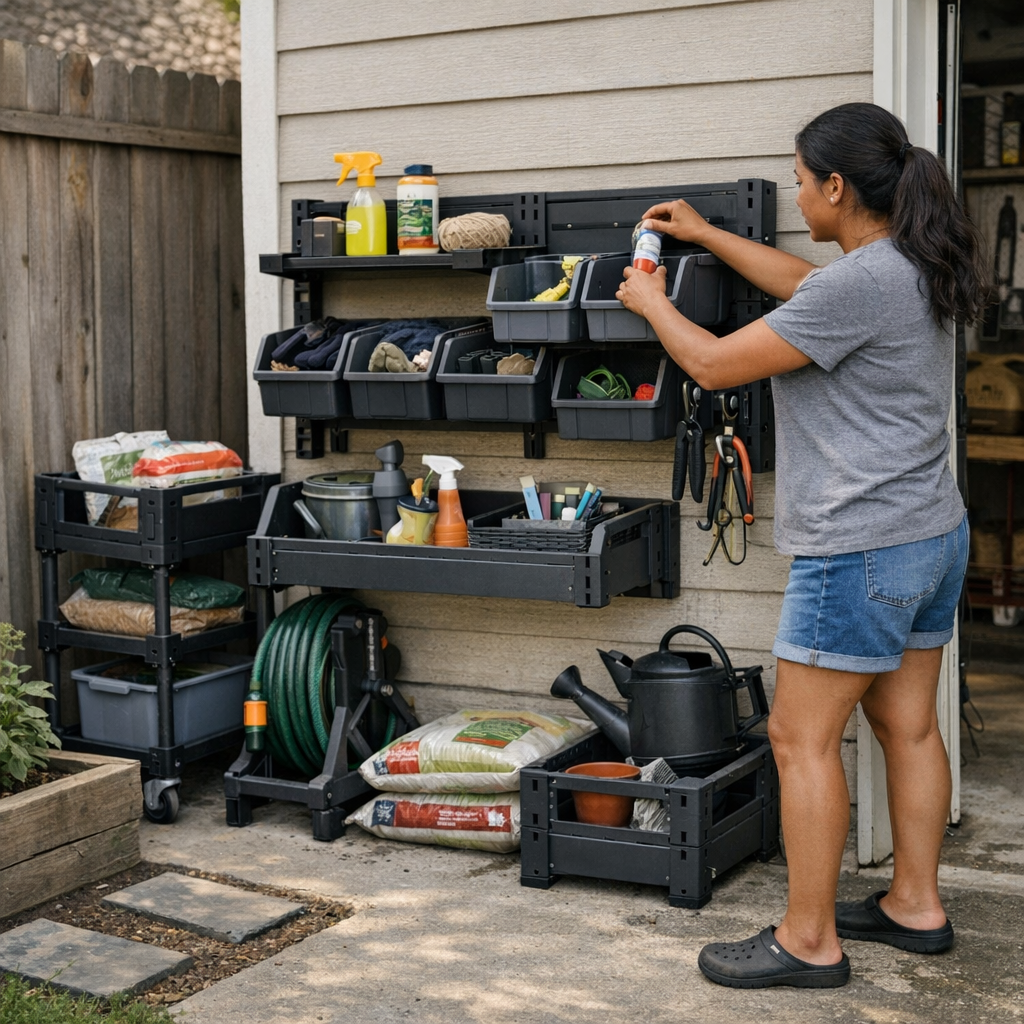
There’s a moment about a week after the weekend tidy-up when the side yard feels mostly organized but not quite right. Walking through, you notice tools slowly migrating out of place, a coil of last week’s hose wound awkwardly, a stray glove perched on an old bin. For a while, it all seems fine. But the rhythm of using the space feels off.
At first, I thought the outdoor setup just needed more storage—another tall cabinet or bigger bin. The usual suspects. But over time, I realized it wasn’t about the amount of storage. It came down to how it felt to put things back—the simple act that, when it’s even a little awkward or out of reach, lets clutter spill over the edges.
Clutter Begins Where Return Gets Awkward
You don’t notice it right away.
The real unraveling starts with the small pause, the one extra step needed to put a tool or ball away. A tight lid, a bin that requires two hands instead of one, reaching too far or bending uncomfortably—this is where friction sneaks in.
Left unchecked, these small obstacles grow. By week’s end, gloves pile up along the fence, garden shears rest by the gate instead of in their place. The official storage stands empty with lids closed, but everything else softly resists going back inside.
That’s the part I kept returning to. The problem was never just storage; it was the feel of the reset.
Open Storage Looks Messy, But Something Changes
There’s a strong bias toward boxes and cabinets, especially outdoors. They look tidy because everything is hidden at first glance. But when activity picks up—kids moving between games, gardening in bursts—those bins stop absorbing the mess. The effort to put things back is always one step too far.
Open cubbies may not be pretty and often reveal more than you’d like. But if you mount them at elbow height and leave them empty for a day, something shifts. Tools, gloves, bottles—anything light and awkward—almost instinctively find their way back in. It’s a relief: no digging, no fighting lids. Just a clear, easy path for the return.
I started timing how long it took for the side yard to feel crowded again. The clutter built up less and less.
The Pace of Reset
There’s no perfect setup. But after many days of coming and going, hauling items out and dropping them back, I found a good outdoor space isn’t about hiding clutter—it’s about easing the path home.
When returning items is simple, piles don’t build at the edges. If something lingers on the ground, it’s usually because the trip back takes just a little too much effort. So I shortened the return path, moved storage closer, and made the reset as light as possible.
The difference is subtle, but it adds up. The side yard never stayed picture-perfect. But it didn’t slide back into chaos either—the space stayed in active use, and the reset felt lighter. That was enough.
These insights came together while working on a backyard project focused on side-yard organization and outdoor utility storage. For more, visit http://www.tidyyard.myshopify.com.