When Outdoor Storage Becomes a Daily Struggle
Outdoor storage works best when it manages daily return flow, keeps paths clear, and aligns with real-life use to prevent clutter and blockages.
It starts small: the repeated detour, the broom that never quite returns home, the way something light and useful—gloves, clippers—ends up in the wrong place again. Outside, where things move in cycles and seasons, the logic of storage is quiet but persistent. It slips into the routine almost unnoticed, until one day the path is blocked and the yard, in some small way, pushes back.
There’s a difference between mess and friction, I’ve found. Clutter can come and go, but it’s the resistance to putting things back—those small, stacking obstacles—that slowly unsettle an otherwise simple system. Picking a storage piece, or even a whole setup, looks straightforward until you live with it through a few busy weekends.
Paths That Stay Clear, or Don’t
A good outdoor storage setup is more about patterns than perfection.
You don’t notice it immediately. But one day, after a stretch of wet weather or an evening spent rushing back inside, the floor space you thought you had starts to disappear under a layer of almost-returned things.
That was the part I kept coming back to: systems that worked on day one quietly failed by day ten, especially if they depended on doors or lids that slowed the hand in motion. The path that was wide and open became a bottleneck. Walking through felt like navigating someone else’s unfinished plan.
Containers with Promises
I tried the tall cabinet with doors, sure that hiding things would keep the yard tidy.
It worked—until it didn’t. On a rushed Monday, even reaching for the handle felt like too much, and “for now” piles settled alongside the sealed box. Space meant for clearing actually anchored the mess. By the end of the week, access became the real problem; the storage “solution” was actually a new reason to pause and push things aside.
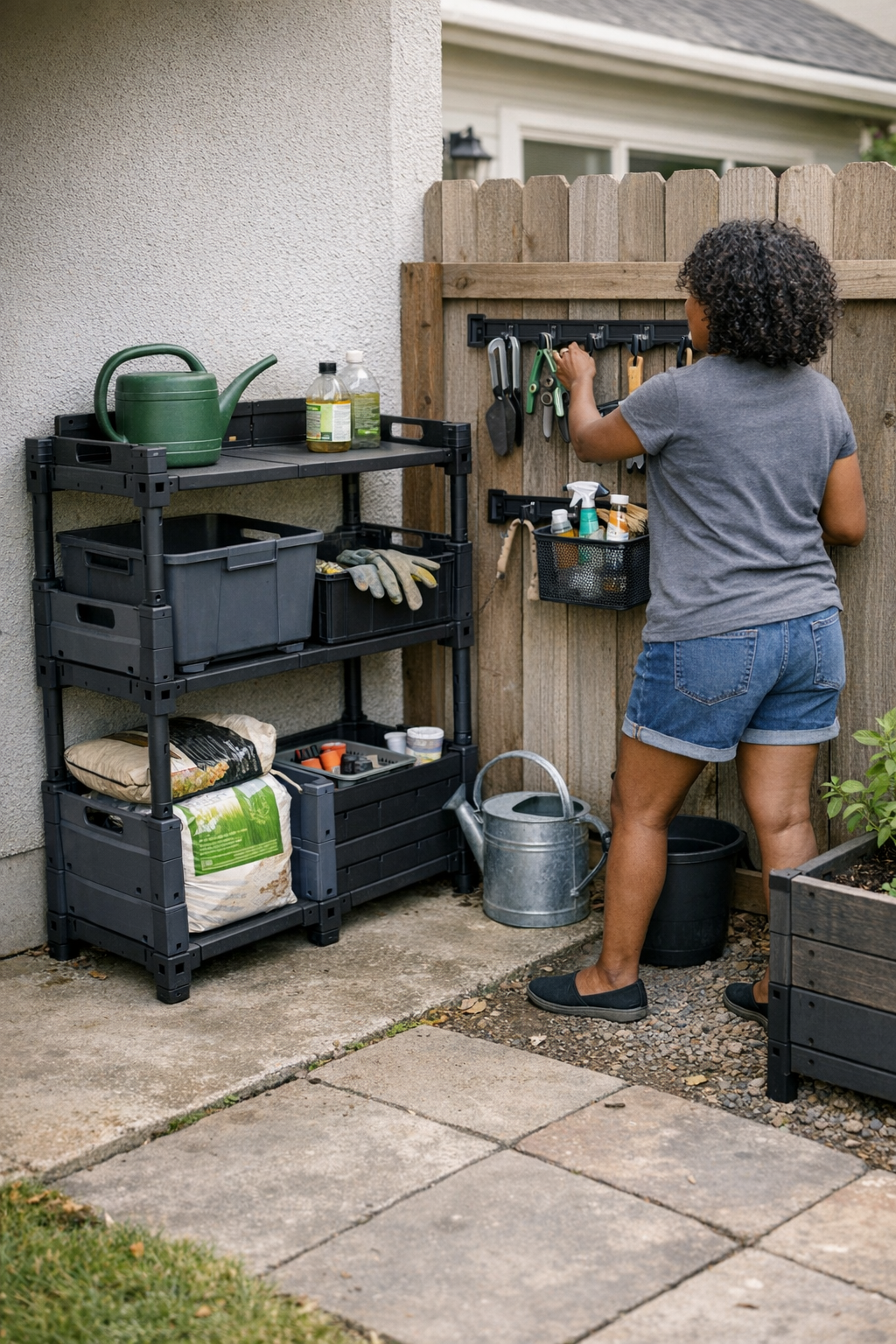
Odd how certain habits override intentions. I started to see that the best storage doesn’t just contain—it guides. Hooks on a simple wall rail, open and at eye level, asked nothing but a passing gesture. Tools landed where they belonged because it was easier than wedging them elsewhere. There was no silent negotiation about lids or shelves.
Finding the Right Return Flow
Clarity in storage showed up when every return felt frictionless. Open hooks, a single drop-in bin, and no doors to fight—the flow just continued, even on a busy day.
Things moved off the ground and returned when space was needed for something new, not just because I decided to tidy. The routine stopped requiring a mental restart each time. It’s a subtle shift, but it holds: storage that cooperates with movement turns maintenance into something nearly invisible—a gentle part of daily rhythms, not another chore.
I used to think neatness was about discipline, but now it feels more like alignment. When storage fits the way things really move, the order keeps itself going for longer than a hasty reset ever could.
These reflections grew slowly as I reworked a side yard, and I tucked more of them away over here: http://www.tidyyard.myshopify.com