When Outdoor Storage Fails Your Everyday Flow
Outdoor storage success depends on matching setup to use; poor flow and reset ease cause clutter, blocked access, and repeated mess.
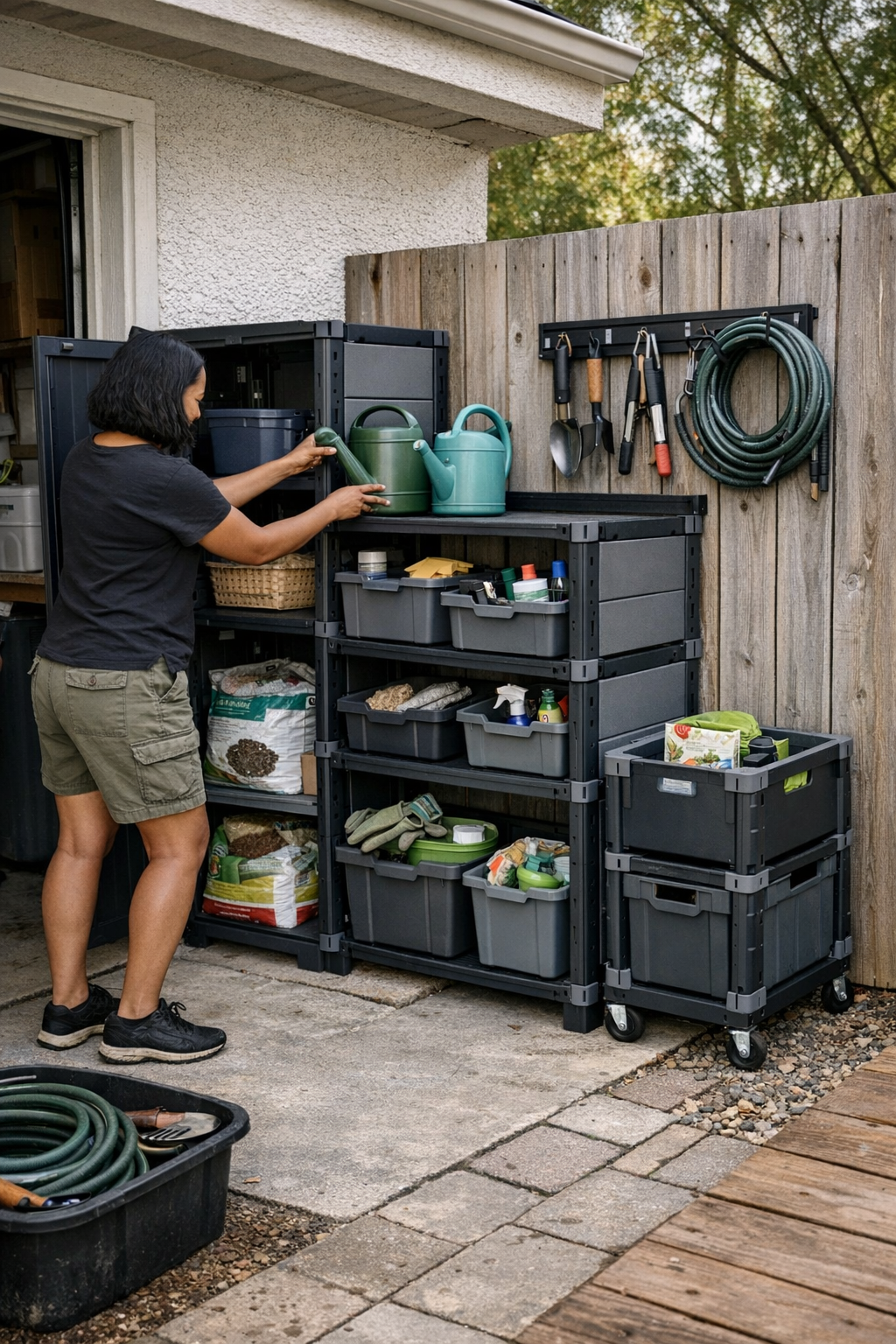
There’s a particular moment, a week or so after reorganizing the yard, when I notice the mess creeping back. It starts quietly—an abandoned pair of shears, a soccer ball near the fence, the mower leaning awkwardly in the pathway. The storage system that looked so promising just days before suddenly reveals itself in all the wrong ways. It isn’t just about what fits, or how tidy it looks in photos. Living with outdoor storage over time surfaces needs I hadn’t fully recognized at first.
The Space We Think We Have
At first, it’s easy to stand in a clean yard and imagine that a fixed storage shed, a wall of hooks, or a set of rolling bins will solve everything. It all seems so orderly and contained.
But the real test isn’t the first day. It’s when routine picks up speed—when a busy school week begins, a rainstorm scatters toys, or a quick project squeezes into limited free time. That’s when a glossy cabinet becomes an obstacle, or a low shelf silently collects clutter, never quite making it back to its intended place.
You don’t notice this immediately.
The Patterns That Creep In
I kept seeing the same thing: small frictions, barely visible, adding up over time. If a bin is too high or hooks are awkward to reach, things settle wherever hands land. In my narrow side yard, storage that was meant to be helpful crowds the pathway, making it harder each day to get past without bumping something out of place.
Strangely, the items that refuse to stay put always match how I actually use the space—not how I meant to use it. The garden hose ends up stretched across the busiest area, while kids’ toys migrate to corners no one planned for. Even mobile carts, great in theory, don’t return unless a specific place is clearly shaped for them.
That’s the part I kept coming back to.
Finding the Quiet Fix
Eventually, it became less about finding the perfect storage unit and more about paying close attention to how things move. I realized that if it’s hard to return something within the natural flow of a task, it simply won’t happen—stuff piles up, forming its own logic along the routes we actually take.
There’s a simple kind of relief in setting up storage close to where things are used, even if it means less symmetry or fewer matching bins. Hooks placed at the right height, a shelf near the end of a mower path, a dedicated spot for wayward sports gear—these choices make a bigger difference than a perfectly organized look on day one.
You get a little more ease in returning things, and the usual pile by the door shrinks without added effort. The space feels quieter, somehow.
These reflections came together while thinking about our own yard and browsing options here: http://www.tidyyard.myshopify.com