When Packing Disrupts the Flow of Travel
Packing for storage efficiency creates travel friction; using outer pouches for essentials reduces delays and eases airport movement.
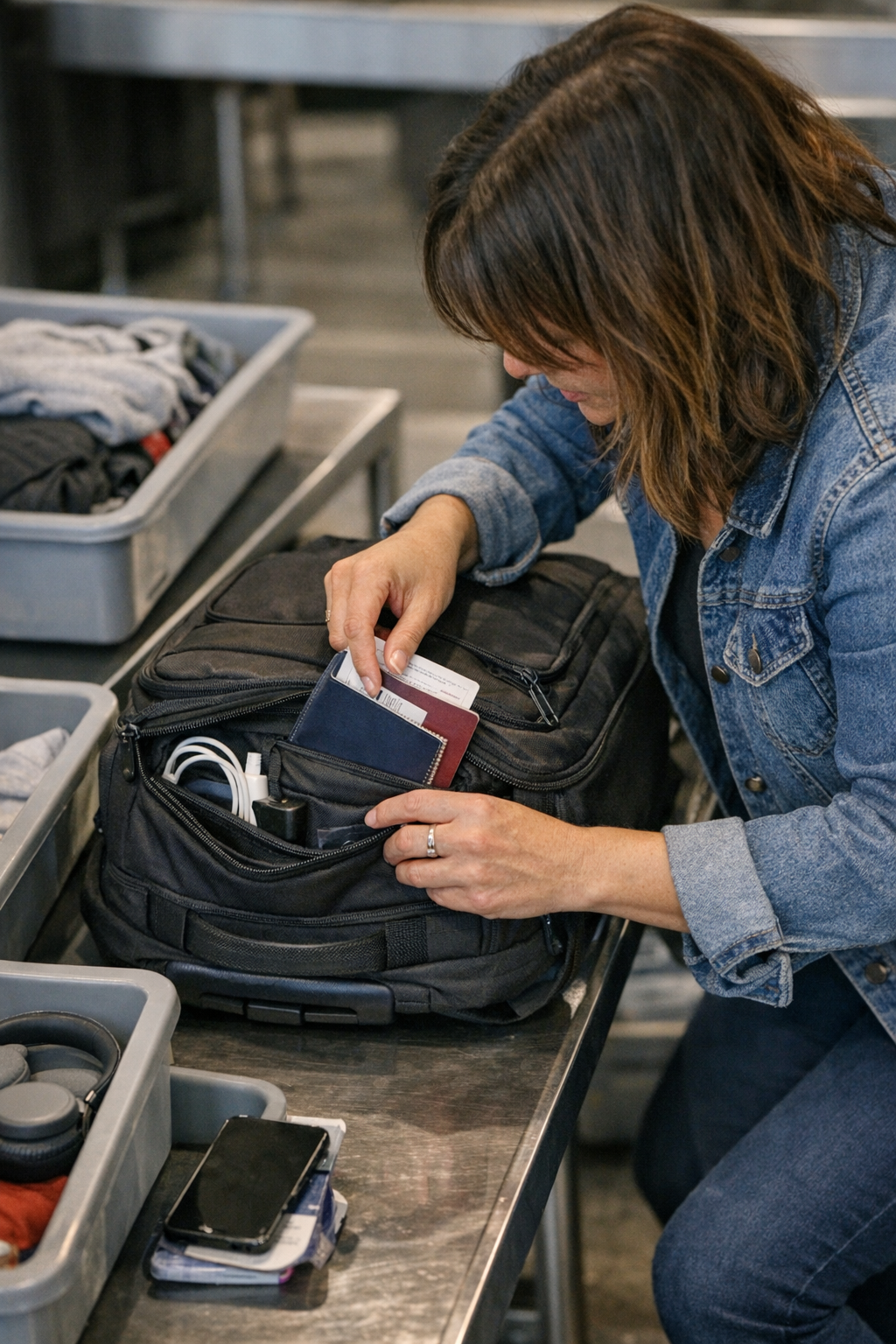
It doesn’t take long to notice where your packing choices actually show up. I used to think compressing everything into neat, space-saving layers meant I’d travel smoothly, but that first tangled moment at security said otherwise. The charger lost beneath a rolled sweater, the boarding pass vanishing somewhere flat and zipped—these little snags piled up every time I moved. It all seemed organized at first, but reality set in one friction point at a time: every tray, every rushed reach, every quick unpack.
The Real Difference Shows Up Between Stops
You notice it after a few transitions. At the overhead bin, the security checkpoint, the narrow aisle shuffle—these are the moments where neat storage fractures. I had organized for maximum space, but when I actually needed something fast, I was back to shuffling layers, half-unzipping pockets, repacking in a hurry with a line behind me. What worked tidily on the bed became a small obstacle once the bag left the floor and started moving. And that frustration kept coming back.
Compression for Looks, Friction in Motion
There’s something deceptive about a tightly packed main compartment. It looks crisp when you first zip it up, but that order is fragile. Pulling at outer pockets, I’d find them blocked by bulges from whatever was crammed deep inside. My passport wedged near a puffy zipper, or the charger wire knotted with a pen. Each retrieval felt like a reset—grabbing one item meant disturbing at least two others. The bag, for all its neat lines, became a puzzle at every gate, every seat change. The difference kept showing up.
Access Where It Matters
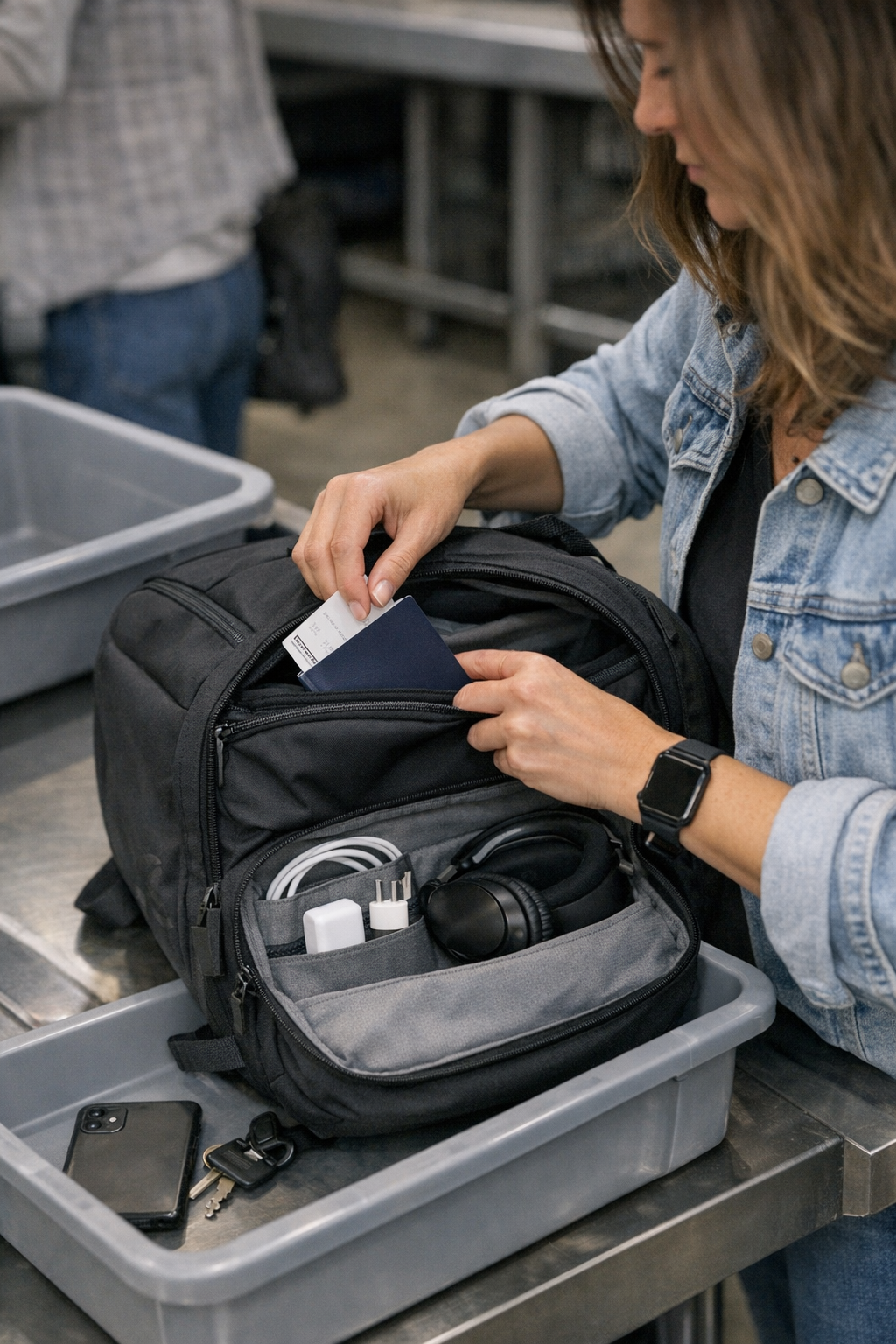
The fix wasn’t a major overhaul, just a habit change. The practical clarity came after enough trips: the things you reach for most—the wallet, charger, passport, maybe a pen—need their own space, separated from the compressed bulk. I started using one outer pocket and a slim vertical slot just for those repeat-use items. The next airport run felt lighter. One quiet pocket, one easy unzip, and there was the document or charger—no digging through layers, no wardrobe disruption. The return to order became automatic, even with half-awake hands, and the rest of the bag stayed put.
This small reset—that essentials should ride in dedicated pouches, separate from everything else—kept movement smooth. Just enough structure to follow the way you actually reach for things on the move, not just how they look lined up the night before travel.
After enough security trays and impromptu seat shuffles, the correction almost builds itself.