When Packing Meets the Realities of Travel Routines
Function-based packing arranges your carry-on by usage time, reducing search and repacking time, making travel smoother during repeated airport routines.
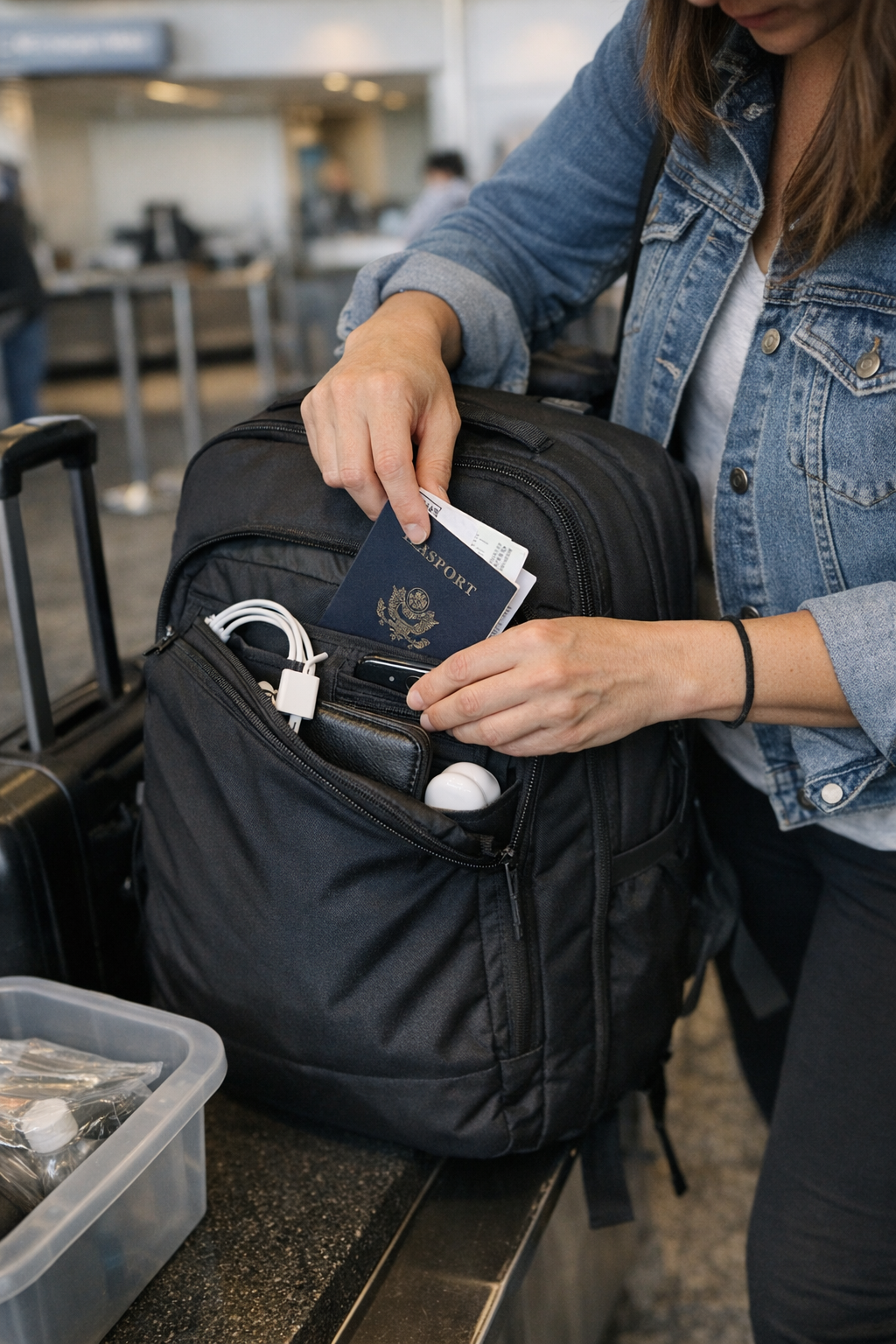
It’s surprising how small friction points add up during travel. At first, a carry-on packed with care—pouches zipped, tech snug, documents in their places—feels ready for anything. But just two or three real travel moments test that order: a stalled boarding line, a passport half-hidden in the wrong pocket, or standing awkwardly, unwilling to pull apart your bag just to find a charger. What stood out wasn’t a perfectly packed bag, but the slowdowns each time quick access became a minor production. These moments seem small alone, but once you notice them, you start rethinking the whole setup.
When Structure Starts to Matter
You only realize it after moving through a few transitions. That’s the detail that keeps coming back.
There’s a difference between a tidy main compartment and a layout that truly functions on the move. Smooth passages—through security trays, seat changes, gate checks—reveal if your system really holds up. When quick access gets blocked by nested pouches or tricky zippers, the promise of order fades. What happens then? Every extra reach or pause stacks up, until even small delays feel heavier each time you repeat the process.
How Bags Behave After the Third Stop
The difference becomes clear by your second or third pass through security, or as you settle twice into a tight seat. An organized main space looks fine sitting still. But when travel documents, earbuds, or your wallet end up buried behind organizers, the whole routine slows—not dramatically, but enough to notice. I started shifting my essentials, grouping them not just by type but by when I’d need them before landing. It didn’t look as neat. But repeated trips showed the benefit: one pocket, one zipper, one smooth motion—no more unpacking the whole bag to return a ticket.
The Structure Pays Off Quietly
That’s when you appreciate structure built for real movement. The shift: keep essentials close with a clear path, while less urgent items stay deeper inside. This setup forgives hurried hands and the unexpected shuffle—forgetting where you put your passport is mostly about the bag’s design, not your memory. Yes, a slightly bulkier pocket may look less controlled, but that edge disappears once you stop crowding the security line or blocking the aisle just to dig through your bag again. Not every trip runs perfectly—a charger can still slip behind something else. But as routines repeat, each well-placed outer pocket becomes less cosmetic and more a quiet relief every time you move.
If you find yourself reaching for structure that works as naturally as your habits, you might recognize the same small changes I did, seen across another trip: http://www.carryonsupply.myshopify.com.