When Pausing Grooming Brings Calm to Home and Cat
Shortening cat grooming sessions before resistance reduces avoidance and cleanup, making daily routines calmer and easier to manage.
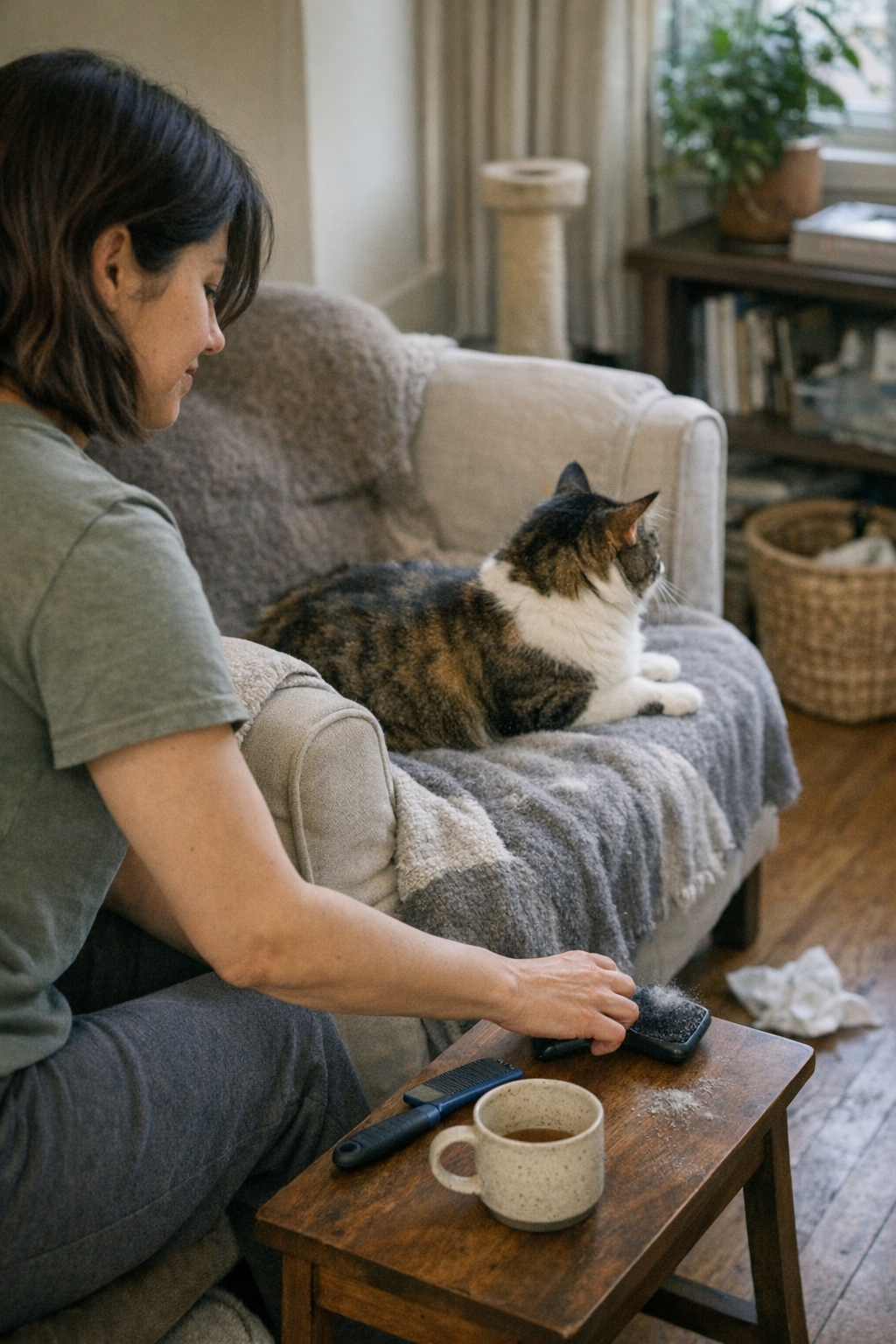
The smallest routine revealed itself quietly. At first, grooming simply settled into the evenings—another pass of the brush before clearing plates, refilling the water bowl, and straightening the feeding area. Most days, I found myself stretching the session a little longer, swiping at that last clump of fur until my cat started pulling away. It didn’t feel excessive. Yet after a few weeks, the rhythm in the shared space was off. Brushing left more tension than it eased.
You notice it after a few repeated resets. The blanket folded on the chair, the brush resting on the grooming shelf, the way your cat eyes the doorway carefully before approaching. Beneath this surface order was a layer of wariness that kept returning. That was the part that stuck with me. The more I dragged the brushing just past comfort, the harder it became to maintain a setup that was truly easy for both of us to live with.
Where Finishing Everything Backfires
The logic seemed simple: get it done, then it’s done. The chair looks neat again, the coat feels clean, and the brush goes back to its storage spot until next time. But the difference wasn’t just visual. Instead of simplifying the routine, the habit of one-more-pass meant fur started accumulating elsewhere. I found myself sweeping stray hairs off the feeding mat later, coaxing my cat out from under the cabinet after they’d retreated, and discovering clumps by the water bowl.
Even on days when the area appeared tidy after grooming, a layer of effort was quietly spreading—future avoidance, quicker protest, a subtle dread before the next session. The tools lingered out longer, too. A brush left on its side on the grooming shelf, fur stuck to the edge of the rest blanket, a slow hesitation before my cat returned to their favorite corner. The extra work scattered across multiple spots instead of solving the underlying tension.
Letting One Patch Wait
One evening, it shifted—unplanned, just a subtle change. A tail flick, a subtle turn away: this time, I stopped brushing before the tension showed up. There were still tufts left along the seat and a trace on the mat. Normally, I’d have pushed on to finish every loose patch, but the room stayed quieter. There was no scramble or protest.
The next day, the grooming routine actually felt lighter. Maybe less “done” visually, but somehow simpler. Without the invisible pressure to finish every patch, my cat settled down nearly right away, and the blanket required less fussing before being used. A handful of fur remained, but the difference was clear—fewer scattered clumps, less delay in starting the same routine again.
The floor was easier to wipe, too. By not pushing the session to its absolute end, the repeated work quietly shrank. Resetting the feeding and water station felt smoother, the litter corner stayed less disturbed, and the toys in the shared space didn’t pile up as stubbornly. The grooming-adjacent shelf and tool area held ready without any hidden-storage hiccups or blocked access slowing down the usual flow.
Trust Returns to the Room
It rarely took big changes. Most days, the room remained its usual mix of bowls, toys spread about, half-folded throws, and the occasional stray litter granule near the box. But avoiding that last push—ending right where attention started slipping—stopped the spirals of resistance. The armchair spot wasn’t a warning zone anymore, and resets became less of a repeated cycle.
That’s how I began to trust the ease of the routine again: by letting it stay unfinished, enough to not invite more trouble. The low-grade avoidance dropped, and our shared space returned to being part of our evenings, not a quiet standoff.
Sometimes, the most helpful shift is simply stopping before you’re forced to.