When Perfect Shelves Hide Everyday Frustrations
Storage focused on style often hides daily-use issues like extra reaching and slow resets; prioritizing access makes routines smoother.
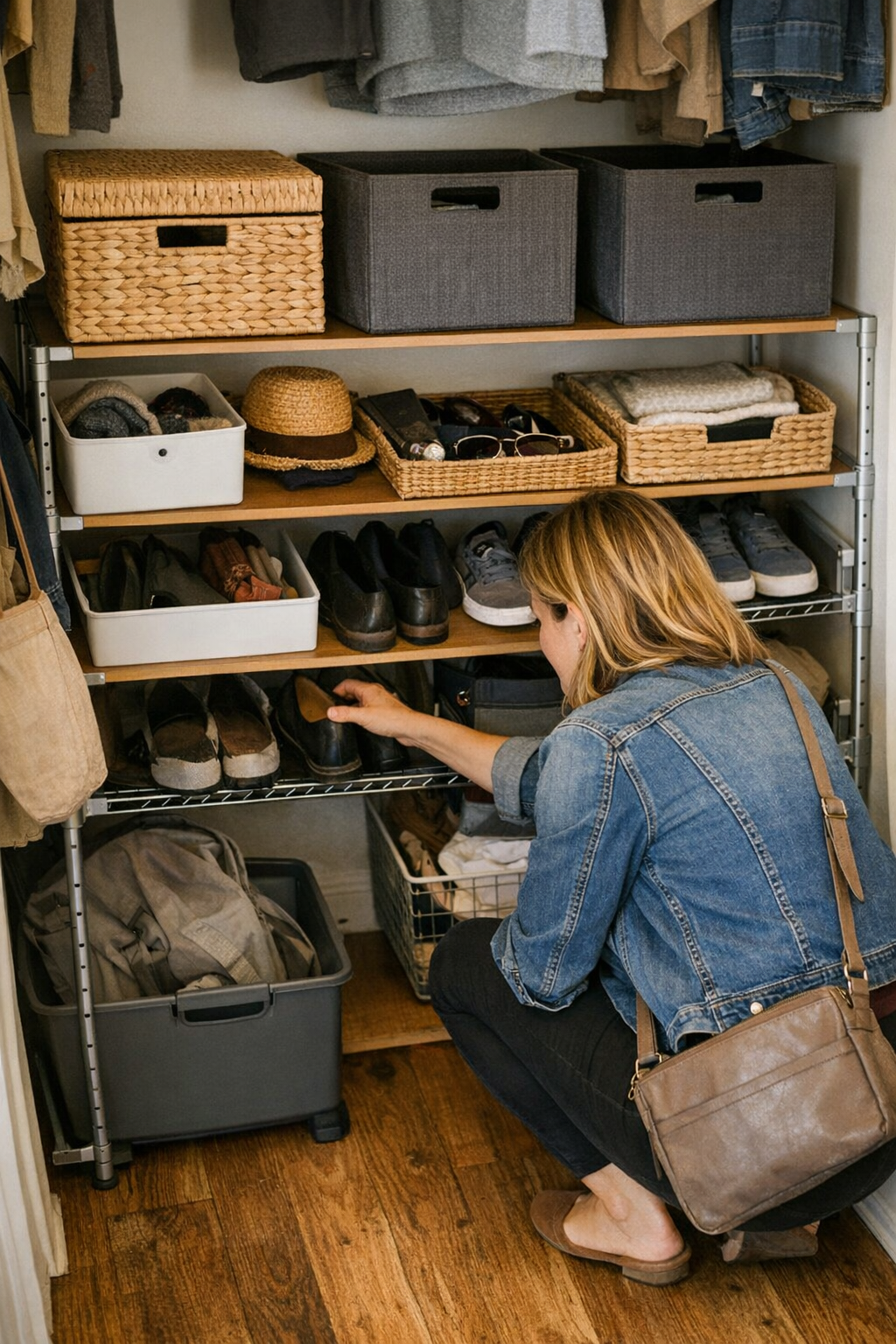
There’s a special kind of satisfaction when you first see a closet stacked with coordinated bins and baskets. The symmetry of it. The calm that rises from everything being in its place and out of sight. It’s easy to believe this harmony will filter into your mornings—streamlining the little routines that set up your day.
You don’t notice the tradeoffs at first. Organization systems are often sold as an answer, a way to bring order and ease to the mess beneath. And sometimes, visually, they do. But after the first week of living with the setup, the distance between “looks good” and “feels good” becomes clearer. Storage is more than just a style choice; it shapes the energy of everyday life, often in quieter ways than we realize.
The Subtle Shift from Styled to Stubborn
At the start, matching containers seem like a relief from the chaos. Everything’s aligned, tucked away, pleasant to look at. There’s even a small thrill in opening a door and seeing those neat rows—baskets with labels, bins with lids masking the clutter of family life.
But then comes the morning. Scarves are buried behind tall cubes, work shoes share a bin with a bag of forgotten cords, and retrieving anything seems to require shifting something else first. You don’t notice it immediately.
But you feel it.
It’s in the little hesitations—wondering which box to open, nudging containers aside, watching small things migrate to the surface because it’s just easier. The routine slows. A styled system, meant to tame disorder, quietly starts feeding it.
Hidden Effort Behind Perfect Lines
Something odd happens when appearance outruns function. The closet you admired becomes a puzzle to solve every day. High-sided bins shield their contents—and also hide the gathering mess. Lids come off, and baskets find their way to the floor, never quite returning to formation.
On paper, the symmetry holds. In practice, the system shifts to favor easy reach. Gloves, chargers, or gym bands pile up at the edge, not in their categories, but wherever there’s a gap. The effort multiplies by small degrees—resetting, refolding, restoring.
With every extra reach and rearrange, the sense of order grows heavier. Even the smallest frictions—the need to move one box to get to another, or the frustration of losing track of things—become part of the landscape.
Redesigning for Access, Not Just Appearances
It took several unsettled mornings before I tried something different. I swapped one neat stack of deep baskets for a mix of low bins and a bit of open shelf, right at arm’s height. No big plans, just a shift to see if things would land differently.
Immediately, it felt smoother—grabbing shoes or keys without nudging aside half the closet. There was less double handling, fewer edge piles at the week’s end. What changed most wasn’t just how the closet looked, but how it let the day start—for me and everyone else passing through.
I realized that sometimes the tidiest look is the one that carries the most hidden work. The best systems aren’t about hiding things so much as making them easier to use and return, over and over, without effort stacking up unseen.
The surface view is one story. Living with storage, day after day, is another.
These thoughts found their shape while reworking a hallway closet in my own house—an ongoing project I’m quietly enjoying.