When Pet Travel Gear Becomes a Daily Challenge
Practical pet travel setups prove their worth at repeated stops; consolidating essentials in one spot reduces friction and keeps travel smooth.
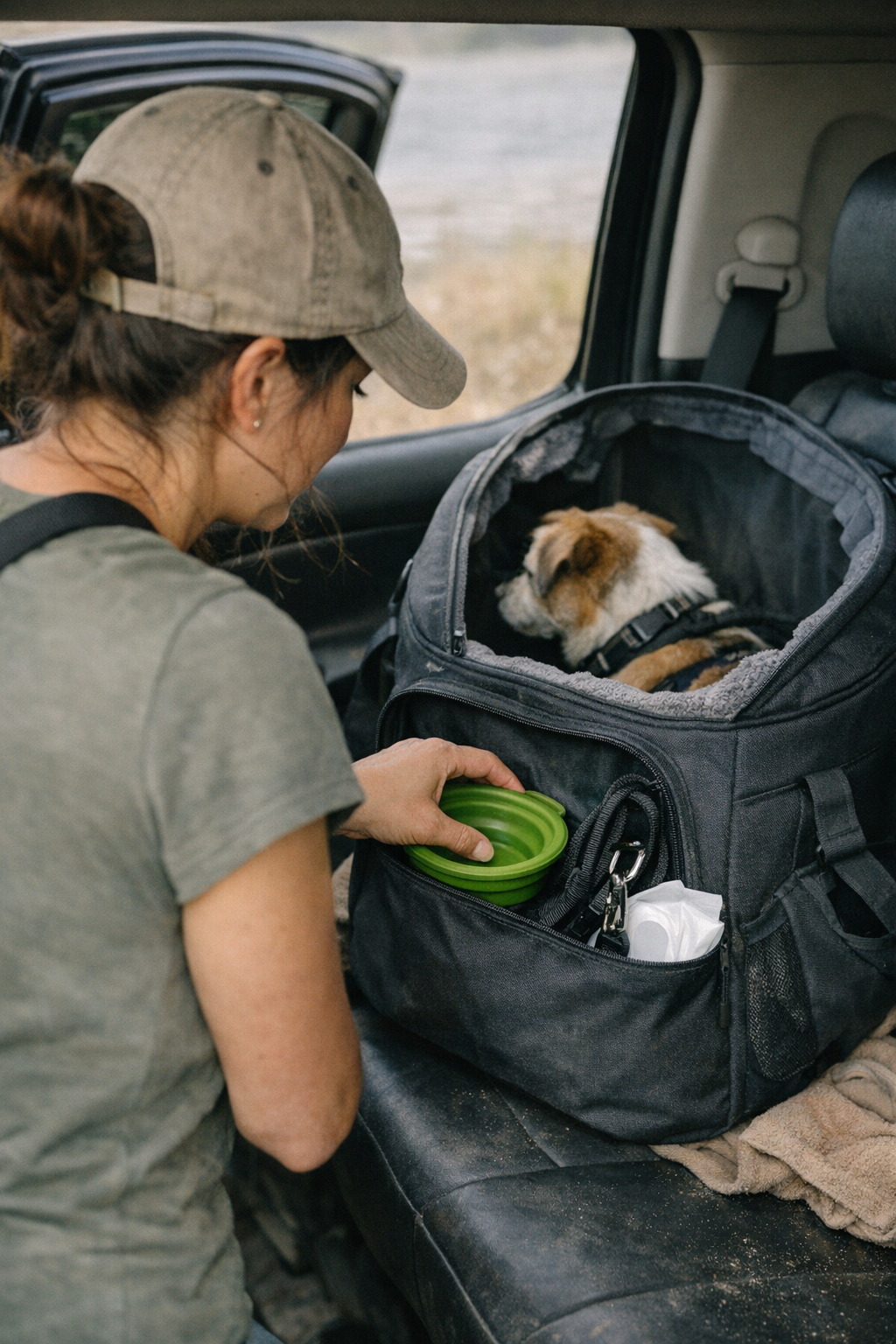
You don’t notice the drag right away. At the first stop, the carrier zips open, the bowls and leash sitting in their designated spots, the wipes quietly packed away. But by the third or fourth pause—when you’re back at the car, hands full and your dog turning in circles—that friction shows up. What seemed organized when you left home starts to chip away at your patience. That faint sense of extra effort at each stop wasn’t in the pictures, but it lingers now.
After a few weeks of loops—quick errands, weekend park visits, trips with stops that start and stop—I came to see how most pet travel setups get in their own way. Not right away, but every time you need to move again. Bowls tucked deep inside some zipped compartment. Wipes placed too cleverly. A leash threaded under a snack bag. The initial order looks neat but fast becomes a slow unraveling; your hand reaching awkwardly, shifting this and that, while your pet waits or tugs.
You notice it after a few trips: this small mismatch between how a kit appears and how it actually works in motion. Resetting the carrier takes longer than expected. The sense of “ready” wears off with each cycle, digging for small things, reshuffling just enough to break your flow. Even tiny details—how one pocket bulges, how reaching for a bowl disturbs the wipes—begin to compound. I kept thinking, “It should be easier by now.”
But the difference kept showing up. One trip, I moved everything I used most—leash, bowl, wipes—into a single easy side pocket, right next to the seat. The routine changed immediately. With one hand, a flat pack of wipes could come out mid-cleanup while the other stayed on leash or door. No more bowls jammed sideways or tangled leashes mixed with extras. It saved maybe a minute at each stop, which isn’t much until you notice the absence of fumbling. The movement—the lived-in space between pet, seat, and bag—actually lightened.
A setup that looks neat means little if it breaks your stride every time you restart. What I’ve found is that repeated movement, not visible tidiness, is where structure earns its keep. The easier it is to grab everything from the same spot, the less the setup slows you down. It’s not a trick or hack; it’s letting one clear zone do the work so the clutter of stops doesn’t spill into the parts of the trip where you want to keep moving.
Most days, I still catch myself reaching for things out of habit, only to realize the flow feels better—quieter, less strained—when the setup matches how I actually move. There’s probably no perfect arrangement. But for now, having everything come to hand where the motion starts and ends is the part that has stuck with me.
For anyone who wants a sense of what these setups look like in practical terms, there’s more to see here: http://www.pawgotravel.myshopify.com