When Pet Travel Setup Turns from Neat to Frustrating
Seat-side pet-travel setups slow down with repeated use; simplifying access and reducing compartments keeps trips smoother and easier.
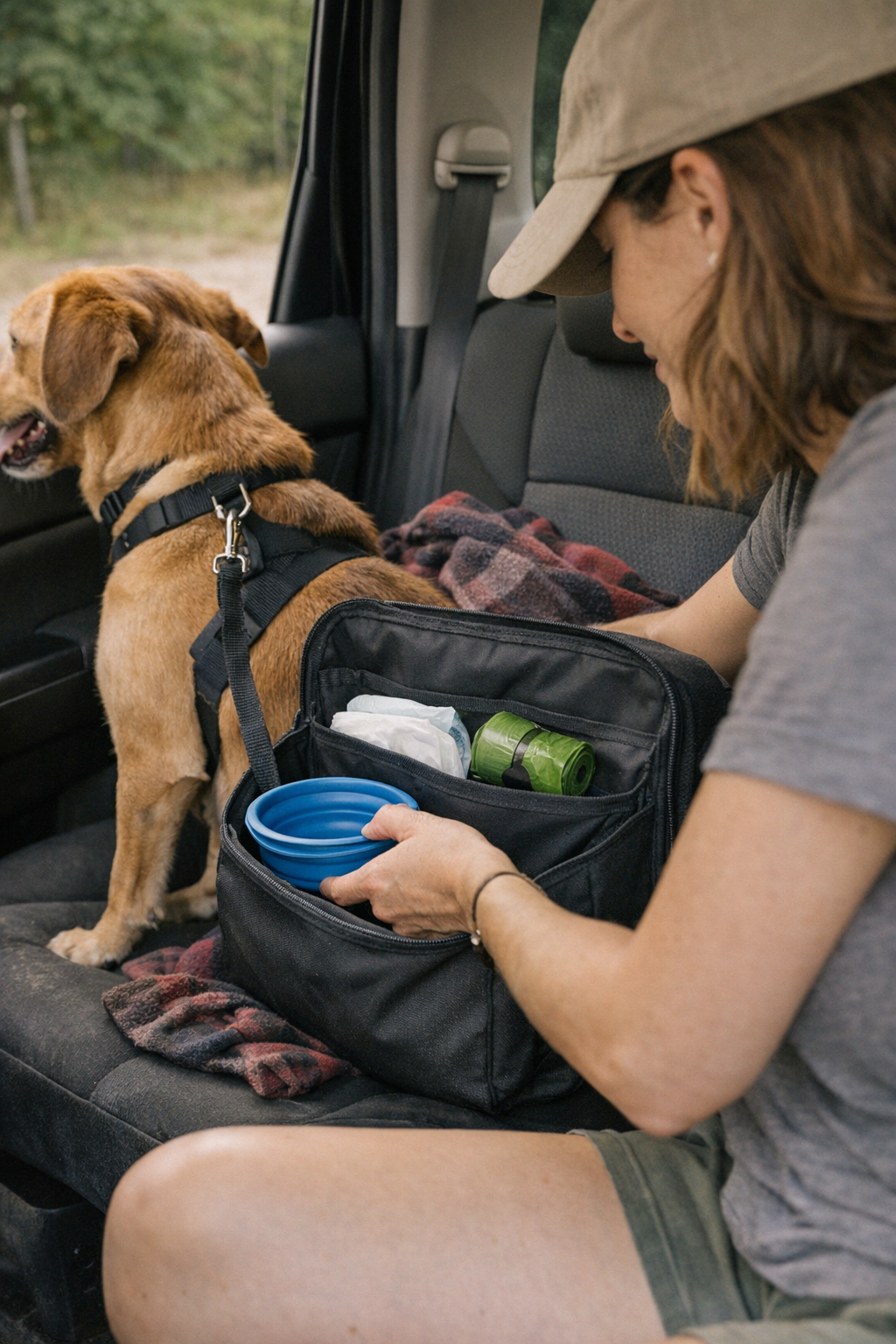
It took a few trips for the pattern to show itself. You start out with everything in its place—the bag zipped, bowl stowed, leash clipped just so—ready for a smooth day of movement with your pet. At first, the setup holds: order on the passenger seat and the sense that you’ve thought things through. But once the stops start to string together—a quick store run, a park break, another errand—those clean lines begin to bend.
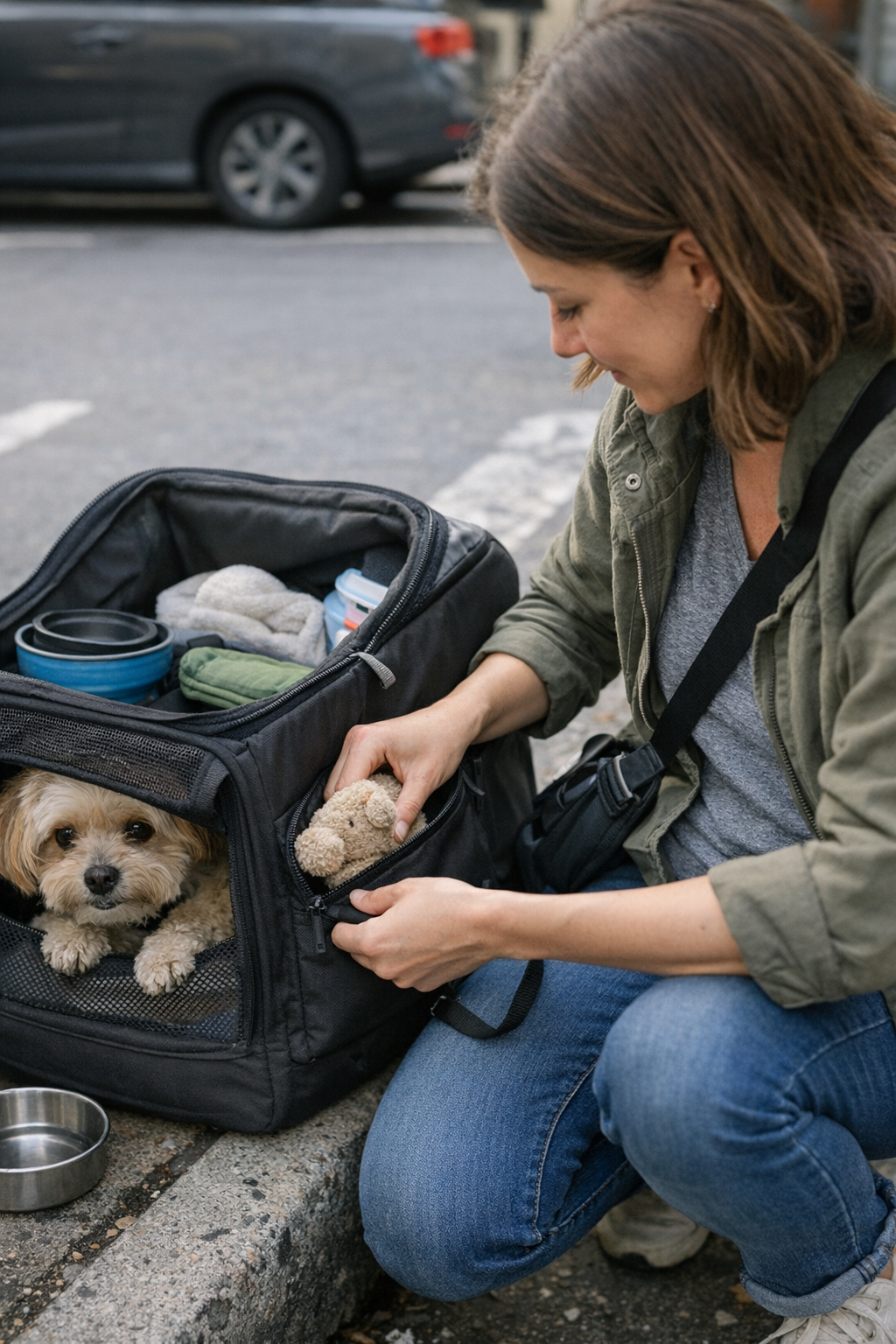
You notice it after a few trips: the wipes that used to be easy to reach have somehow slipped beneath the cleanup bags, the water bowl’s lid sticks against the side pouch, the leash wedged awkwardly enough that it requires a second hand. Suddenly, you’re off-balance, everything demanding a small pause. The illusion of smoothness gets tested. It’s never dramatic; just a faint stacking of interruptions. Each reach, each shuffle, slows you down in ways the first trip never showed.
What seemed cleverly organized at home becomes faintly resistant once movement repeats. Bags that look sorted on the floorboard can, mid-trip, turn clumsy. Hands juggle—dog’s leash in one, hunting for wipes or the bowl with the other—while the seat’s edge marks an awkward divide. Much of the trouble is quiet: a cleanup pouch that should be instant-access now needs digging out, or realizing by the third stop that the comfort pad you packed blocks the only open pocket. The space between looking prepared and feeling prepared widens every time you hit the road.
After a while, the routine edits itself. The detail that kept surfacing was the side pocket—opening it fully, not half-closing it out of habit, allowing core items like the bowl, wipes, and bags to settle into an easy order. It wasn’t the number of compartments but the honest arrangement that mattered; the items you reach for all day belonged lined up simply, not buried beneath or over-planned. With less friction, each movement felt more natural. Organization mattered less as a look and more as a seamless flow. The return to the seat felt lighter, and picking up or moving again didn’t feel like starting over.
It’s a small but persistent difference: no matter how thoughtfully designed the bag, it doesn’t reveal what truly works until you’ve repeated the steps enough times to spot where real delays gather. Pet travel meets you at the seat’s edge: a handful of essentials, an open route to them, and the realization that the best system is one that quietly disappears behind the act of moving.
If this sounds familiar from your own car routines, the setup shown here might be a good place to start quietly reworking things: pawgotravel.myshopify.com. You will receive a blog body draft.