When Play Becomes Quiet: Finding Calm After the Chase
Leaving loose chase toys out leads to hidden clutter and agitation; anchoring a calm toy after play helps reset behavior and cleanup faster.
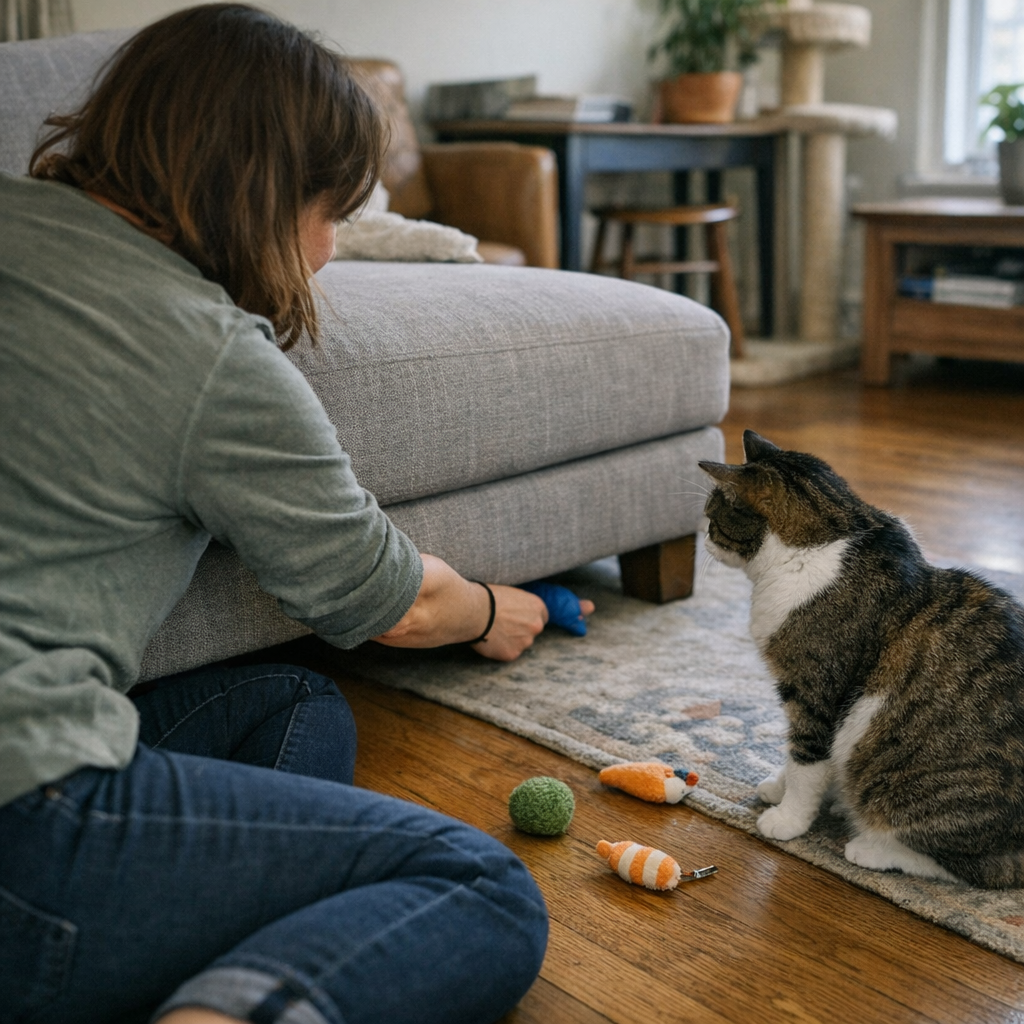
I used to think letting toys scatter wherever my cat left them was fine. It looked playful, sort of lived-in, and efficient enough—a ball under this chair, a wand slumped by the door, maybe a fabric mouse half-hidden in a dusty corner. There was a casualness to it that made sense until it didn’t. You don’t see the friction right away, only the easy evidence that your cat had a good time. But it’s in the reset moments, usually late in the day, when you begin to notice: the sprawl never really empties out.
There’s a particular shape to the frustration. You bend to pick up toys, planning to make one sweep, but they’re never quite where you left them. The half-lost crinkle, the feathers snagged behind chairs—it turns a five-minute pickup into a small hunt. My cat, meanwhile, would begin the same restless tracing around the room: leftovers from the chase with no real end point. I’d start the day with a neat space—feeding areas freshly refilled, water bowls topped up, litter nearby cleaned—but by noon, toys were scattered. By dinner, the rest toss lingered like low-level mental noise. It looked fine at first, but the slow drip of residue—fur in corners, smudges near litter zones, crumbs near feeding spots—started to pile up.
The routine felt off. Picking up would slow when access to the usual spots was blocked by overlooked items or dusty nooks piled with hidden toys. The grooming-adjacent storage area, meant to be orderly, would gather loose scraps. Even the rest corners, designed to be cozy and quiet, showed signs of disturbance—blankets ruffled, mats askew as if the cat was always half on alert.
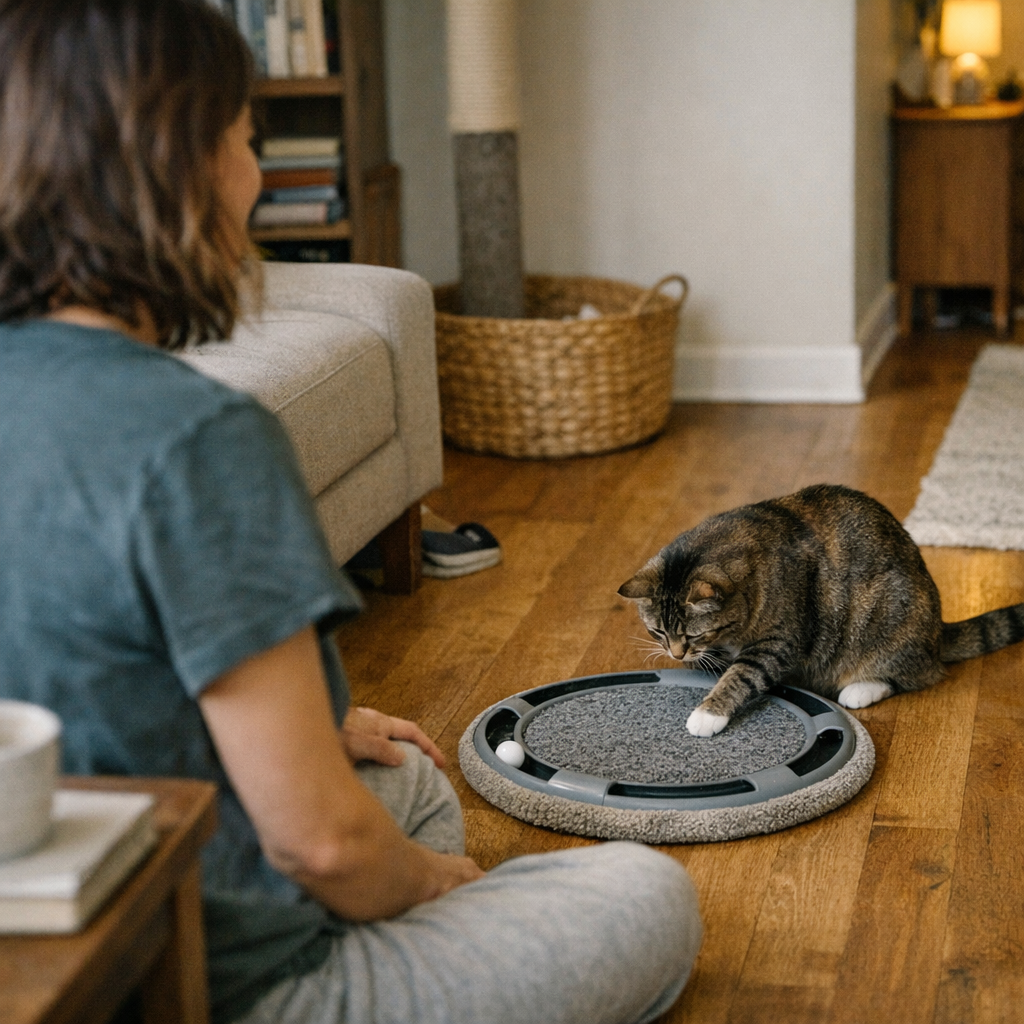
That tension between comfort and upkeep pushed me to try a different approach. I shifted the play zone from loose toys strewn across shared spaces to one anchored piece I could control—a weighted mat with a textured rolling track built in. The difference didn’t hit all at once, but quietly crept in. Evening circuits became shorter. Instead of pacing the apartment with scattered toys trailing behind, my cat started settling by the mat after sprints, batting at the fixed toy with smaller, more focused bursts.
The result was a subtle easing in clean-up. Instead of sweeping the entire room to reset several points—the feeding area with partially knocked over dry food, the watered station needing a refill, the litter-adjacent floor needing a wipedown—I had only one toy to nudge back into place. The scattered carryover diminished, and slow refills or delayed wipe-downs happened less often because the physical setup naturally encouraged fewer disruptions. Residue still appeared—some fur in corners, a ball wedged out of reach—but those remnants felt manageable rather than overwhelming.
It’s relief not to spend extra minutes unraveling a messy trail or negotiating between shared home spaces that compete for attention. The room feels less interrupted, the cat less on edge. After a few days of this reset, the space wasn’t perfect, but noticeably more breathable. This isn’t just about the new toy itself, but about the shape of the routine and how controlling shared indoor zones—whether feeding, water, rest, litter, or play—can redefine the experience for both of you.
If you want to see how a small switch can rebalance your daily loop, you can check it out here: http://www.stillwhisker.myshopify.com