When Pressure Washing Feels Like a Delicate Balance
Pressure washer safety depends on matching pressure and spray to material, preventing damage seen after repeated passes or high pressure.
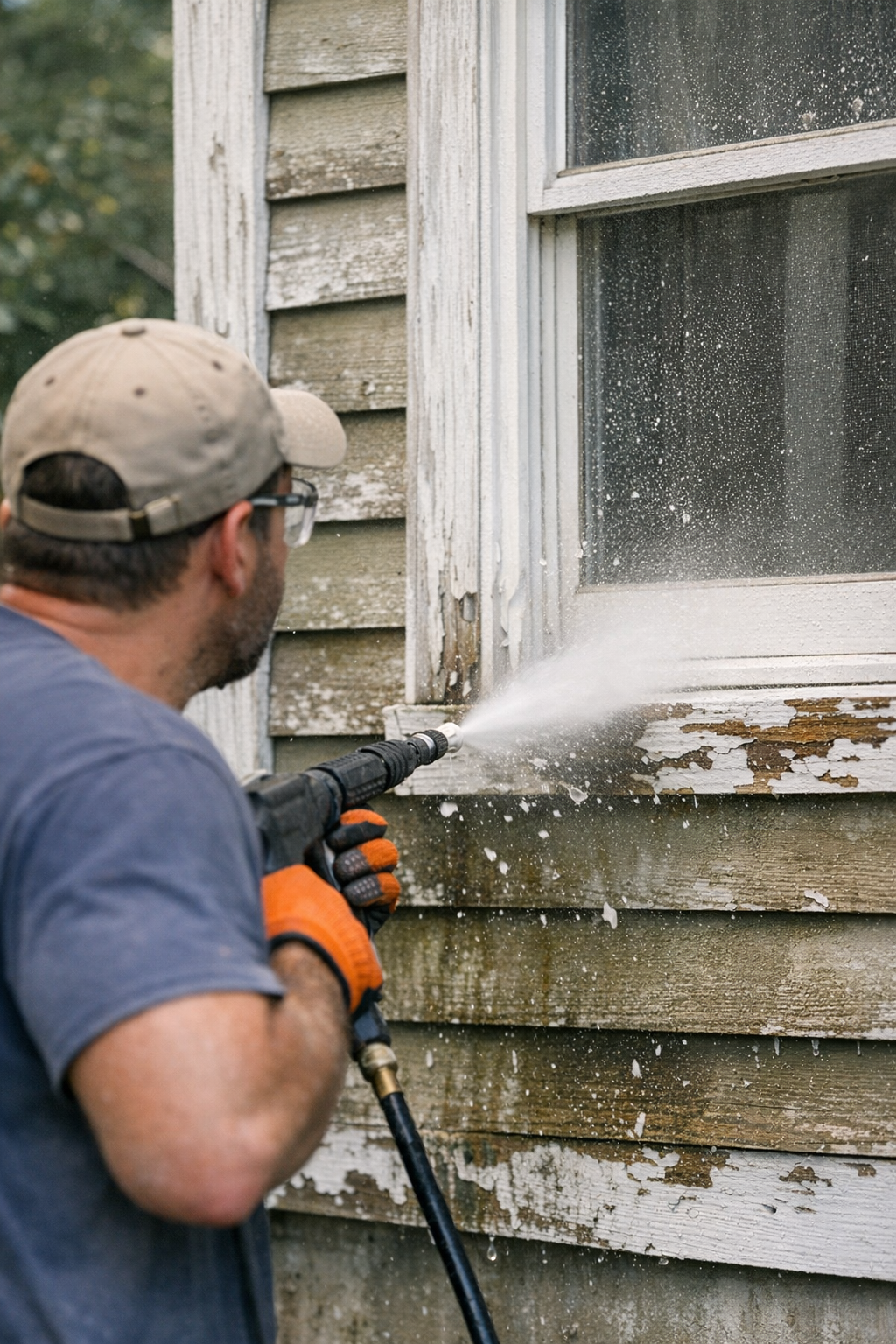
There’s a quiet, almost satisfying rhythm in washing away the grit that builds up outside our homes. The noise of the pressure washer, the pulse in your hand, and the sight of fresh siding reappearing beneath layers of dust creates a small reset.
But sometimes, what begins as a simple cleaning routine can slip sideways. The fix is never just about water or soap. Behind the hum of every pressure washer are small choices — nozzle, pressure, distance — that ripple out, changing the look and health of wood, paint, and trim. Problems rarely make themselves known all at once.
You don’t notice it immediately. But you feel it.
Small Variables, Big Ripple
There’s something about routine that makes us trust our tools. Most pressure washers look alike: sturdy plastics, the familiar whine as water starts to flow.
But as I discovered — and perhaps you have, too — not all days on the siding are equal.
Old wood absorbs a little more force; composite sheds water differently. I’ve learned to listen for the subtle changes: when a steady sound breaks into a hesitant chatter, or when the surface just doesn’t reflect light the same way. These are quiet warnings. Over time, they start to mean more.
A job that begins with a fresh sense of progress can end with tiny fibers raised, paint quietly peeling, or water finding a route behind siding. The evidence shows up only after everything dries — and suddenly, the logic of routines feels less secure.
The Real Moment Damage Sneaks In
Maybe you’ve been there, too. Late spring—mildew on shadier boards, dust covering sills you forgot last week. You reach for the washer and start without thinking much about setup.
It’s easy to miss the impact at first. The siding looks brighter, and the push of the water rinses away old pollen. But as you step back for round two, the new patches look less vibrant than the rest — a little faded, the edges kind of mottled, some wood grain suspiciously rough.
You don’t notice the pattern on the first pass. The difference creeps in quietly, between repeated laps. That’s how most surface scarring and water leaks begin — not from a mistake you see, but from small choices that seemed harmless at the time.
The Subtle Art of Reading Surfaces
With enough callbacks and repairs, you start changing things, sometimes without even spelling them out. I swapped out the narrow turbo nozzle for a broad spray. Backed up an extra step for window trim. The difference felt immediate: less streaking, no fuzzy grain, no restless fight to sand away marks after the job.
It’s not a trick or a rule so much as an understanding: the best results come when you move with the surface, not against it. Sometimes that means adjusting how you hold the spray or changing the angle, almost unconsciously. Most of all, it means pausing if something feels different — sound, touch, even how the water moves.
It turns out that the surfaces we clean remember the smallest details. The payoff for noticing early is not just a cleaner exterior, but a much quieter repair season come fall.
These thoughts came together on a quiet Saturday afternoon, tidying up the side of an old house.