When Pretty Storage Fails in Everyday Life
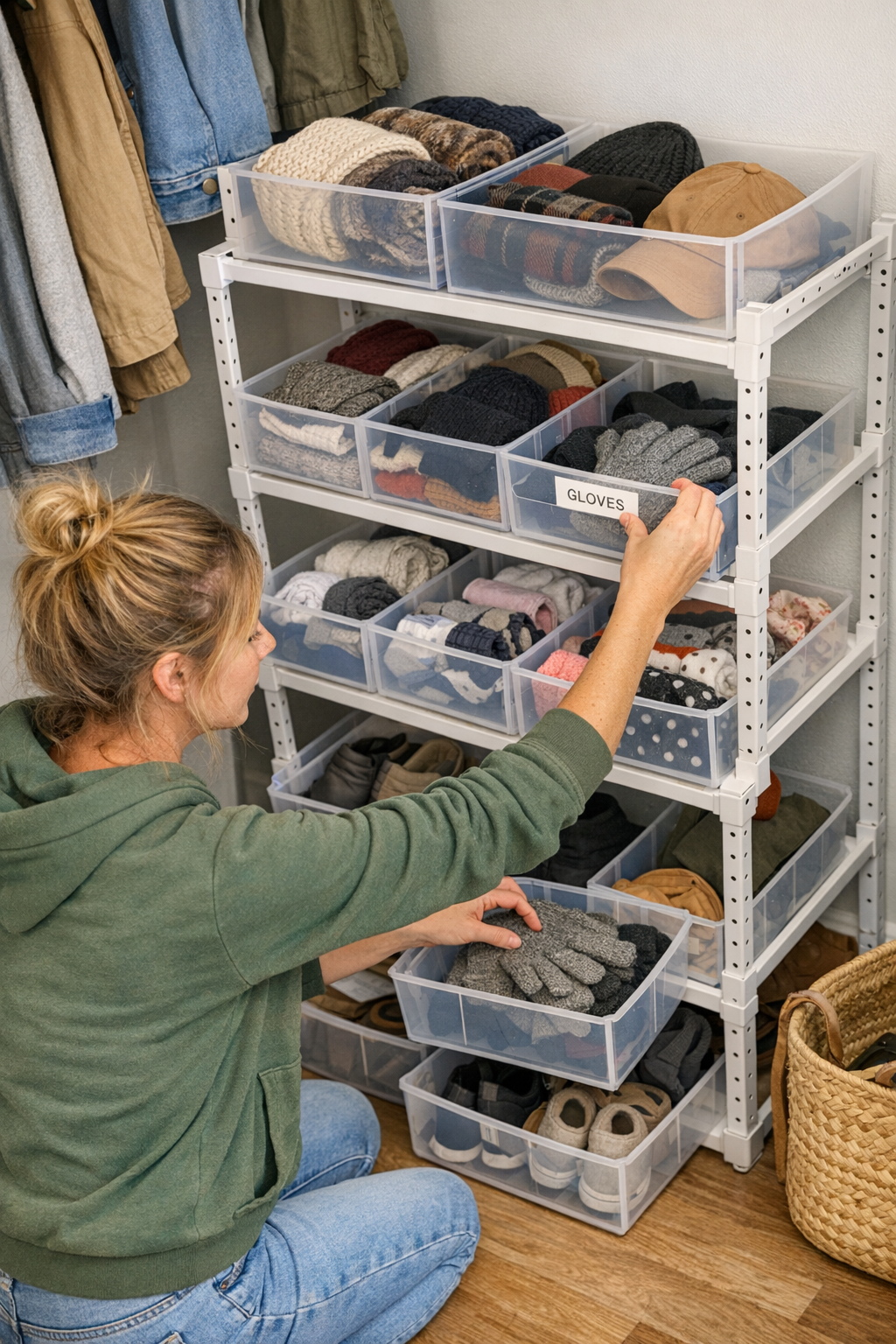
The best storage prioritizes quick access and easy resets with open, shallow bins and clear dividers, avoiding hidden clutter in deep baskets.
The trouble with storage is that you don’t realize what’s wrong—until it slows you down at the worst possible moment. The closet that looked pulled together, the baskets that came in a pleasing row, the shelves that seemed so intentional. All these systems make sense in calm moments. But in chaos, something shifts.
You reach for a sock, and suddenly, you can’t see where it’s gone. The polished surfaces lose their appeal with every frantic morning, every hurried hand searching through a pile that was once so neatly contained.
It’s a quiet frustration, small and persistent.
The Hidden Flaw in Pretty Storage
There’s an odd gap between what looks ordered and what actually helps you find things when it counts. You don’t notice it immediately.
Stacked baskets seem like the answer until you start rifling through them, upending the order just to steal back a single glove. Open bins that looked messy at first glance are often the only spots you know, instantly, what’s missing. Deep containers seem to swallow everything, and by the end of a busy week, you’re sorting more than you’re storing.
It sneaks up on you—the disconnect between “tidy” and “useful.”
When Convenience Quietly Becomes Chaos
I noticed this most in our hallway closet, the one with every intention built in. At first, scarves and hats sat in perfect baskets, labels just so. But real life happened: school drop-offs, last-minute gym runs, rainy evenings, hands too full to bother closing lids. Gradually, the order blurred. By Friday, nothing matched the category on its label, and the hunt began.
You don’t notice the breakdown all at once.
But you feel it. Each retrieval becomes a small negotiation, a pause that grows longer, until you catch yourself setting things on the floor “just for a second.”
The Gentle Shift to Something Simpler
There’s a quiet change when you swap deep, pretty baskets for shallow, open bins. Eight inches or less, with simple dividers—nothing elaborate. Turns out, being able to see everything at a glance changes how you move: it shortens the searches, reduces the piles, makes it oddly satisfying to put things back where they belong.
Visual systems aren’t just about looks; they expose the inefficiencies before they grow. Suddenly, resetting a shelf takes a quiet moment instead of an overhaul. There’s less hiding, less negotiating. Just a gentle return to something that works—especially when you’re rushing.
If it takes longer than ten seconds to find or return an everyday thing, it might be the storage, not you.
Most of these realizations came while reorganizing that hall closet for the third time, trying to find a system that stays easy—no matter how real life gets chaotic.