When Quiet Corners Make All the Difference at Home
Indoor cat nap setups overlapping busy areas cause rest interruptions and irritability; relocating naps to quieter spots improves rest and evenings fast.
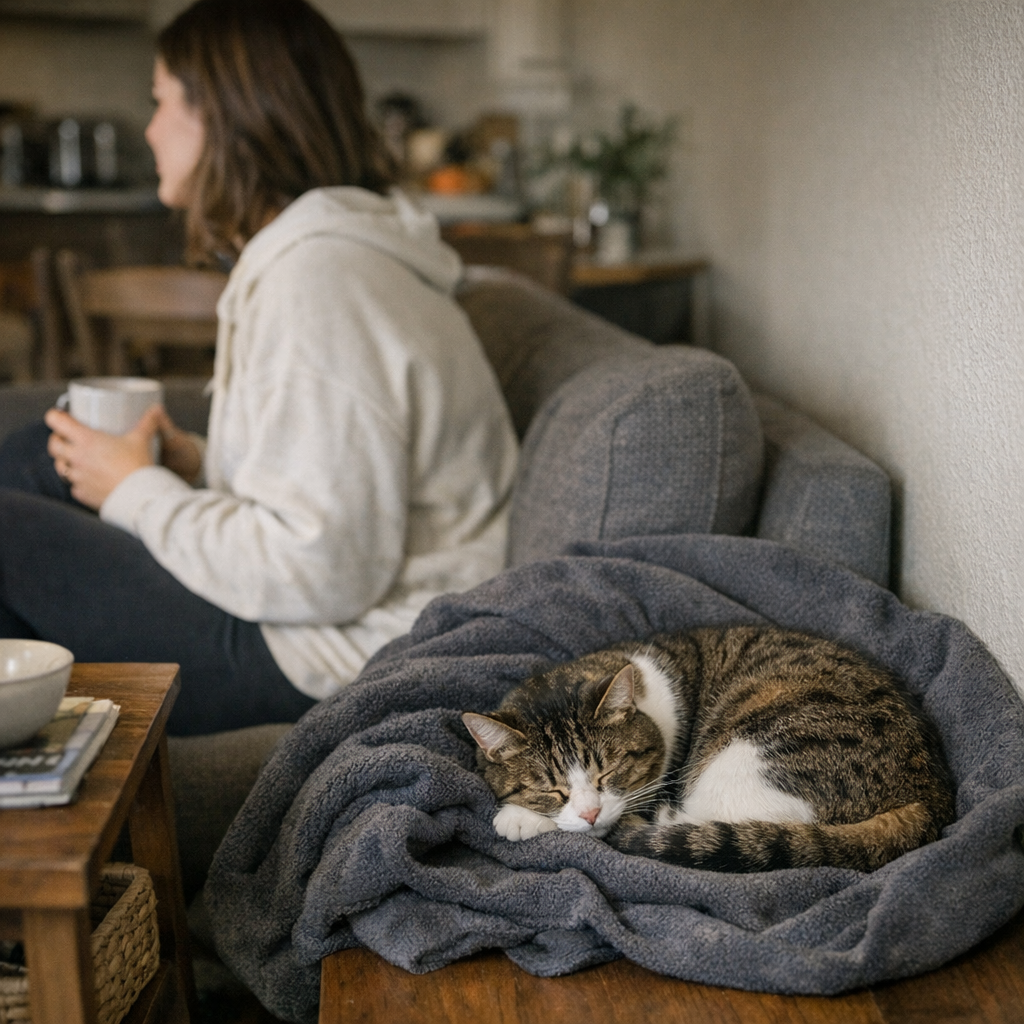
There’s a quiet way indoor cats tell you when a setup isn’t quite right—never dramatic, but a subtle, continuing sense that something’s off in daily life. I noticed it after a few afternoons of tidying the same spot, finding the blanket folded just so, and realizing I was expecting things to stay put. The small irritations kept returning on their own schedule. Our cat’s favorite nap zone looked comfortable and deliberate, but it didn’t hold up through the day the way I wanted.
Home routines reveal where arrangements fail. Footsteps, the hum of a vacuum, or a stray toy rolling out from under a chair can all interrupt rest. When the nap corner sat too close to the food bowls or a hallway, naps ended earlier than usual—always with a soft shuffle and a tail twitch. The setup looked fine at first glance. But the pattern kept showing up: rest that didn’t last through the afternoon, and evenings marked by restless pacing and more frequent meows.
Everyday household activity highlights the balance between comfort and calm. It’s easy to choose a bed by softness, the sunniest patch, or a welcoming blanket. But after smoothing the surface multiple times or fishing out another misplaced plush mouse, you recognize the tradeoffs: even perfect textures can’t compensate when the nap spot bleeds into a traffic path or a cleanup zone. That recurring friction was the problem. A “finished” nap area, still needing adjustment.
A simple change shifted the pattern—a heavier throw repositioned behind the sofa, away from doors and out of line with the litter mat. It was an unremarkable tweak but made a subtle difference. Naps grew longer. Toys stopped drifting in from the kitchen. Cleanup became a single quick pass, without leftover chores hidden beneath or scattered overnight. The mess didn’t rebuild by morning.
These rhythms settle with use. When an indoor cat’s rest is broken by predictable household waves—mealtime routines, after-work activity, or something as small as mailbox deliveries—comfort fades faster than expected. But when the setup moves out of routine friction, it more reliably endures the flow of daily life. The test isn’t whether it stays neat for a day, but whether it demands less effort to reset the next time.
Small resets keep revealing details. StillWhisker offers a few setups designed to fit closer to how our days actually run, respecting feeding areas, water stations, litter-adjacent spaces, rest corners, toy spread, and cleanup needs: www.stillwhisker.myshopify.com