When Quiet Evenings Hide Growing Cat Play Challenges
Late indoor cat play causes restless behavior and mess; shifting play earlier reduces cleanup and improves daily routines.
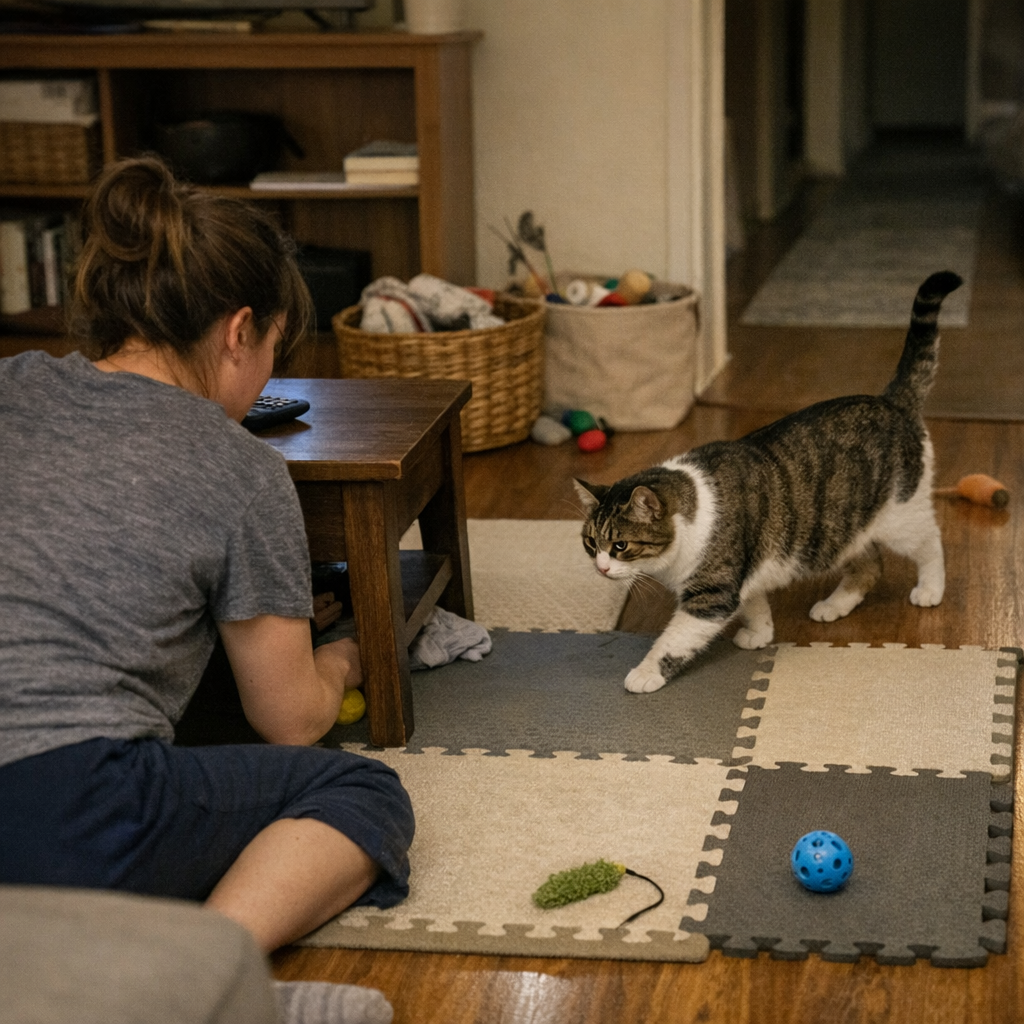
You don’t always notice the real trouble with an indoor cat setup during the first evening—quiet or not, everything looks tidy enough. It’s only after the newness wears off, somewhere on the third or fourth night, that everyday patterns start stacking up in harder-to-ignore ways. Nights that used to end with a clean floor and a content cat slowly slip into the same nagging routine: toys left scattered, a spurt of energy arriving just as you’re winding down, little traces of last-minute play edging into spaces that had just felt settled.
The accumulation happens quietly. A single “reset” hardly seems worth fussing over. But those late sprints—little paws chasing felt balls just past bedtime, the scratch mat shifting across the rug, a toy mouse half-lost under the couch—become a regular script. The energy that keeps showing up at the wrong time isn’t just about a busy cat; it’s about a routine that keeps demanding the same response, long after you think the night is put away.
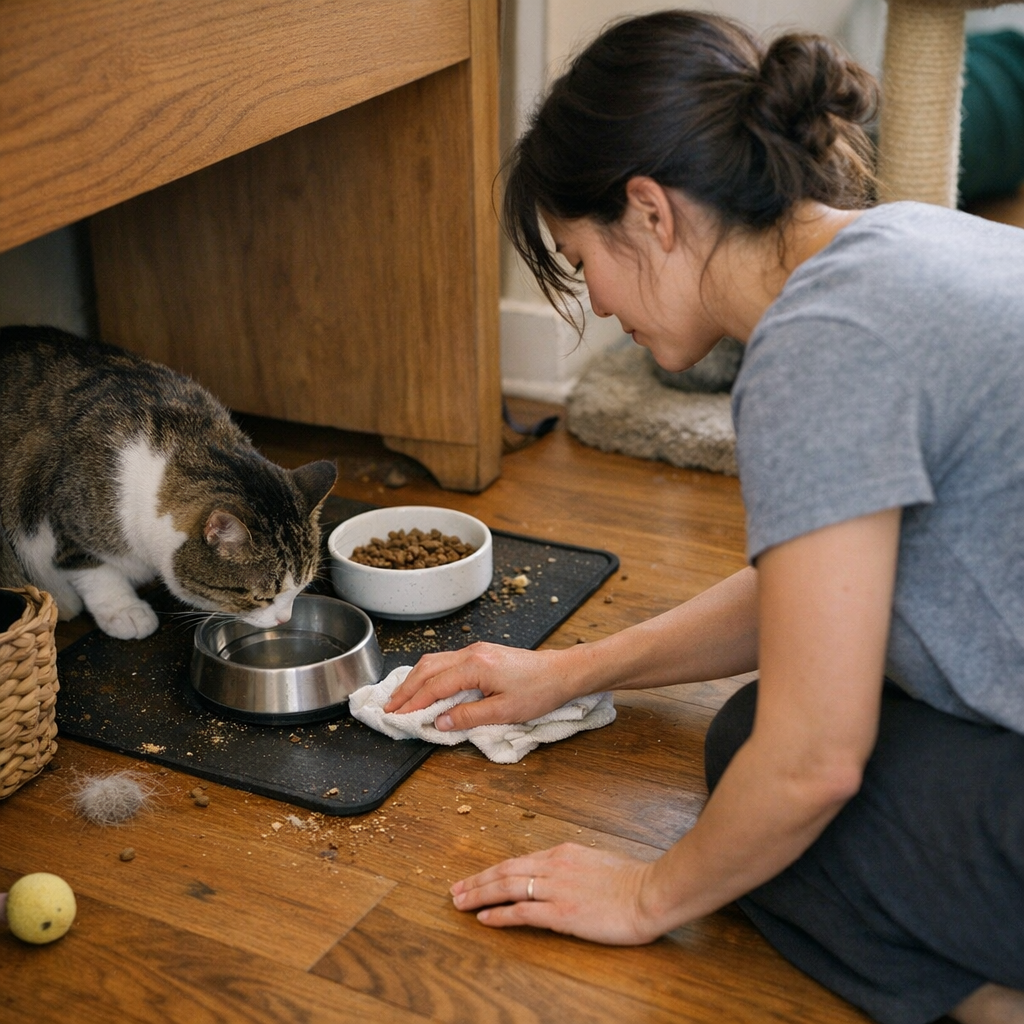
You notice the difference after a few resets. The bedtime calm feels farther off. What was meant to tire out the cat before sleep often leads to more picking up: mats to re-square, baskets to refill, toys dotting the living room well after the lights are out. Feeding bowls sit half-refilled longer, water doesn’t get topped up on time, and litter-adjacent cleanup lags behind the overnight spread. At first, it seemed like something in the setup needed fixing—maybe a new storage bin, or just a better spot for toys. But the same trouble kept showing up no matter how much you rearranged and tried again.
Eventually, the real shift wasn’t a prettier space—it came from nudging the whole routine forward, just a notch. Starting play thirty minutes earlier let the high energy taper off on its own. The scratch mat stayed more often where it belonged, toys stayed clustered, and the late-night cleanup faded. Most mornings, the living room looked, if not staged, at least genuinely lived-in and less churned through by the same spillover from the night before. That ongoing comfort was the part that kept returning—not just a surface reset but a feeling that reset actually stuck.
Something subtle happens when routine stops colliding with rest. It becomes easier to tell when toys stay put, and you notice—almost by accident—that the pile of late cleanup shrinks on its own. The change isn’t about control or perfect order. It’s about finding the small adjustment where living alongside a cat—the daily movement, the mess, the refill-and-reset tensions—feels smoother underfoot.
If you want to see more from setups and routines shaped by real indoor cat life, there’s a quiet look here: http://www.stillwhisker.myshopify.com