When Quiet Moments at the Door Slow Us Down
An entryway leash unclip seems efficient but creates routine pauses, slowing homecoming flow. Moving it inside eases daily rhythm.
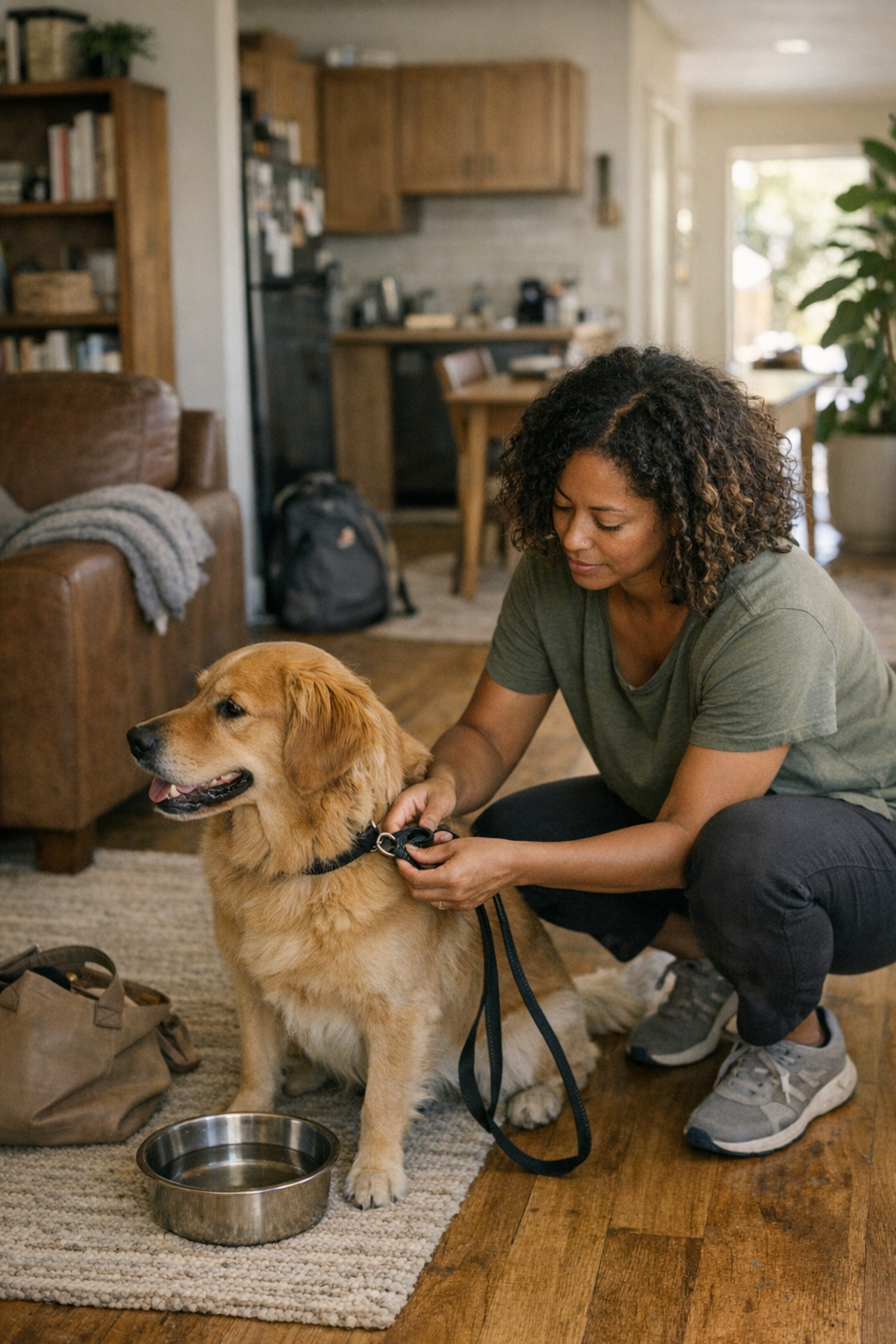
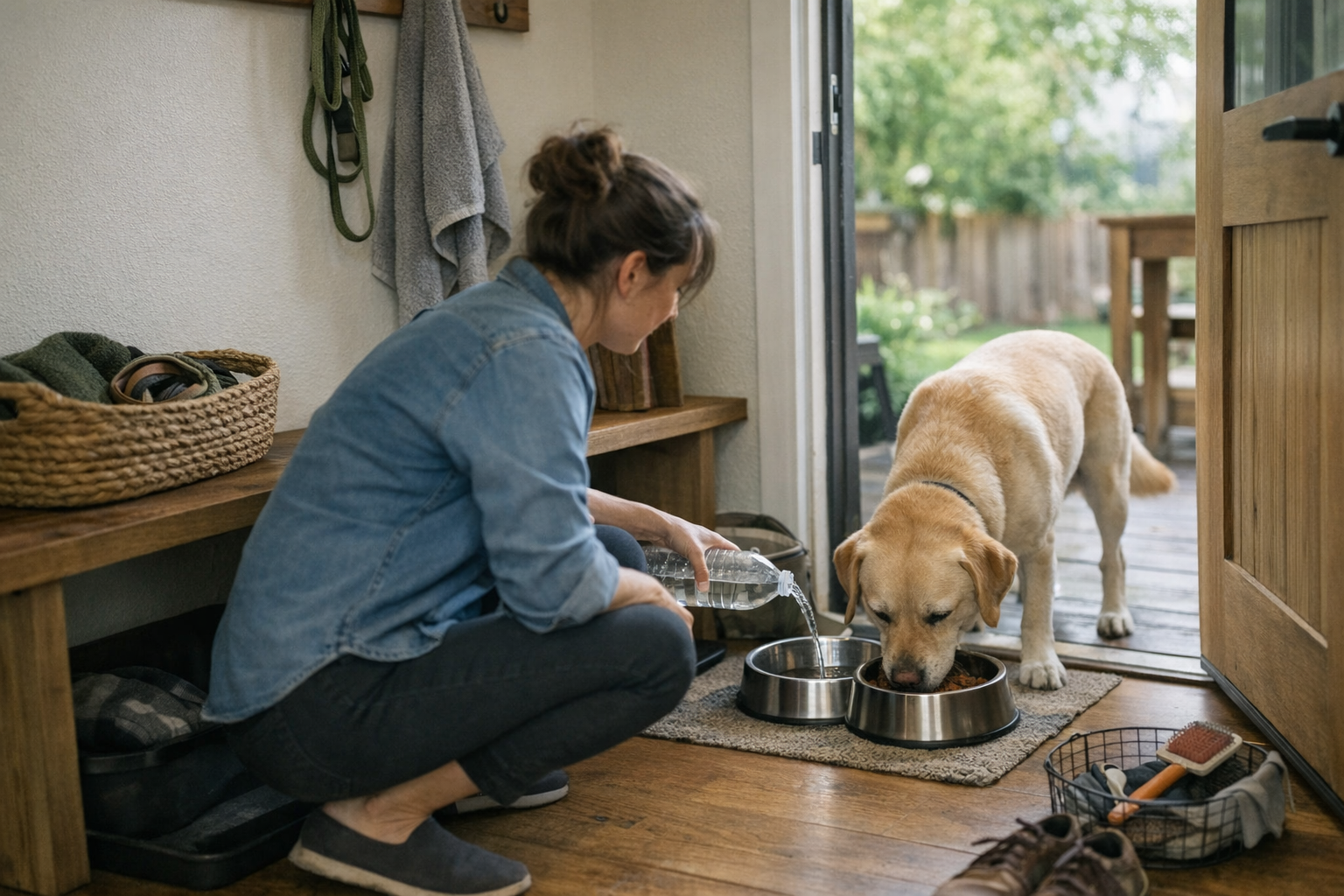
You notice it after a few mornings—the pause at the door that wasn’t always there. The leash is unclipped, your dog sits neatly by the threshold, and both of you hover just on the edge of home. At first, it looks fine: a brief, almost polite stop before moving inside. But over time, that exact spot begins to collect little delays. Starting the next things—filling the water bowl, setting out food, wiping damp paws, taking off shoes—waits for those extra seconds. When you live with a dog, these small pauses add up until they create a kind of friction you barely remember choosing.
Still, the setup feels orderly. Sit, unclip, step in. It should work. And it does, in a way. But the part that kept returning was this quiet hold at the entryway. Your hands are full, the leash dangles, keys press into your palm. Shoes half-off, you realize you haven’t taken more than a step inside. Your dog isn’t tense—just waiting. Expectant, but not moving until you do something else: pick up the bowl, call them forward, finish setting the gear down. Each time you reset, you wonder why the rest of the routine doesn’t pick up speed, why the house feels paused at the edges a bit longer than it should.
A Pattern Hides Inside Calm
You tell yourself it’s just a habit. That first stillness after a walk feels almost responsible, a little version of good manners. But the longer you stick with it, the more you notice the difference between a tidy-looking pause and one that makes movement feel natural.
The pattern is simple. When the leash unclips at the threshold, both you and your dog take a beat too long to move forward. It’s less about relaxation and more about waiting for the next clear go-ahead, almost like you’re both stuck in a slow-loading scene change between outdoor effort and indoor comfort. You remember mornings when the water bowl is empty, shoes still on, and your hand hovers between two tasks—nothing flows past the door until you’ve handled this small, semi-formal checkpoint.
One week, running late, you move the unclip a few steps further inside without thinking. The difference shows up in smaller ways than expected. The pause isn’t gone, but it travels—closer to the water bowl, near the bed, wherever the first bit of comfort usually happens. The transition, mostly invisible, threads itself into the main room instead of stalling at the edge.
The Real Reset Happens Past the Threshold
It’s easy to miss how quickly small patterns become fixtures in a dog’s daily life, and yours. When everything is in its place, the space looks managed: leash here, towel there, toy spillover held to one corner. But routines aren’t about appearances as much as flow. Returning from a wet walk, your first thought is usually how to get paws dry before muddy prints streak the kitchen—yet your towel’s behind a closed door, or you haven’t made it inside far enough to reach it.
So you stand, balancing a leash, nudging shoes off with the wrong hand, aware nothing really progresses until this opening ritual is done. Over and over, these micro-pauses quietly reset the whole day’s stage: paws still damp, water bowl untouched, keys dropped late, your own pace slowed before you even notice.
Letting the leash unclip further in—near what happens next, not what looks tidy at first—started to smooth those bumps without much fanfare. Some messes still appeared: toys pooled by the bed, towels a beat too late, but the flow of coming back stopped feeling staged and started fitting real needs. Instead of treating the threshold like a finish line, it became just another brief landmark, not the main event.
Mess Reveals What’s Missing
Repetition reveals what tidy setups hide. The difference isn’t dramatic—just a lighter sense of moving in, less time hovering in the wrong shoes, bowl set down a little faster, fewer small resets missed because you’re stalled by the door. Not all patterns solve themselves, but this adjustment held up well through wet weather and busy mornings.
That was the part that kept returning: how tiny delays ripple through the day, and how changing the leash-off spot can make the routine almost invisible again. No ceremony, just better flow. You see the difference less in what it looks like and more in not noticing the urge to hurry up and settle in.
It ends up being less about where your dog waits and more about where the real routine resumes—usually just a few steps further than you first thought.
Sometimes the details of real daily dog life don’t come together until you stop expecting them to stay fixed at the threshold. There’s more about these lived-in adjustments quietly tucked away here: http://www.dogpile.myshopify.com