When Quiet Moments Hide Everyday Tensions at Home
Minor setup choices, such as bowl placement near the bed, greatly affect daily calm by reducing restlessness and smoothing the routine.
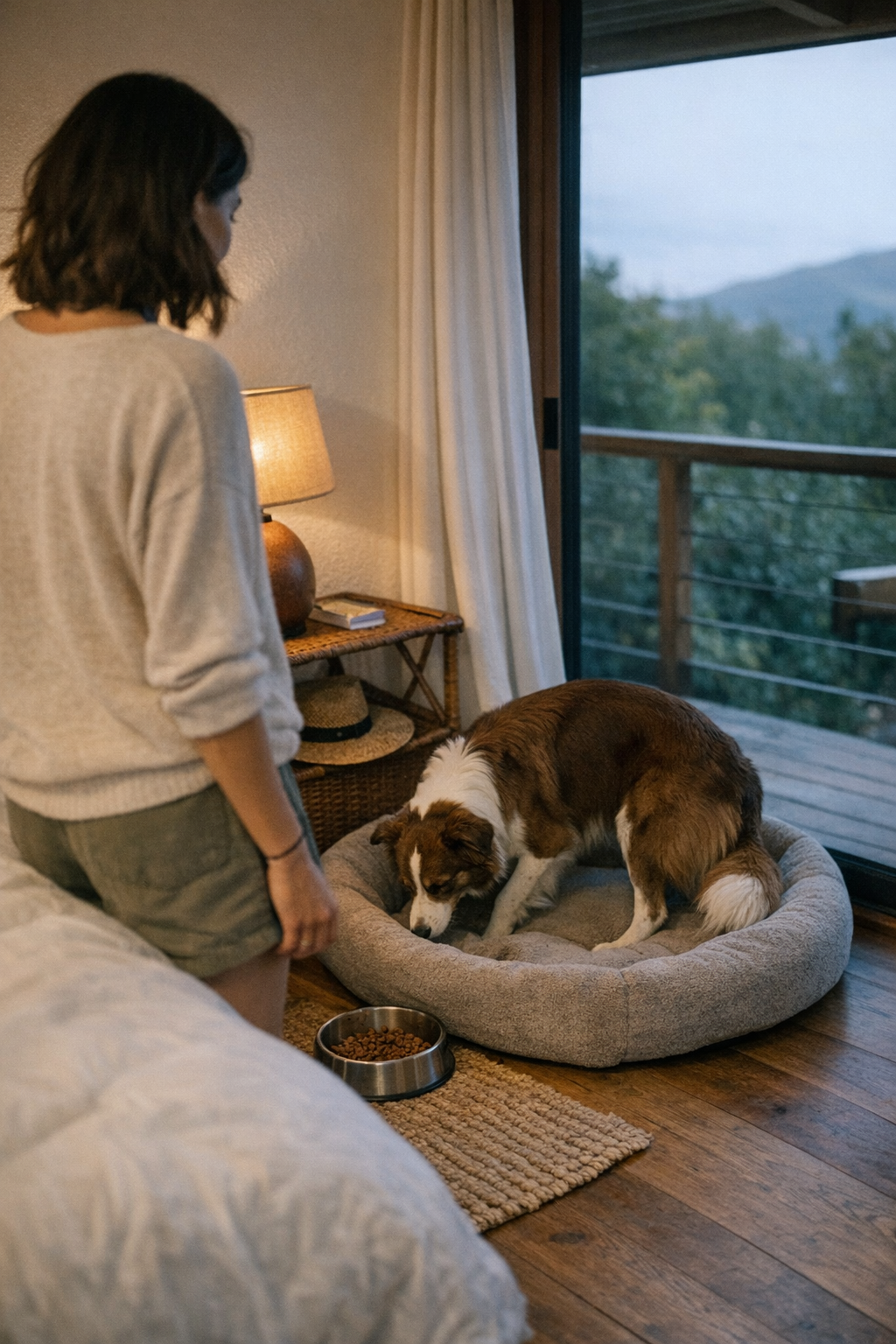
It started on a few uneven evenings—a lingering pause right after dinner that wasn’t dramatic but noticeable. Dinner would end, the bowl licked clean, and then the next dozen minutes would fragment quietly. The dog shuffled, stood halfway between bowl and bed, doubled back as if forgetting something, then circled again. At first, it looked like post-meal energy, nothing unusual. But after several evenings, this in-between pacing became a pattern—always a bit unsettled, never smoothly moving from dinner to rest.
You notice it after a few nights: the transition feels off, not just once, but repeating. It never turned into a real problem, but it stalled the whole evening routine. Toys might be in the way, or hurried footsteps brushed the edge of the dog bed. The difference was subtle. The bowl sat tidy on its mat, the bed still held its shape, but the dog kept repeating that pause, like something in the setup softly interrupted each next move.
At first, I thought it was a schedule change, leftover restlessness from a shorter walk, or anticipation for something else. But it never faded. These pauses don’t draw attention in the moment, yet they slow down the whole evening. One night, after stepping around a stray chew bone for the third time, I caught myself watching the dog hover again—caught halfway, bowl to bed and back, never settling straight.
Noticing What’s Actually in the Way
It looked fine—from the bowl to the bed, every piece seemed set for easy access. The space seemed wide enough to pass a vacuum through—so why the doubling back? In daylight, when kitchen bustle cleared, the pattern stood out: the path always felt crowded at that hour. A towel draped on a chair, an empty bowl two steps from the bed’s edge, toys edging in from the hallway. None of these alone should cause a pause, but together, they kept the flow from smoothing out.
This was the recurring problem. A space can look like it works but still quietly slow simple routines—feeding, resting, getting comfortable enough to flick off a light. The dog's hesitation circled this small zone, and once I saw it, the restlessness started to make sense. It wasn’t leftover energy but small obstacles disrupting the flow from bowl to bed.
The Shift That Made Calm Tangible
The adjustment wasn’t sweeping. One evening I slid the food bowl slightly farther from the bed—barely a stride, but enough to reset how he moved from one spot to another. The difference appeared in smaller ways than expected. Instead of circling in the same few feet, the dog ate, checked the empty bowl, then made a clean move to his bed. No more hesitation loops, no pacing through overlapping spaces. The first time he settled straight in, I realized what changed: the path felt open, finally linear, and that messy in-between moment disappeared.
It was such a quiet swap most would miss it. But after a while, the whole routine shifted. Cleanup became quicker, the pause between feeding and resting vanished, and the evening—usually stuck in partial resets—finally gained a smooth lead-in to night. It wasn’t magic, just setting clearer boundaries between eating and resting. The dog relaxed faster, and the home settled that half-step sooner—unblocked, with no friction left to build quiet tension.
What Changes When Routine Stops Fighting Itself
I still catch myself scanning the setup each evening as light fades and routines close the day. The bed’s now a bit away from the busy corner, the bowl out of that blocked line. There’s still the odd toy underfoot or quick towel grab, but the main loop finally leads somewhere easy. The room hasn’t grown; it just works together in a way my dog can pass through without interruption.
Thinking back to those restless evenings, the most surprising thing is how a pattern can wear itself into daily life—unnoticed until you look at the passage, not just the parts. Friction doesn’t always announce itself. Sometimes, it’s simply the shape of a pause repeating at day’s end.
Every small improvement like this gives the routine a little more room to breathe. And if you wonder whether such a subtle detail can ease evening transitions, you can see for yourself—there are spaces built for that kind of change here: http://www.dogpile.myshopify.com