When Quiet Spaces Hide Restless Nights
Night zoomies often stem from setups that interrupt a cat’s rest; placing beds away from busy paths reduces disruptions and cat activity.
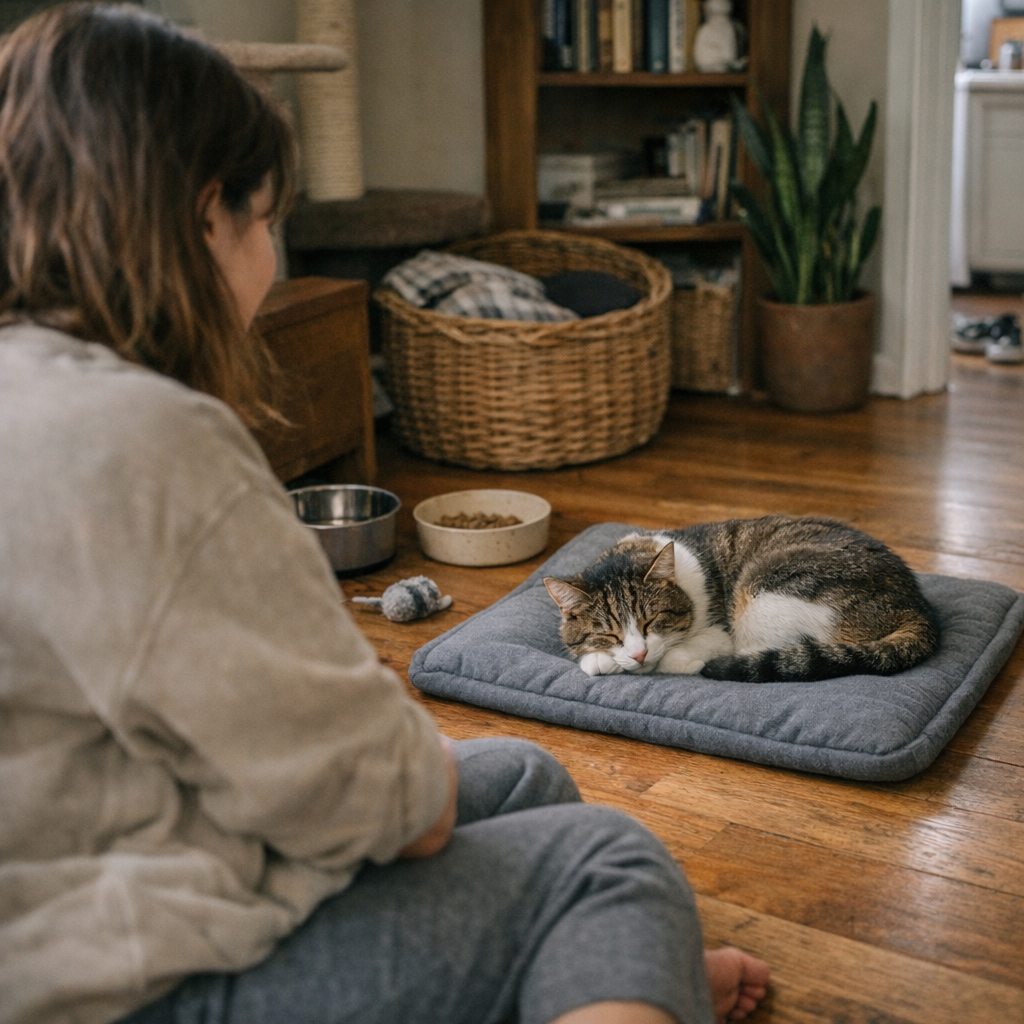
There are nights when the sound of paws on the hallway floor wakes you, and you wonder, again, if you’ve finally worn out the cat. But when she loops the kitchen for the third time at an hour when every bowl, cushion, and blanket should be settled, it becomes clear something isn’t quite right with the rest spots you thought worked. What seemed peaceful on Sunday turns into small daily friction by midweek.
It’s such a small thing: a mat that always needs straightening, a bed that slides onto the pass-through, or a rest spot that never fully settles because it always needs a hand putting back. You don’t notice at first. The spot by the table looked perfect—soft, out of the way, easy to find. But it’s also next to the water bowl, and by the time you’ve wiped up another stray splash and fluffed the blanket, the rest area is already slightly off. A toy or two ends up under a chair, and soon the setup you thought was “contained” begins spreading into everyday pathways. That was the recurring part: a neatly tucked mat, undone again with each small routine.
There’s a cycle here. Each reset feels like a minor reset for yourself, too, but you start to notice how often you’re repairing calm spaces. One paw scuffs the edge during feeding; a water refill nudges the bed; suddenly, the cat’s resting area turns back into a thoroughfare. The blanket doesn’t just look rumpled—it feels like a silent invitation for another lap at midnight. Shifting things away from habitual routes made a real difference. A rest mat with clearer edges, placed just outside the main flow rather than hidden behind furniture, actually stayed in place longer. It didn’t look as fussy, but the push to “fix” it vanished for several days at a time.
The practical part, I found, is about how well a setup holds up during the routines you’re already bound to repeat—refilling water, wiping spills, sweeping litter crumbs. The less often you have to reset a cat’s rest area, the more the room actually feels quiet again, without new activity surges each night. After a few rounds of resets, it becomes clear: quiet comfort isn’t about tucking things out of sight, but placing them where neither you nor your cat have to keep undoing and redoing the same work to feel settled.
Most nights now, the mat isn’t perfect, but it keeps its line. The routines stay separate, a little less tangled, and the zoomies soften—almost gentle—as if she sleeps a bit deeper before darting back into the kitchen. If you want to see where this thinking comes to life in practice, it’s a little clearer over here: http://www.stillwhisker.myshopify.com