When Returning Home Feels Like a Calm, Familiar Routine
Repeated-use travel friction builds when bag designs look ready but don’t match real stop-and-go routines: slow pockets, buried essentials, and extra zippers stall every reset.
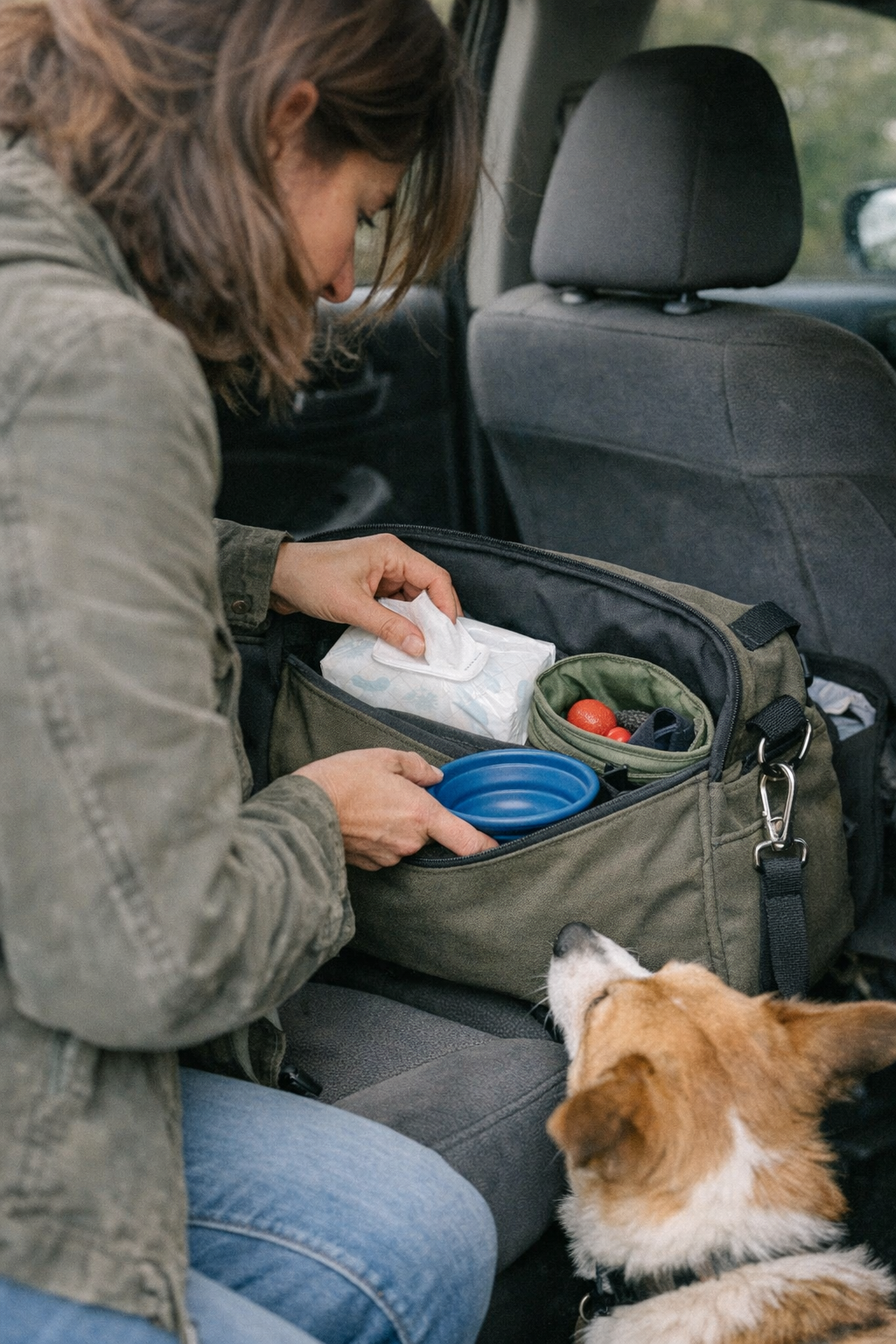
You start to feel it after a few trips—not right away, but once the newness fades and the bag’s zippers become familiar in your hand. At first, it’s just you, your dog, and a travel setup that looks neat enough to make the road feel easy. Each compartment has a purpose, every pouch is packed, and you think you’ve figured out the rituals of getting in and out of the car. But something nags at you, slowly. A return walk shifts from routine to a cautious interruption. The edges show up sooner than expected.
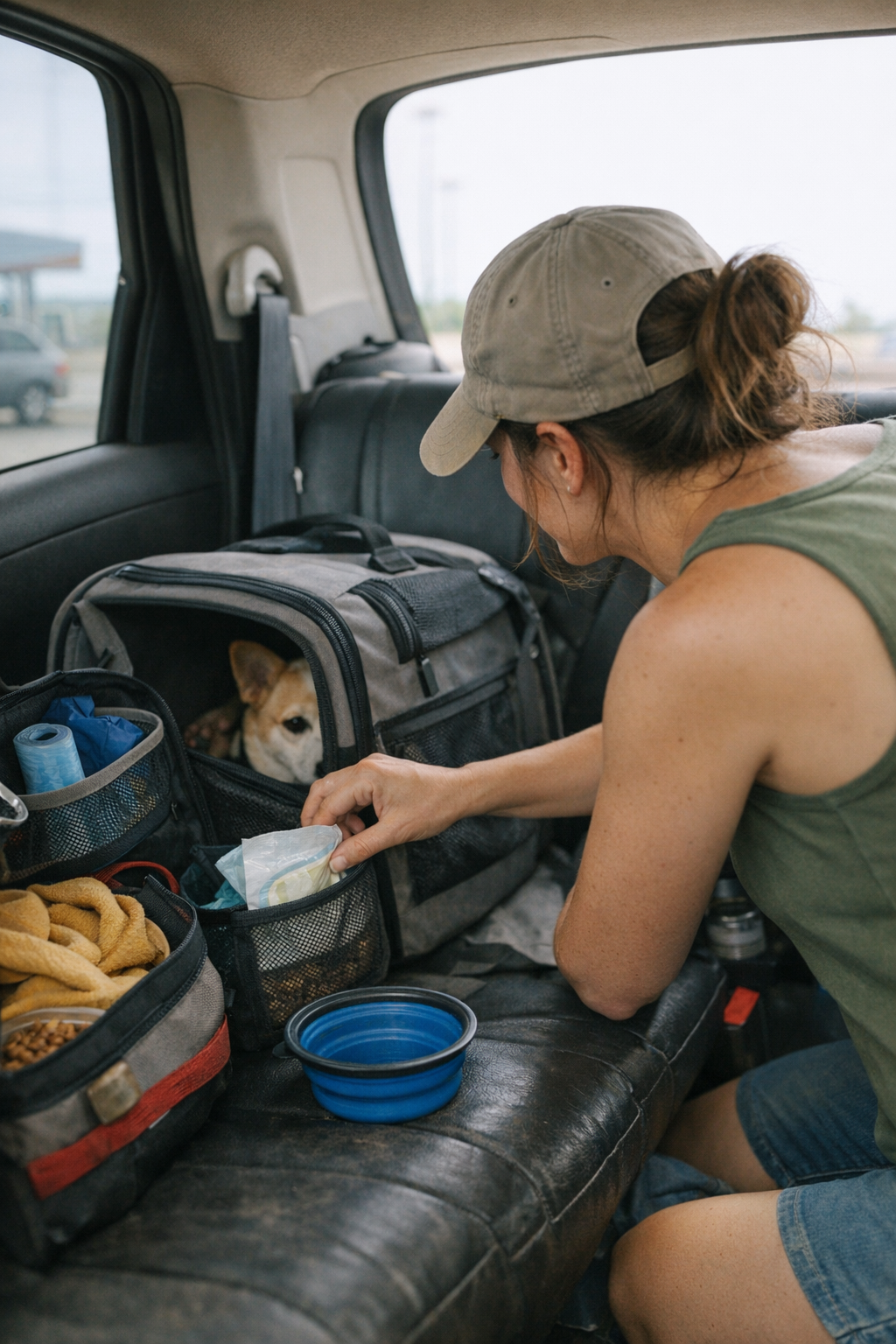
You notice it by the second or third stop: a well-meaning organizer turns into a minor snag. Wipes slip behind a bowl, the leash slides deep inside a pocket more than you intended. Each reach takes a little longer. You pause and fumble, predictably—one hand holding the leash, the other searching for something that felt obvious an hour ago. It was organized, but it wasn’t built for repeated use.
What Looks Organized, What Actually Moves
A bag full of labeled spaces seemed foolproof when you left the house. Hydration, treats, wipes—all in their slots. That was the part that kept feeling right. But after three stops, the neatness started to break down. The “right” pouch might hide the thing you need most, and deep compartments don’t forgive when you’re juggling a restless dog in a drizzle. One moment shifted it all: wedging a travel bowl out from beneath cleanup supplies—with my knee holding the car door open. The problem wasn’t mess, it was an order that didn’t match the movement.
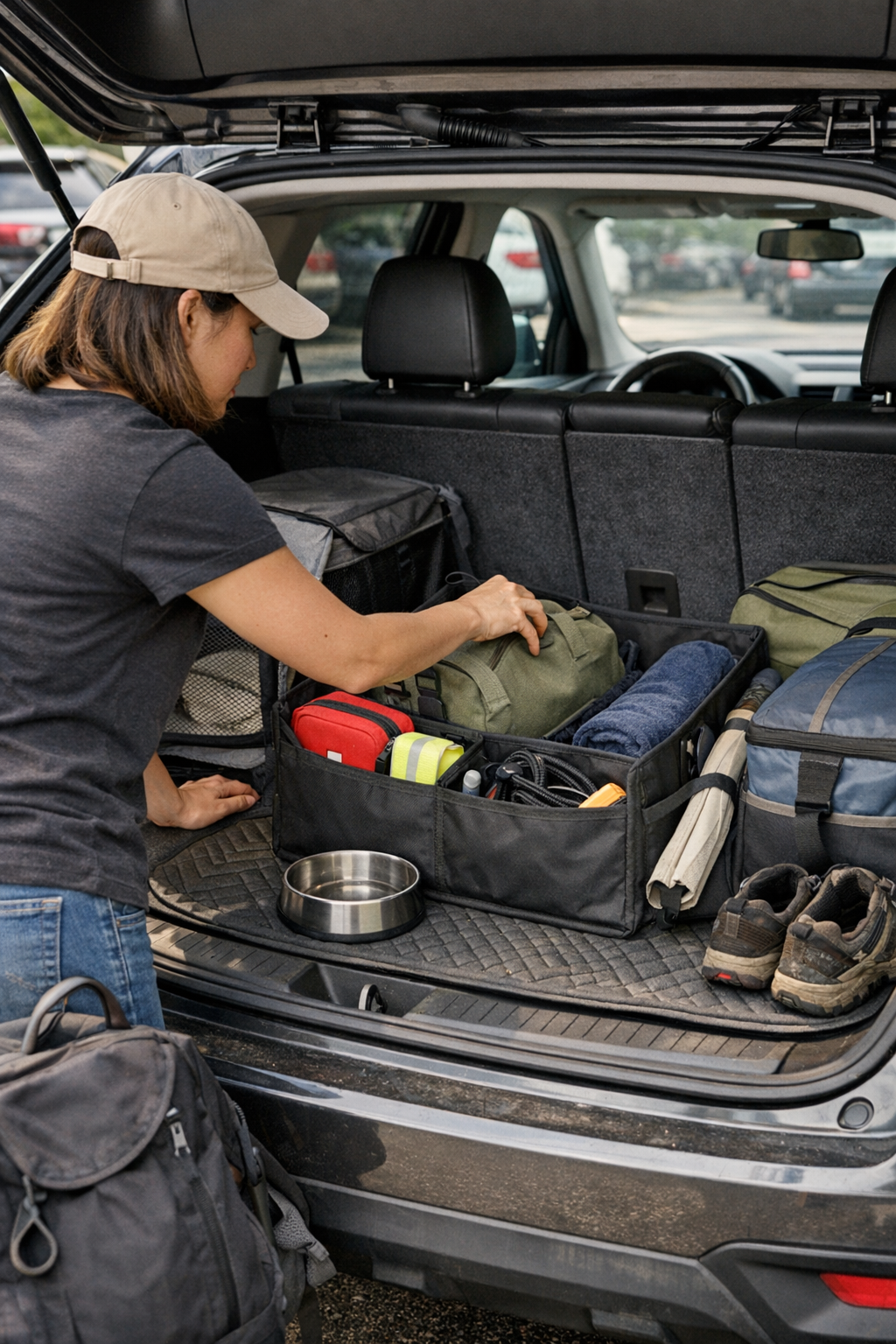
It became clear that the most reliable setups don’t just pack more, they keep the most-used items right at the edge of reach.
Where Quick Access Quietly Matters
It’s subtle, but you feel it when a repacked seat-side bag slows you down on a damp morning. Your routine stutters, and your pet picks up the tension. The cleanup wipes, reliable in theory, are two layers under. That extra second searching means your dog edges closer to the parking lot’s boundary, eyes watching for your cue. Real access only works when you don’t have to lift or reshuffle several times to get what you need.
The change didn’t come from adding pockets, but from placing a single, broad pocket at seat side—one swipe away instead of buried deep. One simple understanding: whatever you can grab with one hand, while the other holds everything steady, determines how smooth the routine feels. The difference was clear. If I could reach a leash or wipe on the first try—no digging—the flow restarted without friction. Both of us, dog and human, fell back into step immediately.
The Quiet Tradeoffs of Repeat Movement
It’s not about looks or clever compartments. Overlapping sections and zipped layers may seem efficient, but they add steps with every stop. The real weight builds in the pauses—the seconds spent searching. The test always comes on a rushed or rainy afternoon: your hand reaches the same spot, hoping essentials are still there. When the bag supports that, it feels like it’s meeting you halfway.
A pattern emerges—each pause becomes less of a break and more of a breath. You stop noticing the setup altogether, which might be the best sign it works. That happened for me between errands and actual travel: one less awkward moment, one more sense we’d done this before, and the routine felt possible again.