When Routine Comfort Quietly Starts to Stall
Even “reliable” dog setups can create friction—hesitation or restlessness—that small placement changes can fix, restoring smooth daily transitions.
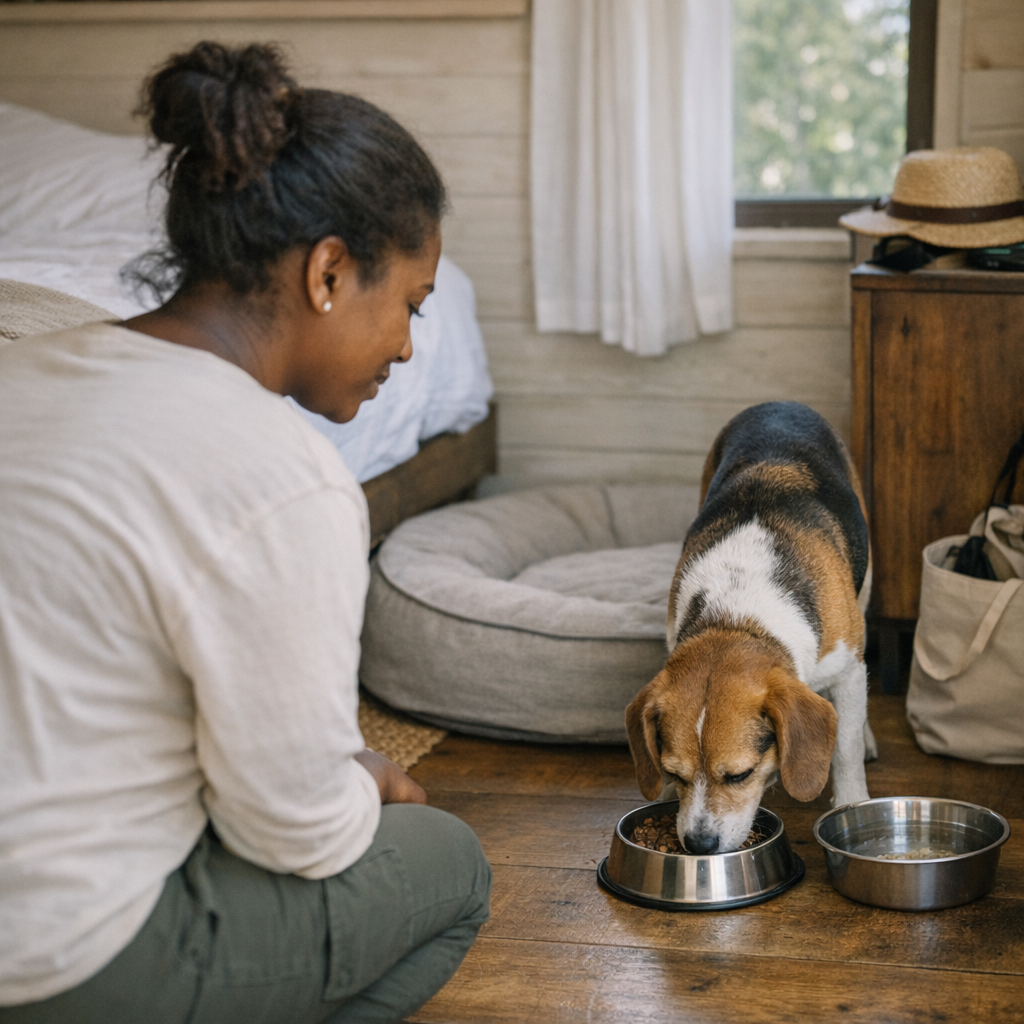
I started to notice it during the small pauses—those beats just after a walk, when keys are dropped into a bowl and the dog circles the same patch of floor for the third morning in a row. At first, everything seemed normal: food in one corner, water nearby, towel tossed just close enough to the door to remain useful. Yet something in our routine was never as smooth as it looked. There was always a moment’s hesitation—my dog would step toward her bowl, shift back, then start again, as if mapping a path through familiar territory that never felt entirely open.
You notice it after a few mornings. Nothing dramatic—just those quiet little roadblocks that keep repeating. I’d mop up another water spill edging under the food mat, or find myself reaching awkwardly past the laundry basket to ruffle her ears after a meal. The space looked settled, but the rhythm kept getting snagged. Comfortable, but somehow incomplete.
It’s the type of mild friction you dismiss at first, chalking it up to early morning grogginess or dog quirks. But it returns, steady and soft, the way a rug creeps a little farther off-center every day.
The Subtle Cost of Tidy Corners
It’s tempting to make pet spaces as neat as possible. Bowls get lined up against the wall, beds get tucked into corners, toys bottled into baskets. It all looks under control—no scattered fluff, no visible mess. But in carving out these precise little zones, I ended up building gentle barriers, almost invisible until the routines dragged.
When the bowl sits tight to the cabinet and the bed nests between a bin and the wall, my dog hesitates. Not refusal, just a slow orbit before settling in. That’s the part that kept returning: a pause with no obvious cause.
It looked fine at first. Visitors would say how tidy her setup was. But inside the routine—the practical rhythms of coming in from the rain, wiping muddy paws on a towel just out of reach, refilling water mid-rush—the “tidy” started to feel like work. A couple of cold mornings running back in, and the trouble showed up in smaller ways than I expected. A bowl slid just out of easy reach. A toy basket blocked the last step toward her bed. A lingering, restless energy after meals that didn’t flow smoothly into rest.
Small Moves, Different Days
There’s no dramatic reveal or secret trick—just a quiet morning spent moving things a few inches at a time. I shifted the bowl out from the baseboard into open space and angled the bed just off the wall, facing the main room. It felt like simple redecorating at first, but something changed immediately. My dog’s approach smoothed out; she moved from door to bowl to bed without backtracking.
It was clear mostly in the absence—the missing interruptions, the quiet that filled the space after dinner instead of spilled water or a slow pace between comfort spots. The routines began to overlap less. Meal, rest, play—all found more natural borders.
That was the part I kept returning to: small changes doing more than any planned setup.
Everyday Patterns, Unstuck
Living with a dog is less about single moments and more about patterns. When a routine sticks, it slows everything else: cleanup becomes reaction instead of intention, rest stalls into vigilance. A setup can look put-together but still stack up small obstacles.
Now, moving through the house is just a little more continuous. Bowl, bed, towel, door—all where they quietly answer what needs to happen next, instead of turning small comforts into slowdowns.
The difference wasn’t in the products or the intentions, just the gentle willingness to keep shifting things until the day felt lighter for both of us.
Sometimes it only takes moving a dog bowl or rotating a bed by a few inches to clear the way forward—spaces that feel lived in, but movable enough to let the routine breathe.