When Rust Creeps In: The Hidden Struggle of Stored Tools
Neglecting moisture removal on stored multitools causes rust that hampers mounting and finish; quick oiling prevents this and ensures consistent performance.
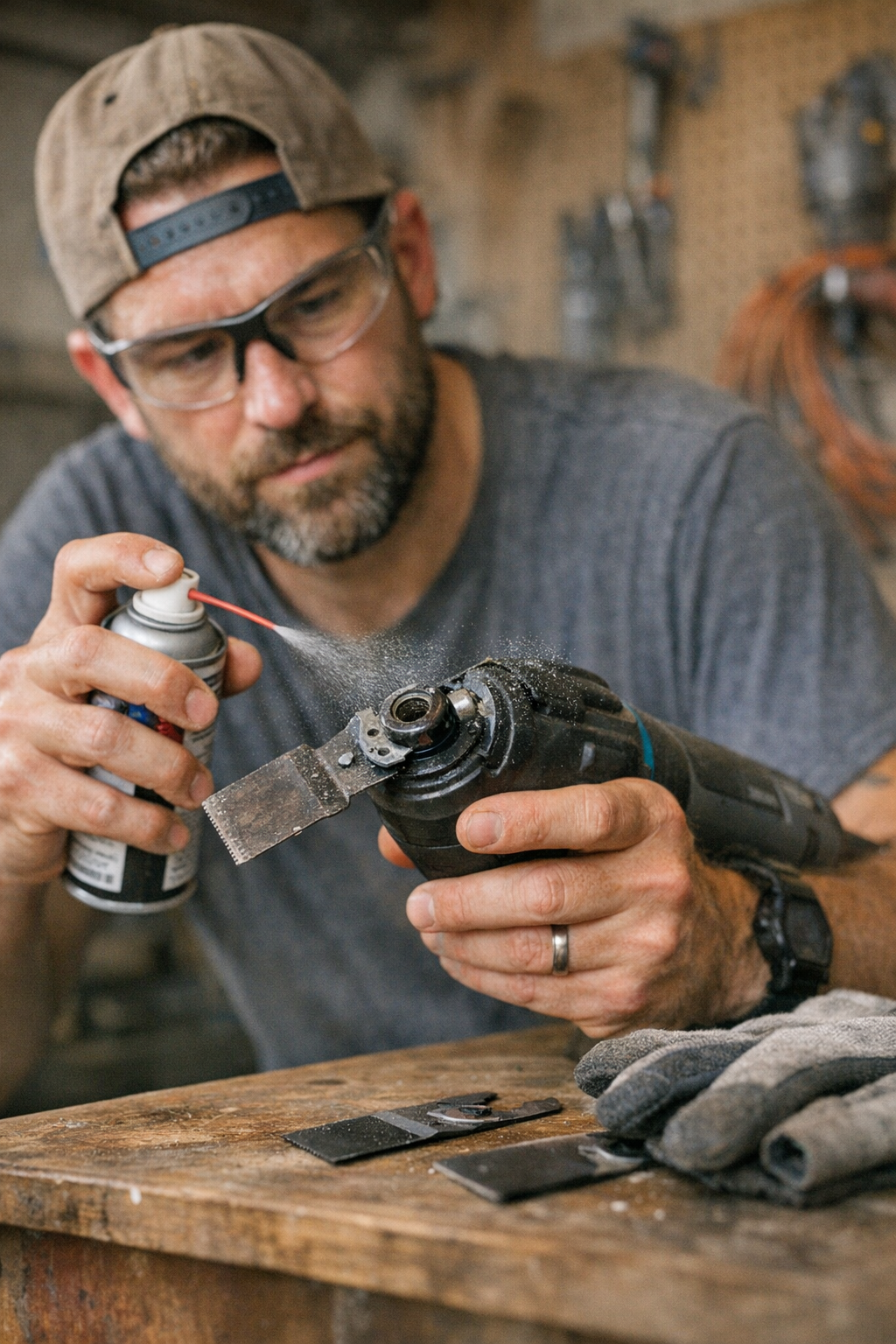
You don’t really think about the state of your power tools—until suddenly, you do. Maybe it’s on a late Saturday, plans unfolding, when your multitool doesn’t slide as smoothly as you remember.
It’s small, at first. The feeling that something’s off.
A little stiffness, a reluctant click.
Maybe you chalk it up to a long week or a dusty garage. But beneath it all is a quieter culprit, one that creeps in between jobs: rust, born from barely-there moisture, waiting for you in the places you thought were safe.
The Subtleties We Miss
Garages seem dry enough. Shelves and drawers promise protection. Most days, there’s a certain comfort in putting your oscillating multitool away—out of sight, worries packed up too.
But even after a brief job or a sweaty grip, tiny droplets and specks of grime linger on metal edges and inside each accessory mount.
You don’t notice it immediately.
But you feel it the next time you reach for the tool. Gliding parts hesitate. Blades that once snapped in now resist, asking for extra force or a careful wiggle. It’s not so obvious in the light, but there it is—an almost invisible drag that makes each cut slightly off, every week just a hair less precise.
The Real Moment of Truth
The difference shows itself when you least expect it. Two tools, both seemingly clean after a week on the shelf—yet only one responds the way you remember. One attachment slides in with a click. The other grates, fighting your hand.
There’s a subtle resistance, a roughness that seeps into your movements. Locking in a blade takes twice as long, the mounting just off enough to compromise each pass. You start adjusting unknowingly—pressing harder, straying from clean lines, sanding away imperfections you never used to make.
It becomes clear: the habits you form after each use, or forget, quietly shape how your work unfolds the next time.
Rethinking Routine Care
What changed things wasn’t an overhaul of process. Just a small pause—a quick mist of mineral oil on moving parts, a gentle wipe before putting the multitool away.
Oddly, this barely noticeable habit cut down mounting force by half on the next go-round. Not meticulous, barely a moment, but enough to keep blades true and attachments smooth.
You start noticing it in craft details: flush trim cuts stay easier to control, sanding pads don’t skip, and every new session begins a little closer to how you meant it to feel.
Sometimes, it only takes that slight refresh—pausing long enough to protect the things that quietly get you through the tough tasks. Not every routine asks for attention. But the ones that do can change everything, even when nobody’s watching.
These thoughts took shape one afternoon, as I wiped down a multitool in the quiet corner of my garage.