When Seat Setup Shapes the Quiet Moments in Flight
A seat setup favoring repeated access over neatness eases in-flight comfort, enabling smooth reach of essentials under movement pressure.
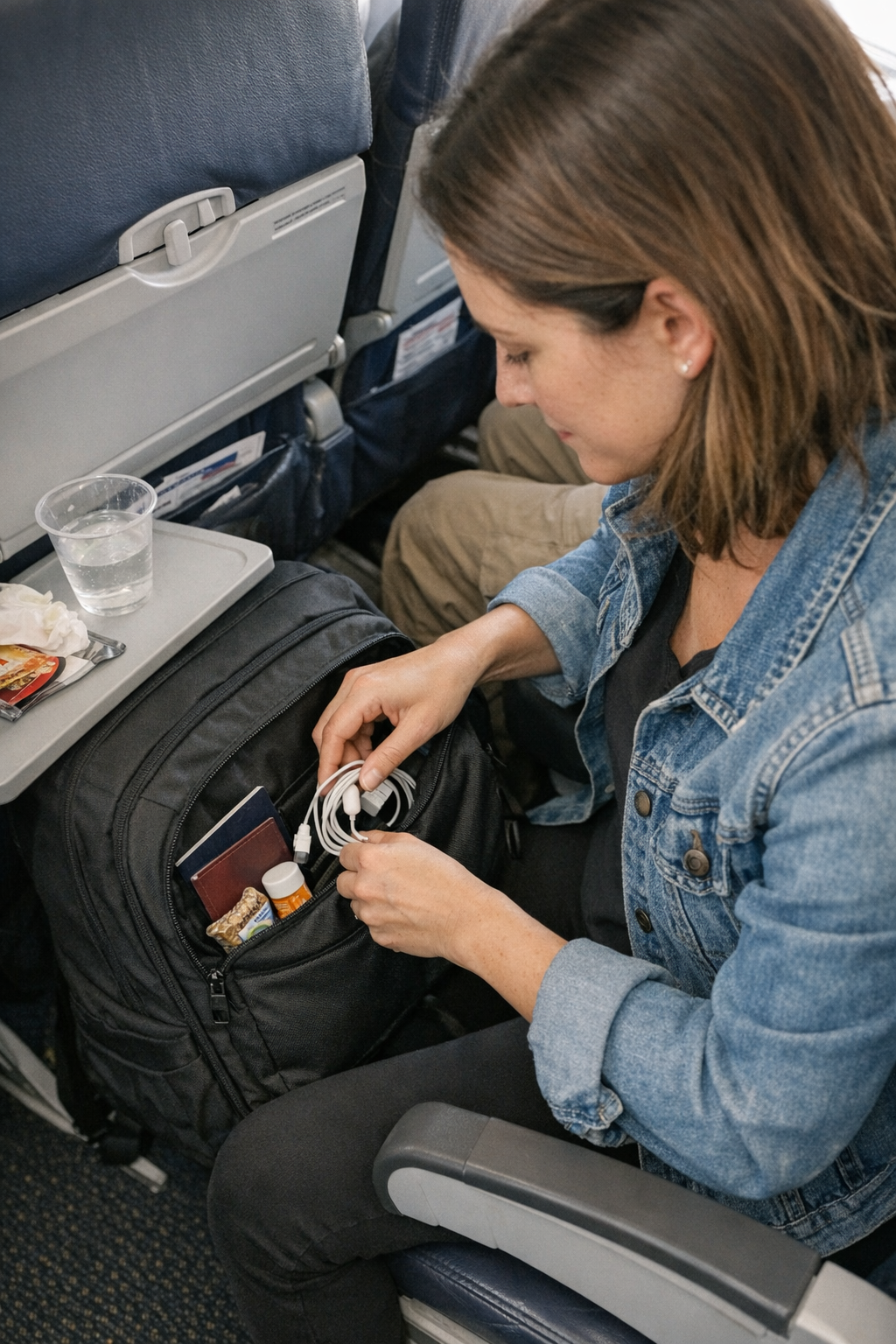
Eventually, you realize it’s not the number of pouches or the neatness of your packing cubes that determines how smoothly a flight goes. It’s the small hitch that happens when you’re trying to slide your carry-on out from under the seat. The moment you find your charger tucked two layers deep in a pouch, or your passport blocked by a bulky sweater. A tidy bag doesn’t guarantee an easy trip. I learned that somewhere between cramped airport seats and the repeated small performance of reaching for a pen.
You start noticing it after a few transitions. The difference between looking organized and actually moving comfortably appears early—after the main aisle closes and you’re hemmed in. Each reach for headphones or a snack feels like solving a puzzle. Stacking pouches across the main compartment looks great before boarding, but the first request for documents or a tray-table shift exposes the flaw: what you need right now is never at the top. Every attempt to retrieve something disturbs two or three other items. That friction kept coming back.
The real struggle starts at seat entry. Even before trays drop, a carry-on with a buried zipper or hard corners presses against armrests and feet, making access difficult. Routines that require balancing your backpack on your knees or blocking the aisle wear thin after a few flights. It looked fine at first, but with movement restricted, neat layering shifts into minor chaos—items slide, pouches tangle, and the so-called system demands two hands instead of one. This difference shows itself every time you have only a second to grab what you need.
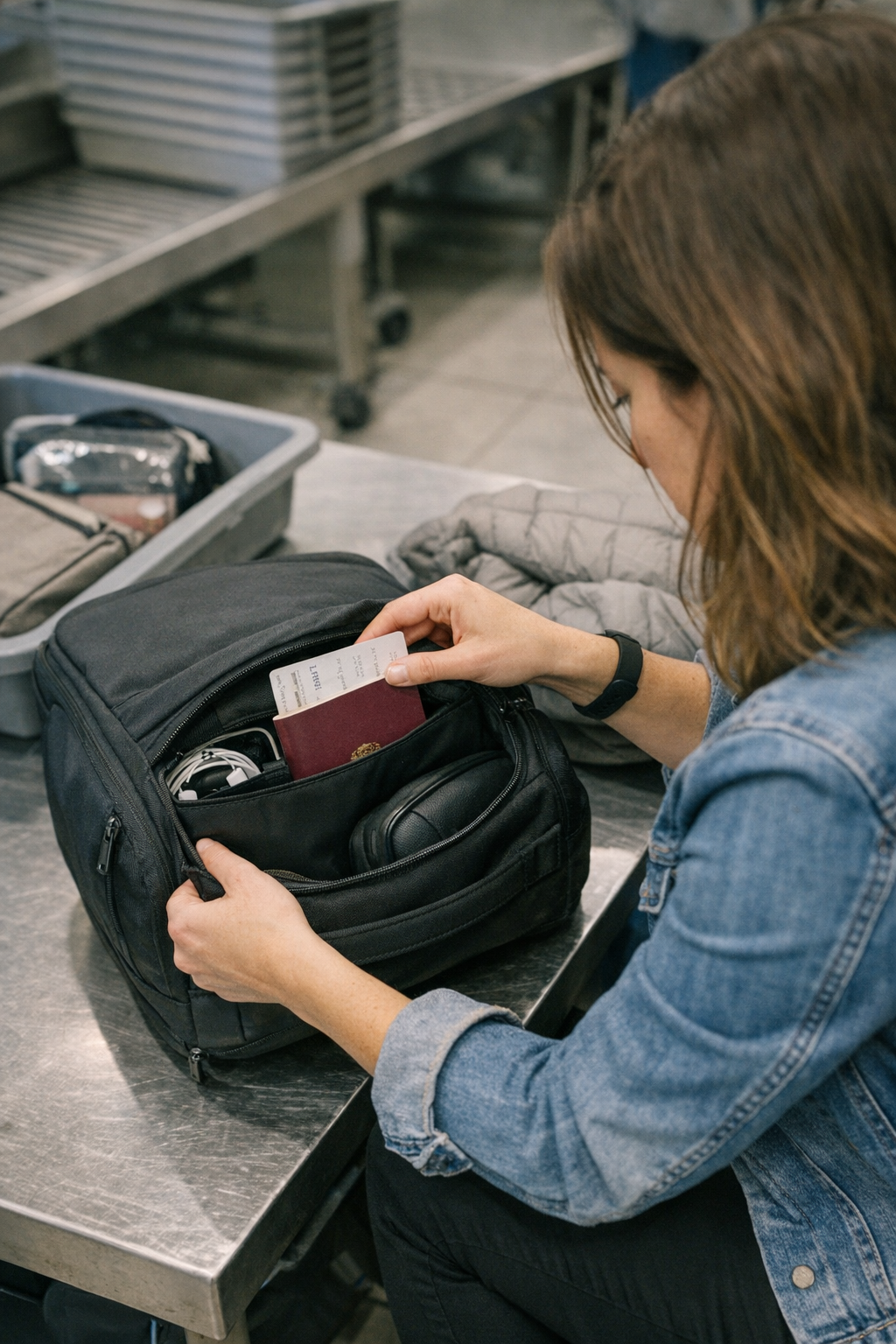
For me, what finally changed the experience wasn’t another set of zippered cubes—it was pulling the most-used items (charger, pen, snack, notebook) into the shallow outer pocket, separated from the main stacked layers. Suddenly, I could reach under the seat with one hand and retrieve essentials through a small zipper without unpacking the entire bag. The routine simplified: fewer interruptions, less shuffling, nothing buried underneath a pile. After landing, there was less anxious searching for forgotten cables or documents because everything vital was immediately accessible, not hidden in layers. It didn’t make the bag look more impressive; it made it quieter, less of a presence—almost easy to forget until movement required it again.
Sometimes the small, repeated gesture—like returning a boarding pass to the same thin document slot—becomes the calmest part of the trip. That quiet satisfaction comes when the bag fades into the background, a tool working silently instead of a series of tasks demanding attention. Being able to move in and out of the seat, retrieve, and repack without drama matters more than almost any other packing logic I’ve tried.
If you want to explore the kinds of setups and tools inspired by this experience, they quietly sit here: http://www.carryonsupply.myshopify.com