When Shadows Disrupt Simple Routines at Home
Lighting that misses key work surfaces undermines confidence; adjusting fixture type and position fixes glare and shadows for steady, fluent tasks.
Some rooms teach you patience, not through noise, but by quiet obstinance. You step in with a basket or brush, at ease, until a trick of light interrupts the flow—your hand awkward at a faucet, fingers searching for soap you know is there. The glare from a mirror catches your eye. A shadow cuts off the edge just where you meant to reach.
These aren’t dramatic disruptions. They gather through repetition, like pebbles inside a shoe. I only started noticing after months of repeating the same hesitant movements, especially in bathroom and laundry corners. It wasn’t the amount of light, but exactly where it resisted—a certain pause in the routine.
Where Brightness Fails, Edges Matter Most
A ceiling light, flush mounted or semi-flush, often feels bright enough at first. But day after day, the boundary between seen and unseen remains stubborn. The faucet’s edge, the stretch behind the soap dish, that sliver beside a laundry bin—these are the spots where shadows settle no matter how strong the bulb.
You don’t notice it immediately, but you feel it. It isn’t about the fixtures themselves. I learned this after swapping hardware, hoping to fix the problem with lumens. Instead, every ceiling fixture—from thick-panel to semi-flush—cast familiar harsh, downward light. My own hands or shoulders interrupted the path, throwing new shadows across counters just when I needed a clear view.
The Routine of In-Between
I found myself shifting position without naming why. Folding towels, emptying detergent, or leaning closer into the mirror, there was always a subtle extra step—a pause, a squint, a slight sidestep to catch a patch of light that should have been obvious.
Sometimes it was as simple as glare on glass, or as persistent as the dark zone under a cabinet’s lip where toothbrushes hide until you feel around for them. Routines slowed down. I adapted, but I began to wonder what it would be like if the hesitation disappeared.
That was the part I kept coming back to: the missed seconds, the small tension. Not quite discomfort, but never quite ease.
When Light Finds the Right Place
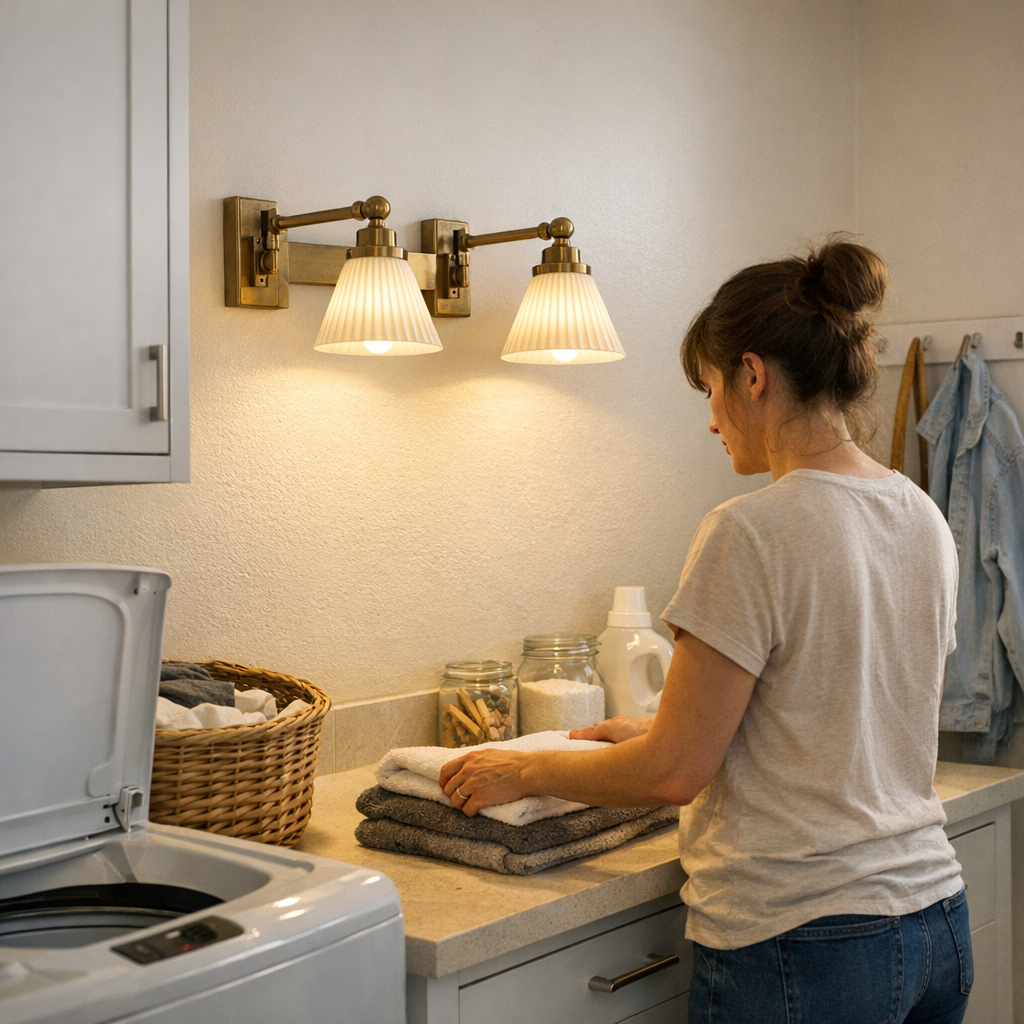
Eventually, I added a damp-rated wall sconce near the mirror—hardwired, just above where my hand moves each morning. The difference arrived quietly. Corners smoothed out. The sideways throw lit every practical edge, from faucet to stray stain at the sink’s rim.
Suddenly, there was less need to angle or search. Soap was right there, no guesswork. A shirt button lost in the laundry pile surfaced on the first look. It felt like the room had learned how to help, not just shine.
You realize this isn’t about brightness alone. It’s about where the light travels and how it slips between hand and surface. Once fixtures match your routines, interruptions—glare, shadow, hesitation—begin to fall away. A subtle change, quietly welcome.
If you ever want to see what I mean, there’s more to see here: http://www.lighthelper.myshopify.com