When Shadows Hide the Mess at Day’s End
Ceiling-only lighting hides shadows that slow cleaning; adding wall or under-cabinet lights improves visibility and speeds daily cleanup.
Some parts of the evening just drag on. That last sweep of the kitchen, the sink wiped down in anticipation of tomorrow, the hallway crossed again for forgotten laundry. There’s a quiet kind of fatigue that comes not from the cleaning itself, but from doubling back—realizing later that crumbs lingered at the edge, or a stray streak survived beneath last night’s glare.
It’s rarely dramatic. But I started noticing a pattern: the difference between a room that looks bright and one that actually makes the task feel finished. Most of it has to do with how, and where, the light falls.
The Illusion of “Enough” Light
At first glance, standard flush mount ceiling fixtures seem to do their job. Rooms register as “lit,” and it’s easy to assume that’s all it takes.
But there’s another reality. As you move from counter to stove, from cabinet to mirror, corners stay just a little dim. Cleanups become a choreography of small frustrations—spots that get missed or need a second look, simply because shadows erase the difference between clear and almost clean.
You don’t notice it immediately. But you feel it.
The Slow Realization in Repetition
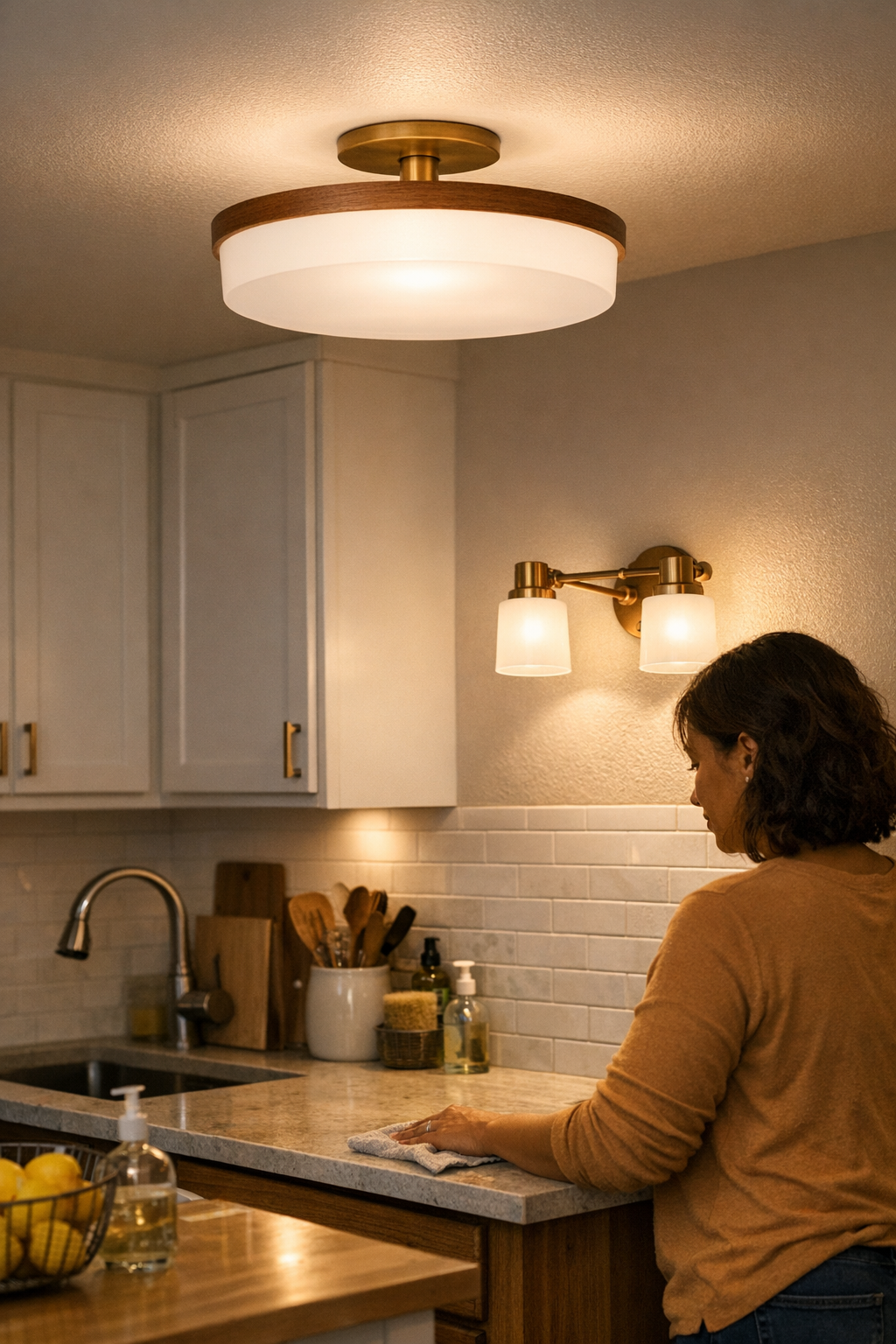
For me, it was the kitchen that revealed the gap. Over weeks, cleaning sessions blurred together: rushing through after dinner, retracing steps along the same stretch of counter. Somehow, always missing crumbs near the backsplash or wondering if a shadow was a spill or just a trick of the light.
The “enough” lighting promised by the ceiling fixture never seemed to reach the edges. It was only after I added a shallow wall sconce near the counter—almost as an afterthought—that the difference appeared. Suddenly it wasn’t just brighter; the shadows under cabinets relaxed, and the whole cleaning routine quieted down. I spent fewer moments squinting or retracing.
That was the part I kept coming back to.
Living with Rooms Built for Movement
This realization didn’t arrive all at once. It came from moving through the same spaces, night after night. The change wasn’t decorative—it was practical, a shift that showed up between tasks rather than in photographs.
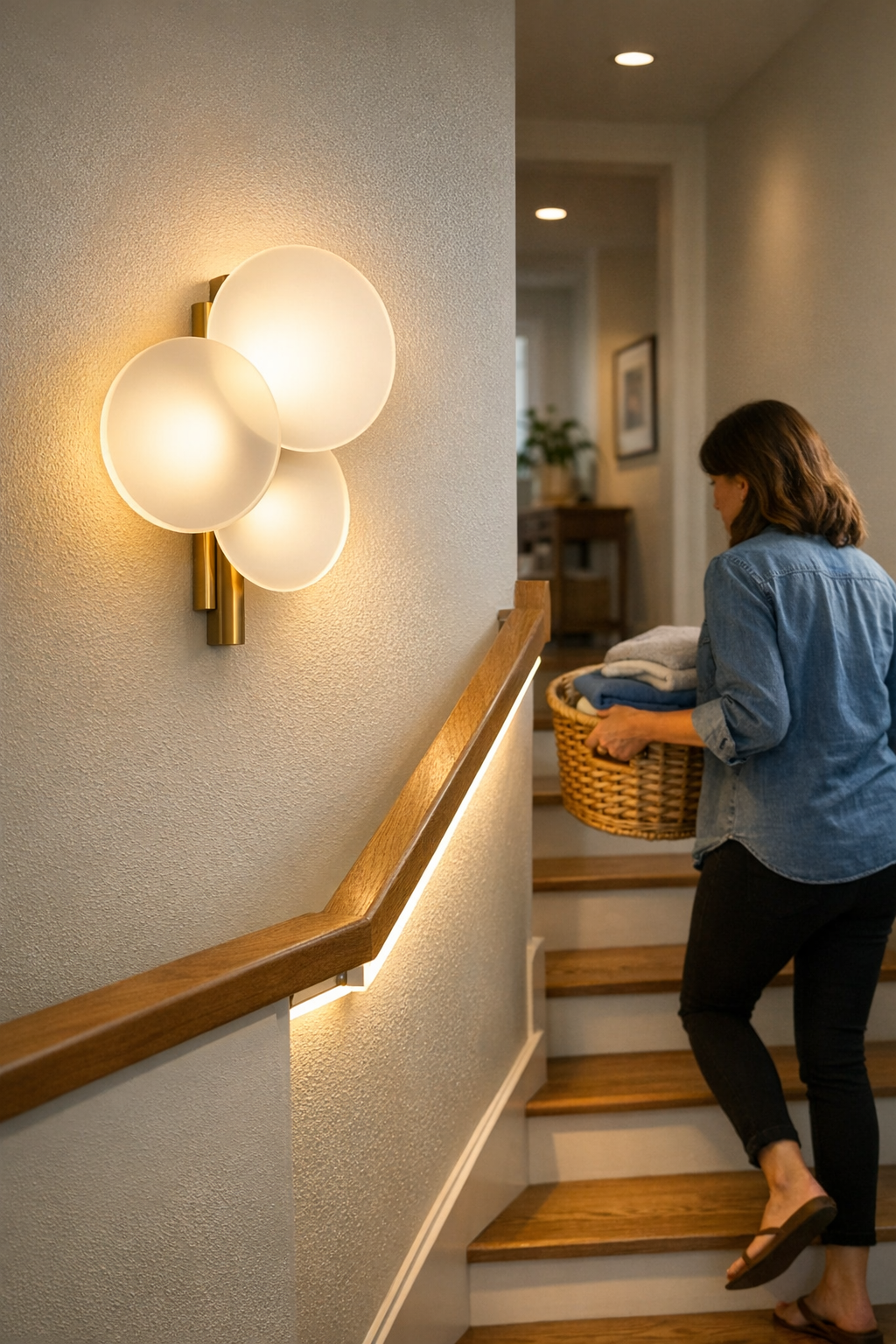
Places that go unnoticed, like the edge of a laundry sink or the step up in a hallway, quietly benefit from targeted task lighting. The right sconce or under-cabinet strip, especially those built for real-world spaces—damp-rated, hardwired, or designed for repeated use—makes time pass more evenly. A room stops feeling tricky. Corners come quietly into focus, and routines find their natural pace.
There’s something steady in knowing the light simply works, neither too harsh nor too soft, supporting the task with as little fuss as possible.
If you’ve ever wanted to see how practical lighting quietly transforms those forgotten edges, LightHelper’s page collects fixtures that make this feel less like theory and more like relief: lighthelper.myshopify.com