When Shared Spaces Demand Quiet Order
Backyard storage systems reveal value when daily use exposes mixed routines; wall-mounted setups keep paths clear and reduce resets.
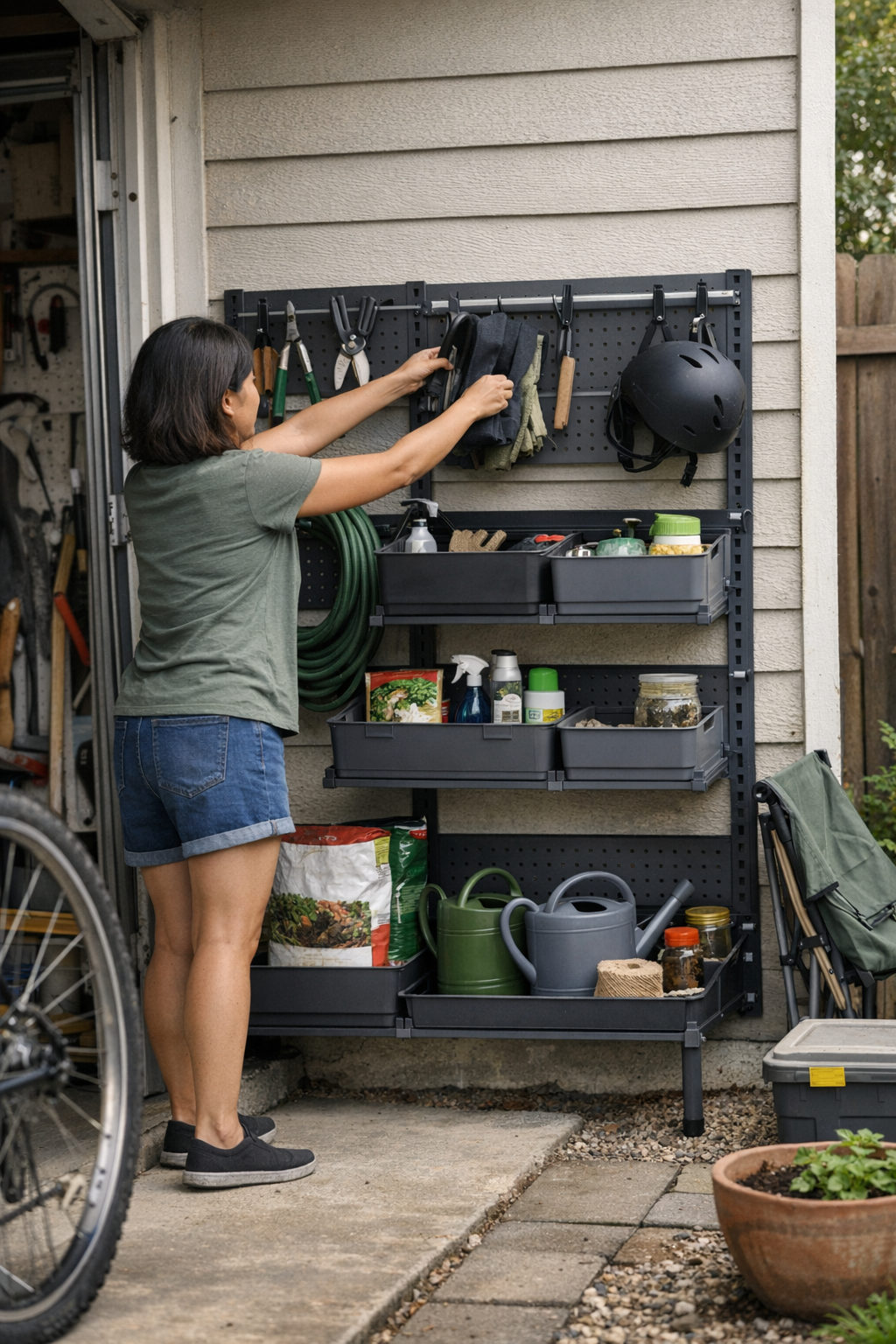
It’s funny how easy order seems at first. You stand back on that first day and survey your freshly organized yard, and for a moment it really does look finished—swept paths, well-hung tools, bins where they should be. For a day, it works. Later, someone hurries through, tucks a chair wherever there’s room, a rake gets swapped for a soccer ball, bins start to bulge at the edges. That surface calm becomes harder to keep. The real test of any backyard storage system is never what it looks like early on, but whether it can quietly handle everyone’s different rhythms after a few weeks of actual use.
Little Things That Break the Flow
It often starts not with chaos, but with small patterns repeating a little off-key. One person resets the tools, another returns things wherever their hand lands. Each time, more items end up out of place. You don’t notice immediately.
Soon it’s slower to move through the space, harder to grab what you need, easier to step around a pile than clear it. The open racks or bins that promised flexibility lose their shape first—overflowing by the end of the week. I remember my own habit was to promise I’d fix it all up later. Later never comes.
The Quiet Difference of Wall Systems
There’s something almost restrictive about a wall-mounted system, at least that’s how I saw it at first—a little too rigid, too carefully designed. But after living with one, its quiet order starts to reveal itself: trays and hooks stay where they’re meant to, things return naturally to their place, and a clear footpath holds even after someone dumps in a stray item.
We all move differently in a shared yard. When the design gently stops clutter from creeping into walkways, it’s one less thing to trip over. You don’t have to think about it much, but you feel it—the flow through the space is simply easier.
Resets That Don’t Feel Like Work
Eventually, everyone falls back into their habits; frequent resets just can’t keep up with real life. One change turned the pattern for us: splitting the system—hooks for hanging what needs hanging, shallow trays a bit above the floor, and always clear paths beneath. It was a small, almost unremarkable adjustment. But it stopped lost gloves gathering underfoot and saved more time than any big spring cleanup.
Order in shared outdoor spaces hangs on tiny design choices that absorb everyone’s quirks, not work against them. Over time, that’s what makes a yard feel kept—without making anyone the frustrated caretaker.
These reflections came together in the course of working on this quiet little project. You will receive a blog body draft.