When Shelves Stop Supporting Everyday Flow
A tidy storage system fails if edge flex or bottlenecks appear; true trust means smooth movement and minimal reshuffling over time.
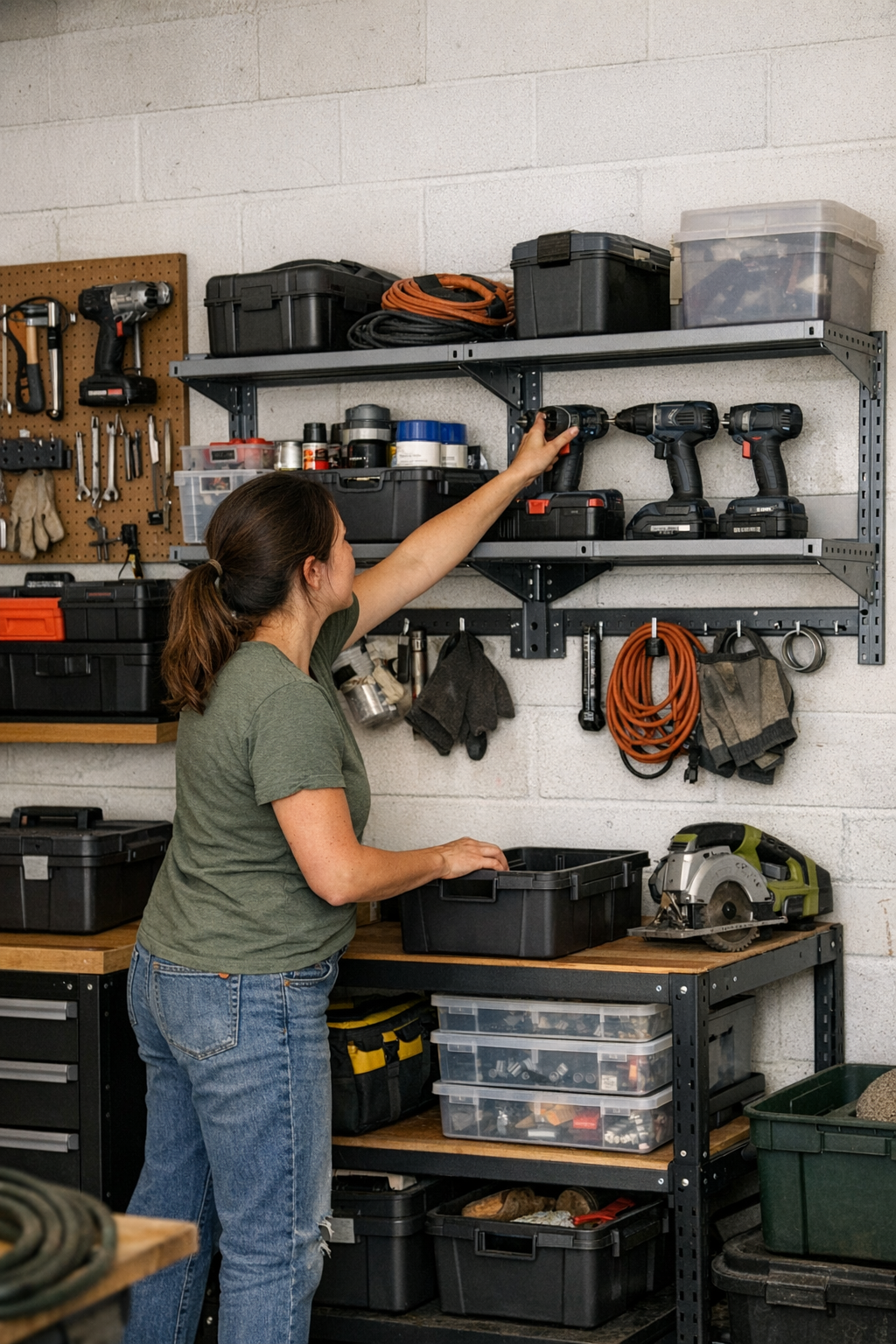
There’s a satisfaction that comes with a freshly installed shelf or a new modular storage system tailored to a small workshop, garage, or backyard setup. Everything lines up, squared away, surfaces cleared and ready for use. At first, it feels like you’re set — as if this order might finally hold through daily routines and heavy use. But the real truth of any storage setup doesn't reveal itself on day one. It shows up quietly, in the slow repetitions of daily use, as you reach, reload, and return the tools and things you rely on.
You don’t always notice the shift immediately. But eventually, you feel it.
The Difference Between Looking Ready and Staying Ready
I’ve seen this in my own workspace. A shelf may look reassuring in the morning, perfectly aligned and tidy, but by afternoon, the story changes. If a modular or wall-mounted system is properly anchored and thoughtfully designed, you move smoothly from one task to the next, each tool returning to its place with minimal thought. Even when the surface gets crowded or the work pace quickens, everything still functions. Over time, a quiet trust builds: the storage supports your flow, instead of hindering it.
The opposite is more common than we think. Maybe a bracket flexes slightly under the weight of a heavy drill or a middle section sags after repeated use. These issues don’t stand out right away, but subtle pauses appear. You start working around trouble spots, shifting bins sideways or avoiding corners that consistently overflow. What once helped now clutters your workflow.
Invisible Bottlenecks and the Real Test
It’s striking how two wall racks can look identical at a glance: measured, tidy, and in place. But the real test isn’t appearance — it’s how well they hold up during repeated use. I learned this during a weekend project, pulling power tools from a wall-mounted rack and stowing extension cords in a busy garage space. For the first hour, the shelf kept up just fine.
Then, quietly, a single row became a trouble spot. The center began to dip, tools shifted toward the middle, and I found myself working around my own storage system instead of with it. Every reach triggered a subtle shuffle. It was so quiet but it broke the work rhythm all the same.
A deeper anchoring point made all the difference. Not a magic fix, but a steady safeguard — a way of saying, “Use this again and again, and it won’t falter.” I added a single bracket at the shelf’s busiest flex point. From then on, there was no pause, no subtle tilt to check for. Movements became automatic, and the shelf receded quietly into the background of my work.
The Quiet Test of Real Use
A storage system reveals its nature slowly. Stability isn’t about perfection or looking organized just for show. It’s about whether the setup holds up without getting in the way — even when the pace is fast and the handling rough.
Try this: fill your shelf as you normally would, then go about your day. Store heavy items in their usual spots, take them down, and put them back repeatedly. Any wobble, flex, or creeping overflow tells its own story. The friction is quiet, but over time, you’ll notice routines slow, workarounds multiply, and clarity fades.
When the support is right, there’s relief. Things move where they need to without extra thought. You spend less time rearranging, less energy compensating. It’s a small shift, but it keeps you aligned with the work and flow you actually want.
I didn’t notice this all at once. I have to remind myself still.
But I can trace these thoughts back to the afternoon I spent quietly reorganizing my wall shelves — a small project that left more peace than clutter. For more ideas on garage and workshop storage, visit this reflection from a recent garage setup.