When Shelves Wobble, Daily Flow Breaks Down
Shelving with extra tiers seems to maximize storage but stability proves more valuable, making movement and access easier and efficient.
When “More Space” Turns Into Less Movement (And Why It Matters More Than People Think)
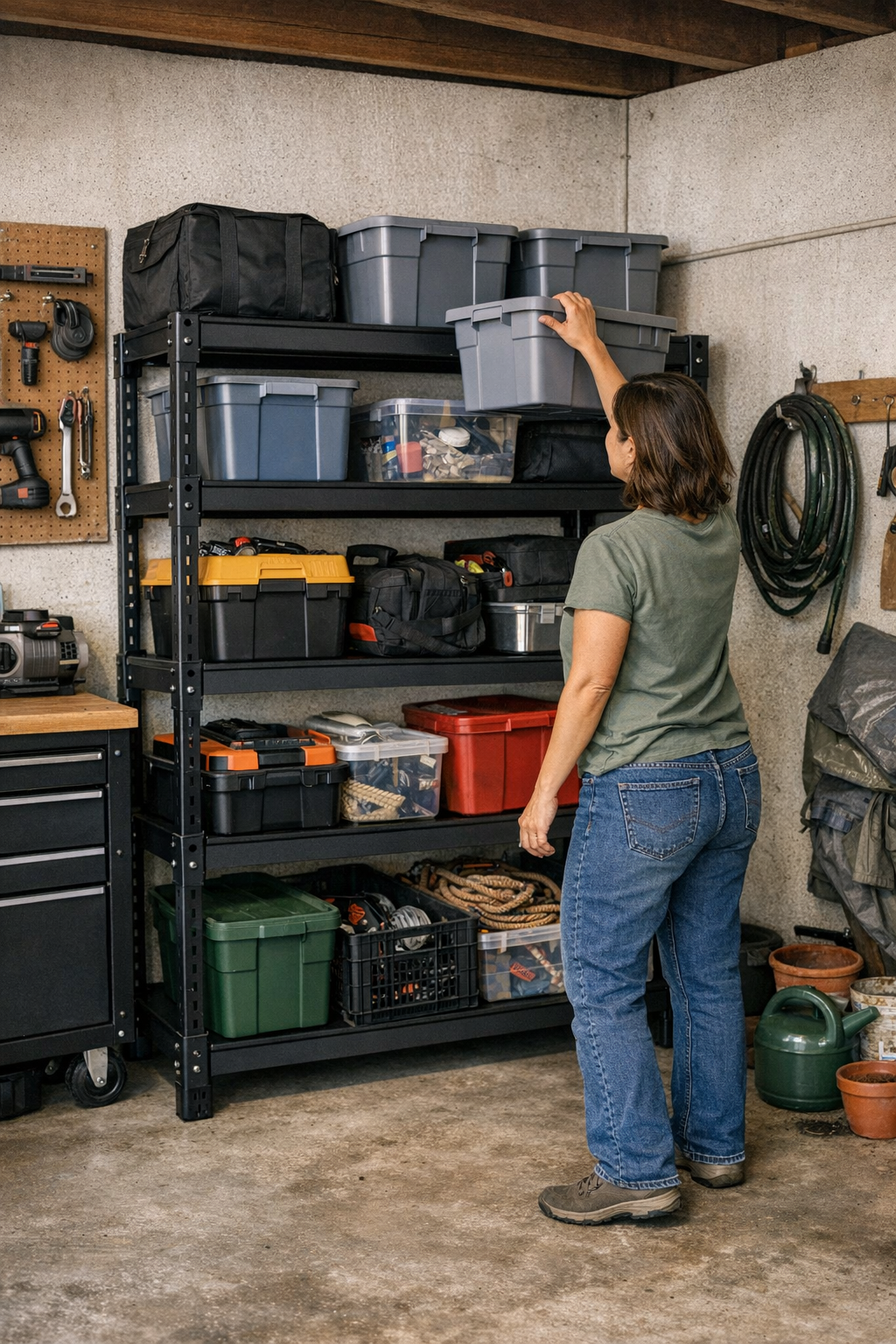
At first, adding more shelves to your garage or workspace feels like a win. Tools and bins lifted off the floor, neatly arranged, almost within arm’s reach. For a moment, it seems like you’ve solved your clutter problem.
But in real use, daily routines reveal what appearances don’t.
When Stability Slips into the Everyday
You don’t notice it right away.
Extra tiers added to a modular shelving unit promise flexibility. Move a bin, tuck a toolbox just one level higher, and suddenly more space opens up—until over time, something subtle shifts. A wobble sneaks in. The frame that once felt sturdy starts to flex a little more.
It’s barely noticeable at first. But you feel it every time you pause to steady a box or navigate around a shelf that now juts out further than before. Movement gets cautious. The proud idea of vertical expansion fades, replaced by a rhythm of tiny detours and silent adjustments.
I noticed this during a rainy weekend, swapping summer gear for winter. The bins up top went mostly untouched—too inconvenient to reach without steadying myself with one hand. Down low, shelves bowed slightly. What started as efficiency had become an obstacle course.
The Hidden Cost of High Expectations
Adding shelves often begins with good intentions—more tiers mean more room, right? But each added level changes how the unit moves when you use it.
After weeks or months, the issues appear. Edges become blocked, space fills back up, and the line between “organized” and “cluttered” blurs. You don’t just grab something; you stop, adjust, and reset your approach.
The tradeoff becomes clear: higher shelves require more care—leaning in, bracing, lifting at awkward angles. These small adjustments slow your flow and remind you that storage isn’t only about capacity. It’s about fitting the pace of your day.
I found quiet relief after removing the top tier and reinforcing the frame instead. The shaky moments disappeared, and I didn’t have to keep shuffling items after each use. It felt like gaining ease—not just gaining space.
The Grounded Shelf and a Clearer Path
It’s tempting to keep going taller, always adding layers.
But after observing the shifts—the steadying hands, the wider footprints, the clogged walkways—I preferred a shelving unit capped lower with reinforced corners. The daily routine felt lighter. There was room to move, not just to store stuff.
Sometimes the best way to simplify is to reduce. A stable shelf invites movement without hesitation. There’s less need to course-correct, less friction in evening or weekend habits.
Stability isn’t flashy, but it rarely disrupts. And when your space is meant for work or calm, less interruption feels like progress.
Looking back, the real satisfaction wasn’t stacking up shelves, but having everything move smoothly around a shelf that held its ground.
These realizations came while reorganizing my own workspace, as shared in a recent small project.