When Simple Lighting Starts to Shift in Everyday Life
Plug-in accessories help renters adapt lighting without wiring, but good cable management is key for lasting neatness and usability.
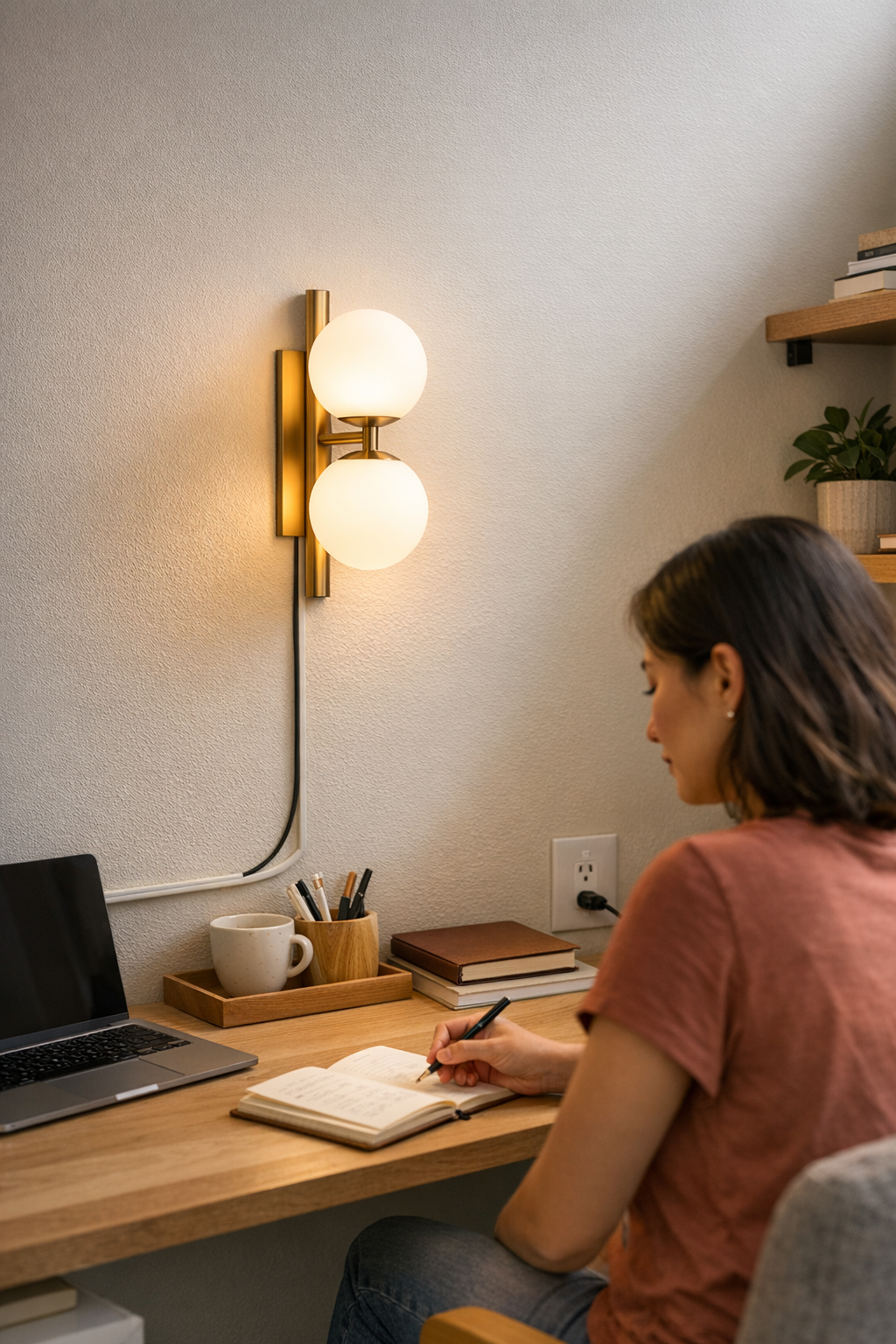
The day my new desk lamp arrived, I thought I’d solved the problem. For renters, plug-in lighting accessories often feel like a quick fix—no drilling, no landlord calls, just a soft circle of light exactly where you need it.
But that sense of simplicity has a way of shifting. What starts out looking tidy—just a cord tucked behind a shelf, a lamp angled just right—gradually reveals its weak points. The routine of sitting down, sliding a chair forward, reaching for a charger, or moving a notebook across the same surface all put pressure on where the setup holds and where it gives. And that’s the part I kept coming back to.
You don’t notice it immediately.
The Quiet Fraying at the Edges
It was the cable, more than anything. At first, I barely registered its zig-zag escape from the socket—just another part of the room’s functioning. But after a week, I found myself frustrated, catching the wire with my foot multiple times a day. The lamp, too, seemed to drift a little every evening, casting glare where I didn’t want it or reflecting off my screen’s edge.
It’s strange how routine makes you notice the smallest things. The lamp never looked messy, but it felt unstable. Every minor adjustment—a device shifted, a chair moved—pulled on the cord or nudged the lamp, as if the initial “flexibility” was giving way to distraction.
That’s when I realized how different a plug-in accessory feels once it’s really lived with, not just installed.
The Subtle Mess of Flexible Lighting
Flexible lighting seems like it will solve all problems initially. And it does, at first. But then outlets get crowded with chargers, and the space for rearranging shrinks. A cable tucked out of sight can’t stay hidden if the room’s layout changes week to week. In a compact workspace, the difference between functional and frustrating hinges on what stays put and what slips free: cable management, a stable bracket, a light that doesn’t wander every time life shifts.
Midway through some afternoons, the whole setup—lamp, cords, brackets—just slips out of sync. A stray glare across a notepad. A cable trailing where it catches under a shoe. The illusion of order dissolves, not all at once, but in fragments.
You feel it. Not right away, but as your focus breaks just enough to notice how much adjustment happens simply to keep one light running right.
Settling What Moves
I started looking for ways to anchor the parts that wanted to move. A slim cable channel with an adhesive strip—nothing flashy, but enough to hold the cord firmly against the wall so it didn’t inch loose with every chair shift. The change was subtle but steady. The lamp’s circle stayed where I aimed it; the wire stayed out of my path.
It’s not about making the setup perfect. Most days, the room still shows small signs of use. But what I return to now—the lighting support that stays put, the cable that doesn’t tug free when routines shift—feels quietly essential. Less about appearances, more about how well it endures the repetitive motions of daily use.
Every so often, I notice the cable tucked into its channel and realize how much smoother my mornings run. There’s less to think about—or step on—when lighting support does its job quietly in the background.
Some setups feel better lived in than they first seem. I found a few other small ways to adjust things; you can explore more here: http://www.lightsupport.myshopify.com