When Small Changes Make Outdoor Storage Feel Manageable
Outdoor storage stays organized only if its structure manages return flow, especially small tools that drift with use. Partial panels reduce clutter.
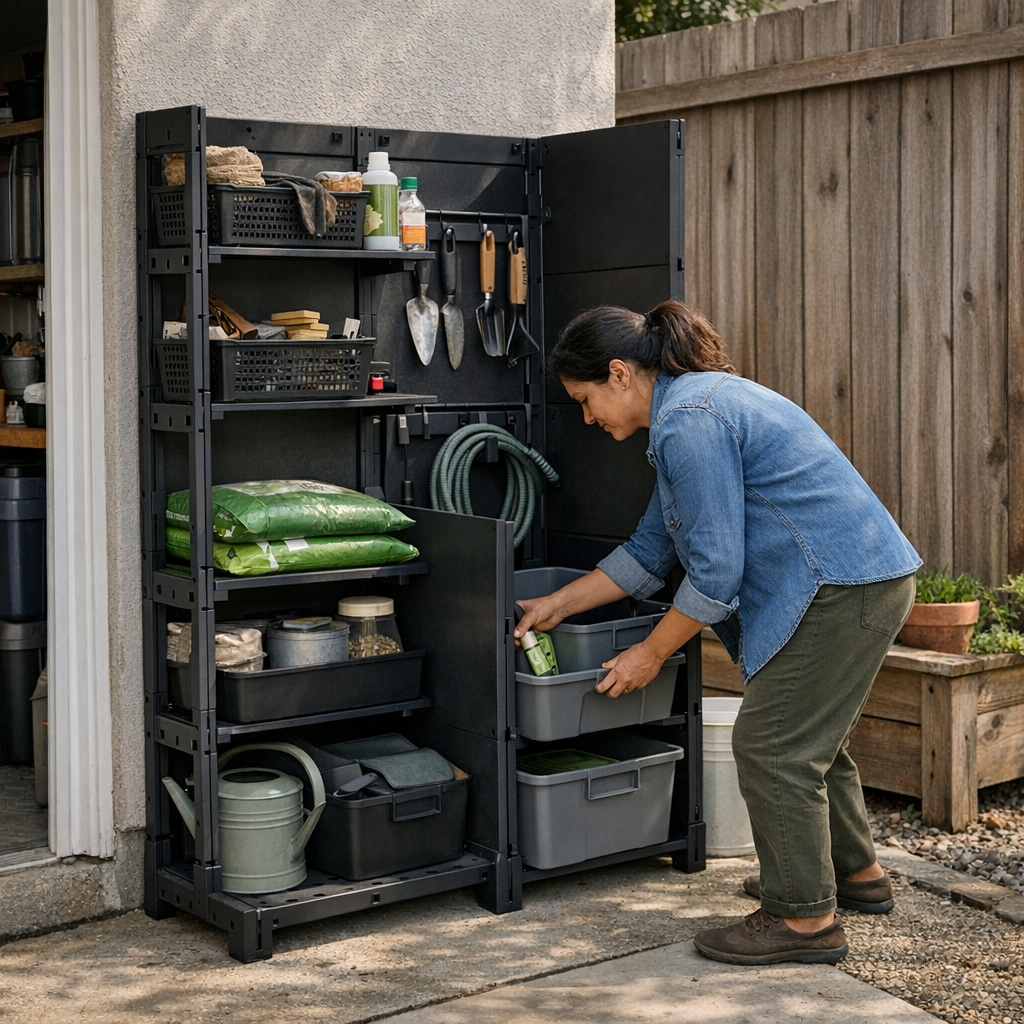
There’s a funny way that mess creeps into outdoor spaces. One moment, the tools are neatly stacked and supplies are in clear bins. Not long after, things start to slide, shift, and vanish—trowels blending into walkways, gloves wedged behind heavier items. At first you don’t notice. Then, one random day, you find yourself wondering how it went off track so fast.
It isn’t really about storage space, I’ve realized. The real test is how easy it is to put things back at the end of a day. When the cycle gets awkward—more hunt, less flow—the clutter starts to win.
The First Few Days Seem Promising
With open racks and visible bins, everything begins hopeful. Tools are at arm’s reach. Odd little items have spots. You think, “This will work this time.” There’s a brief window where retrieval feels so intuitive that you barely register the act.
But these setups are fragile. Once you start actually using the space—digging, planting, sweeping—small supplies scatter. Seed packets migrate, gloves go missing. The order isn’t gone after one rush, but it’s fading in the background. You don’t notice it immediately.
The Drift Is Subtle, But Relentless
What I kept coming back to was the way friction enters the daily flow—not as a big problem, just a low-grade irritation. Open storage makes it fast to grab what you need. But returning things neatly, again and again, starts to feel oddly difficult. Items slip to the sides, pile in unused corners, and slowly claim pathways.
Fully closed bins, meanwhile, promise containment. They hide the clutter, true, but they also hide the things you mean to use. Eventually, the stuff you need most ends up either lost in a box or in a tangled pile somewhere else. Closed bins slow you down; open racks speed you up at first but collapse with repeated use.
There was a day I realized I was skipping an entire shelf because items would just slide off or mix up after each round. The more I rushed, the worse it got. That was the part I kept coming back to.
Small Boundaries Change Everything
I tried adding a single vertical panel—just one board on a lower shelf. Suddenly, things stopped spilling out. The hand tools and packets gathered where they could be seen, but they weren’t lost under bags or boots anymore. The simple boundary kept everything grouped together just long enough to pause, regroup, and reset the whole area at the day’s end.
It felt oddly relieving, how a small structural nudge shifted the whole maintenance rhythm. The effort to put things away faded. Instead of hunting for that last trowel under a mess in the dark, I found myself finishing up and moving on, the space still available for whatever came next.
I’ve come to think outdoor storage lives or dies not by how much you can fit, but by whether things are steered gently, but reliably, back to their spots in all the normal moments no one writes about. The right barrier or boundary, even a modest one, can transform the whole cycle.
These reflections took clearer shape while looking for better outdoor answers here: http://www.tidyyard.myshopify.com