When Small Shifts Disrupt Everyday Workshop Flow
Stability reveals itself over time; fixing subtle wobble with stronger anchoring or wheels reduces hesitation and keeps space efficient.
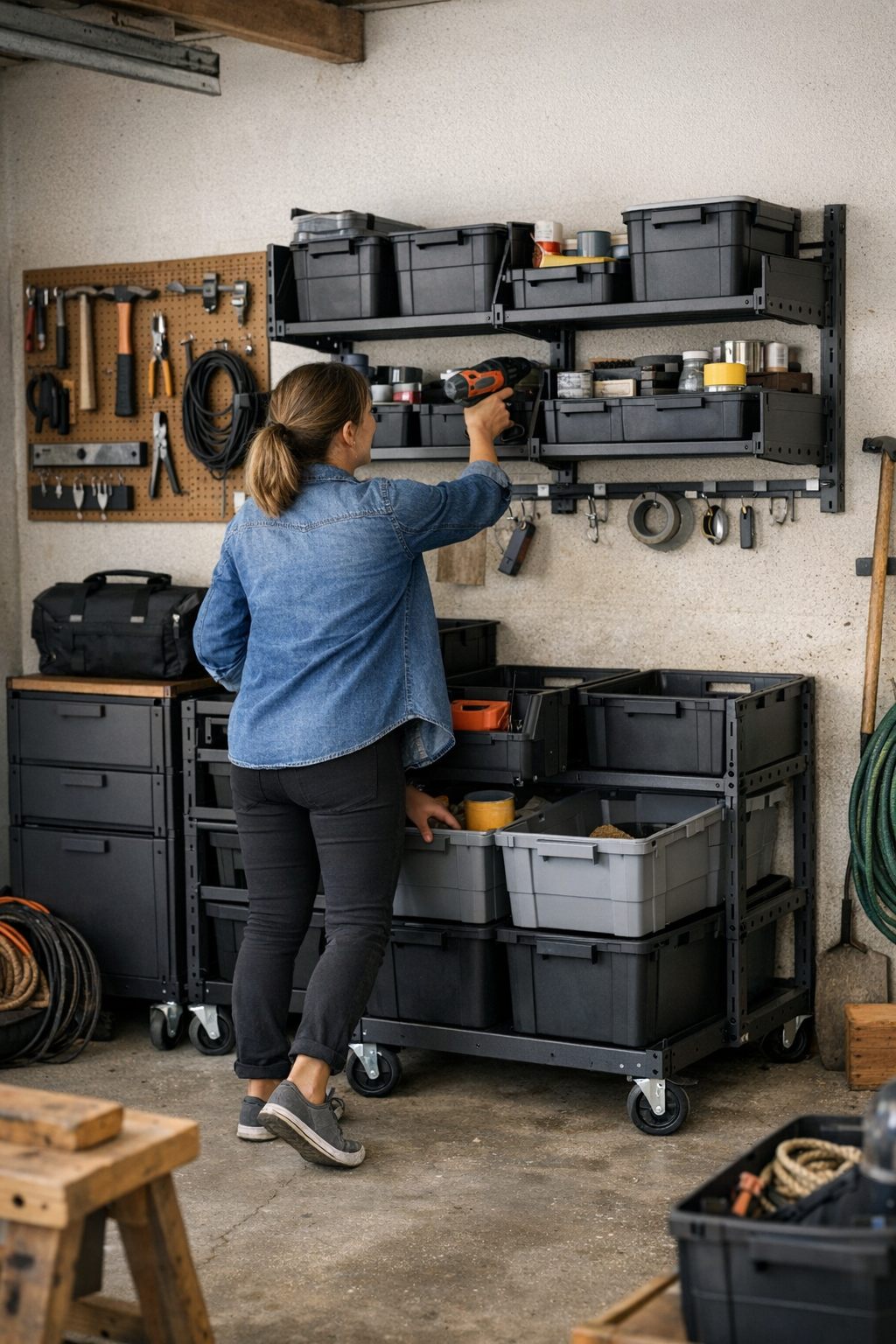
Sometimes, a small distraction hints at a deeper problem. A bin that doesn’t roll quite straight. A shelf with a gentle sway. You might not even notice it at first, but you feel it.
It’s the difference between a workspace that stays organized and one that quietly slips back into chaos. I’ve spent hours setting up modular rails, cabinets, and rolling carts—admiring how aligned it all looks—right up until something minor goes off. That’s when you realize order doesn’t always mean stability. Hidden flaws show up only with daily use, changing the energy of your routine.
When the Lines Aren’t Straight Enough
Most workshop or garage setups begin with optimism. Everything in its place: wall-mounted bins above, rolling carts below. Photos capture their initial perfection.
But reality settles in slowly. One day, you return a tool and notice a shelf flex where it meets the wall. A week later, a bin sticks as you roll it across the floor—never quite tracking back to where it started.
You don’t notice it immediately.
But over time, routines start to shift. You stash heavier items where they’ll wobble less, avoid overloading one side of a shelf, let some corners fill with tools you barely touch. Each little adjustment is barely perceptible yet steadily changes how you use your space.
The Hidden Cost of Everyday Movement
I once watched as a friend reorganized her garage with modular storage and rolling carts. The shelves gleamed, everything moved smoothly. Yet just days later, she found herself bracing a hand on a shaky cabinet as she reached overhead—instinctive, unplanned.
This kind of friction rarely shows in photos.
Over time, these small hesitations—dodging a tippy rack, steering a bin away from a sloped floor edge—alter the flow of work. A shelf flexing under weight, wheels snagging on uneven ground. The disruption might feel mild but is real: tasks take longer, items end up out of reach, and the sense of control slips away.
It seems minor. Until it isn’t.
Small Fixes, Lasting Calm
A while ago, I anchored my busiest shelf—two screws driven deep into masonry—and swapped narrow casters for wider wheels under the main bin cart.
The difference was immediate. The shelf stayed solid, even when fully loaded. The bins rolled smoothly, never drifting off line or stacking awkwardly.
Tension lifted. There was less need to brace, pause, or correct. Resetting the space felt easier—a routine, almost meditative. The setup began to hold its shape consistently between uses, not just right after organizing.
Sometimes, the quiet efficiency of a workspace depends on little things: an anchor that truly holds, a base that rolls evenly. It’s less about how straight the lines look at first and more about how steady everything remains as real life moves through.
These thoughts came together while working late in a spare corner of my garage.