When Small Signals Shape Quiet Moments at Home
Consistent daily structure matching owner actions to dog signals reduces friction, making routines smoother and less reactive with precise timing and placement.
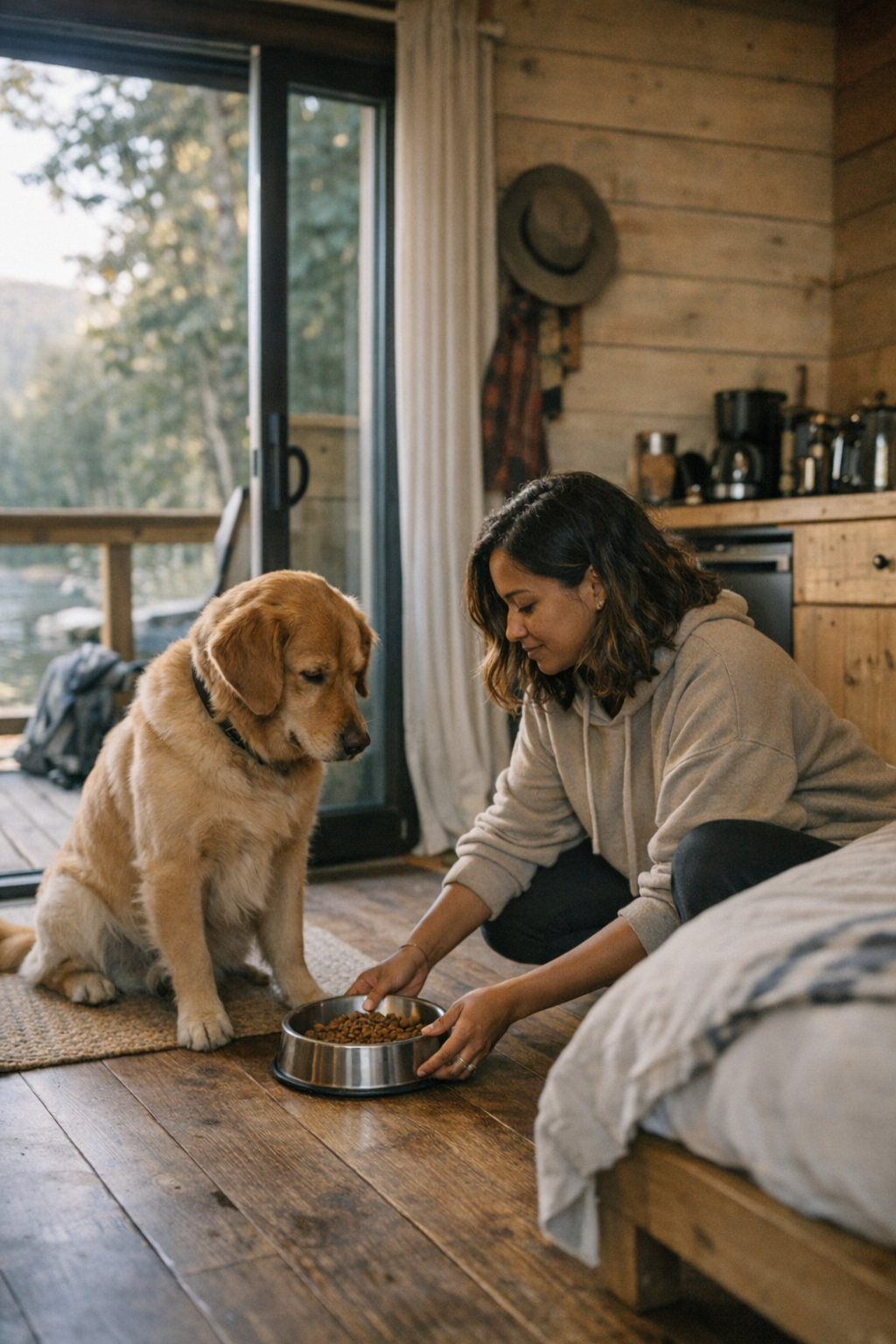
It took longer than I expected to realize the routine wasn’t working. From the outside, everything looked reasonable—food in the bowl, leash by the door, a bed set up in the same spot. But something small always felt off. The day would snag on itself during familiar moments: a dog waiting by the doorway, staring as I fumbled to grab the leash, or weaving around toys that I had nudged aside but never fully cleared. These little interruptions crept into our day until they almost felt normal.
You notice it after a few mornings. The bowl is never quite where you expect it; the towel lies further from the back door than you remembered. My dog would hover patiently, then pace, as if checking whether I’d get it right this time.
That’s the thing about dog routines—they’re more lived through than perfectly planned. On most days, you think you’ve set things up to be smooth. But the difference between “set up” and “easy to use” keeps revealing itself in small ways.
A Pattern That Repeats
Looking back, there was usually some barrier—literal or not—between intention and action. The rest corner was tidy, but in practice, the bed would drift or get partly blocked by a grocery bag. Feeding felt awkward more often than not; the bowl stood straight but wasn’t quite where she wanted to settle.
You find yourself repeating the same motions. Pausing to clear toys out of the walkway. Repositioning the crate after a restless night. Discovering a damp spot on the towel because it was set down too late, again. The idea of order sits on top of real use, and what starts as minor inconvenience becomes recurring friction.
Sometimes I’d watch her circle—never in a hurry, always expectant—by the food spot. No drama, just a low-key insistence that this step wasn’t quite right. That was the part that kept coming back. It looked fine, but the routine didn’t click until the gap was fixed.
Small Adjustments, Real Changes
It wasn’t about doing more. It was about doing less, but smarter. For us, the biggest shift happened when I stopped scattering objects for “convenience” and instead matched locations to how we actually used them. The bowl now stays in one spot, no longer shuffled across the floor. Towels got their own reachable hook near the door, not draped over a chair. Toys that used to spill into walkways are rotated out more, even if the basket rarely stays full.
The difference appeared in smaller ways than I expected. Mornings felt less scrambled. She rested sooner after eating. Waiting by the door became quieter; less tiptoeing, more standing ready. No need for elaborate systems—just the same spot, the same motion, every time.
What felt like extra work at first turned into less work day by day. Routines don’t overwhelm you with extra steps when you stop interrupting them with small obstacles.
Returning to the Beginning
It’s easy to think these moments are trivial. But living with a dog—the real daily kind, not a staged lifestyle version—is quietly shaped by how smoothly all these background tasks blend together.
The surprising part is how quickly a pattern becomes background noise, even as it keeps slowing things down. Misplaced leashes, towels just out of reach, bowls slightly off the usual path—all add up to friction that’s hard to see until you finally do something about it.
On nights I’d shift her bed back into its corner or pause to clear a path after a walk, the space would reset. Not in a performative “everything in its place” way—just enough for the routine to feel like it belonged to both of us.
You learn to see routine structure not as a system to “fix,” but as something that either welcomes you back into the day or sets you up to trip over what you missed. That quiet realization sticks with you.
For those small daily returns that make up dog life, there’s always room to notice what keeps interrupting your rhythm—and sometimes, just moving the bowl really does make all the difference.