When Space-Saving Doors Become Daily Frustrations
Bi-fold doors reduce blockage but risk jams and misalignment daily. Open storage avoids friction, ensuring smoother access in busy entryways.
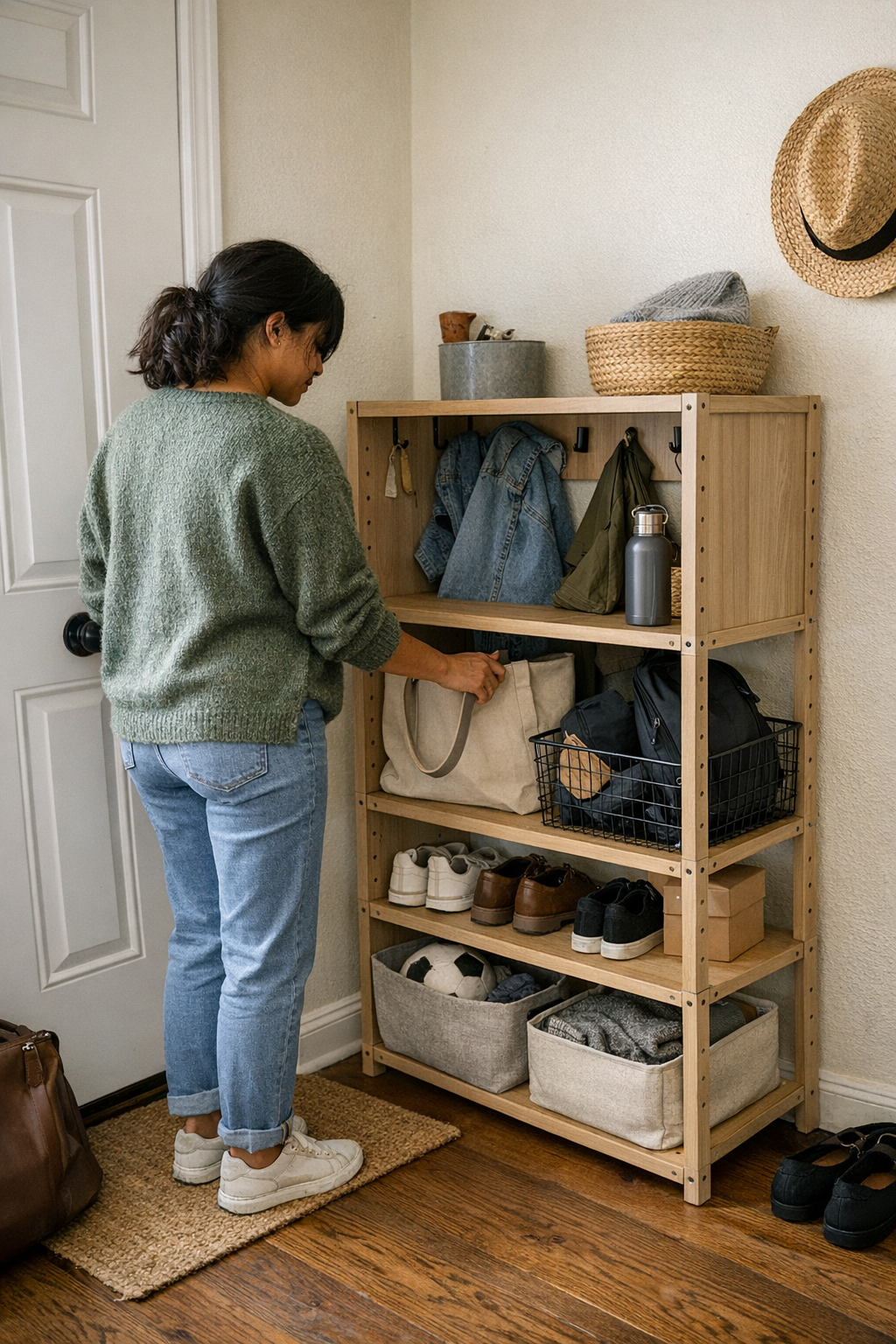
It’s surprising how long you can ignore a small friction in the daily rhythm of coming home. For a while, I kept making peace with a bi-fold storage unit planted right by the main door—hoping its tight footprint would justify every hiccup. But the reality of any transition space is that even simple solutions can create their own small burdens. With each arrival and departure, what slows you down starts to stand out, even if you try not to notice.
Smaller Spaces, More Moving Parts
The pitch always sounds logical: bi-fold doors open wide with less swing and keep walkways clear—perfect for when shoes multiply or coats get dropped in a hurry. The idea held true at first. But over time, a different feeling crept in—the way the panels didn’t quite fold smoothly, or how the track groaned under the weight of a boot nudged too far forward. It doesn’t strike you immediately.
But you feel it.
There’s a subtle pressure at the threshold, where entry benches and piles of bags already test your patience. You try to keep order. Fumbling with creaky doors just adds a new step to the repeated shuffle.
How Storage Looks vs. How It Works
From across the room, it’s comforting to see everything neatly tucked behind closed panels. But that only works if access stays easy. Any hesitation—one panel sticking, tracks resisting—ends up scattering the control you aimed for. I saw it happen: half-folded doors blocked the only clear spot for boots and grocery totes, and soon the bench edge filled with "temporary" piles waiting for a better moment.
In these compact areas, appearance and function are in constant tension. The controlled look can’t quite hold against the unpredictability of repeated, hurried use. That constant tug was the part I kept coming back to.
Finding Space That Flows
What felt like lowering the bar—removing those folding doors altogether—allowed the area to breathe. It was a quiet change. Shoes could slide into their slots, bags dropped and retrieved in one smooth motion. Yes, the gear remained visible, but nothing blocked the passage. Resetting the space after a busy morning started to happen without thought.
Living with a transition space means tolerating some drift—a little mess along the way. What matters most is how easily you can clear it, again and again, without small stuck points building up. It made me realize that in these spots between indoors and out, design that survives daily repetition is the design you’re actually grateful for.
If you want to see how others have solved similar threshold puzzles, there are more quiet solutions collected here: http://www.betweenry.myshopify.com