When Stair Lights Stop Playing Tricks on Your Eyes
Most stairway lighting fails due to contrast jumps and uneven visibility; better setups ensure continuous edge clarity and smart cable concealment.
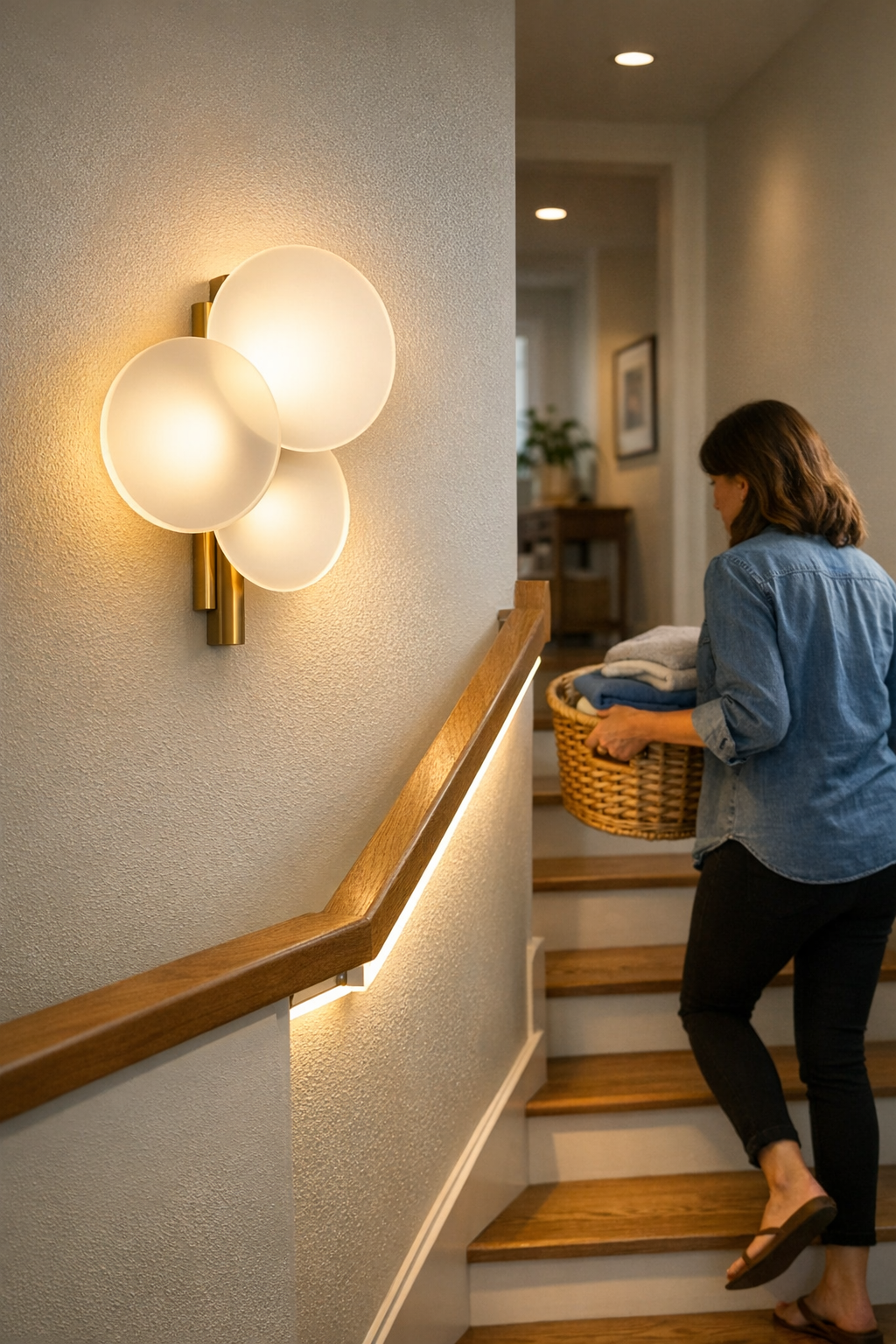
There’s a certain hesitation you feel when standing at the top of a stairwell late at night. The hallway is silent, your hands full, and for a moment—just before the first step—a band of light makes you pause. The issue isn’t how bright the bulb is, or whether another lamp would help. It’s something smaller, quieter: the sudden sharpness where one step sits in shadow and the next glows in glare. That was the part I kept coming back to.
Stairways—the kind you cross every day—reveal these contrast shifts slowly. At first glance, the lighting seems fine, tidy even. Still, the difference between clean ceiling or wall lighting and a comfortable trip down those stairs shows up in your daily routines. Especially when you’re carrying bags or moving late at night, tired, and your body’s less alert.
Where Clean Lines and Actual Comfort Split
It’s tempting to focus on what looks uncluttered: a pair of ceiling lamps, maybe a sconce or two, cables tucked neatly behind casings. On paper, the light is there. But overhead fixtures often throw long shadows across risers, blurring the edge of each step. Rail-mounted LED strips can leave thin, dark bands when hands, feet, or bags pass through their glow.
You don’t notice it immediately. It’s not a dramatic hazard—just a subtle mental extra step, recalibrating each move. The eye adapts, but the body hesitates. That’s when an awkward bracket or a tidy cable, even if well-installed, starts catching your attention. Sometimes before your foot lands, your mind checks for unevenness or the shadow a basket might throw.
The Way Repetition Reveals What Plans Don’t
This tension grew clearer with time. A single bright lamp might wash half the staircase but leave the rest in doubt. I’d see family members pause at the same stretch, slowing awkwardly or double-checking the floor. Every small convenience—like sliding a hand along the rail—was interrupted by a flash of glare or the brush of a zip-tied cable.
None of it was deliberate, but it accumulated through every hurried trip—especially at times when no one’s thinking about lighting at all. You grow used to adjusting: shuffle a bag, shift a load, look down more than you meant to. The solution didn’t arrive suddenly; it took time to realize how much this strain blended into everyday movement.
When the Edges Finally Settle
Eventually I replaced the two wall fixtures with a slim LED strip tucked low and clipped just beneath the handrail. Sliding it two inches lower made all the difference. No more odd bands or vanishing final steps at night, even with a basket in hand. The cables disappeared behind brackets, slipping out of mind except when you actually look for them.
You barely notice when the little stutters in your walk stop happening. But you feel it. The freedom to move without glancing down, unbothered by raking shadows or rogue glare—that’s the change that sticks. One key takeaway: cable placement matters when baskets, bags, and hands pass through constantly. Anchoring lines along seams that the body rarely brushes keeps everything out of step and mind.
These improvements aren’t perfect, just quietly easier. The difference accumulates gradually, every climb and descent smoothing out until the lighting stops drawing attention to itself. Sometimes all it takes is a subtle adjustment, and the space lets you move without thinking.
If you’re curious about where these gradual adjustments led me, you can find the details here: http://www.lightsupport.myshopify.com.