When Storage Boundaries Shape Our Daily Routines
Visible storage limits make it clear when to edit, keeping resets quick and preventing clutter from spreading or categories merging.
There’s a particular feeling that sneaks up on you in your own home. You slide a coat into the hall closet or reach for a hat in a bin, and suddenly things don’t fit as they used to. You push, adjust, and promise yourself you’ll tackle it later. For now, you just hope nothing spills onto the floor.
It isn’t obvious at first how quiet excess can be. Your storage system—closets, shelves, baskets—was meant to help. Yet if it’s too easy to squeeze in “just one more,” you stop seeing what’s really happening. Clutter has a way of collecting quietly, until it doesn’t.
The Slow Leak of Overflow
The trouble starts small. Maybe you toss an extra scarf into a bin or slide a pair of shoes behind a door. You don’t notice it immediately.
But you feel it.
On the surface, your closet looks put together. Opaque bins sit in orderly rows; the chaos seems hidden. Still, over time, small pauses creep into your routine. Retrieving a pair of gloves means rummaging under hats, finding a tangle instead of a category. The overflow leaks out—not with a crash, but with an extra minute here, a sigh there—until clearing the clutter takes longer every time.
The Hidden Cost of Out-of-Sight Storage
There’s something comforting about covered bins and tucked-away shelves. Out of sight, out of mind. But I’ve noticed that the most organized-looking spaces can hide the messiest realities. In my own home, a family closet with matching opaque bins seemed like a smart solution—until winter layered a dozen hats, gloves, and scarves over the edges.
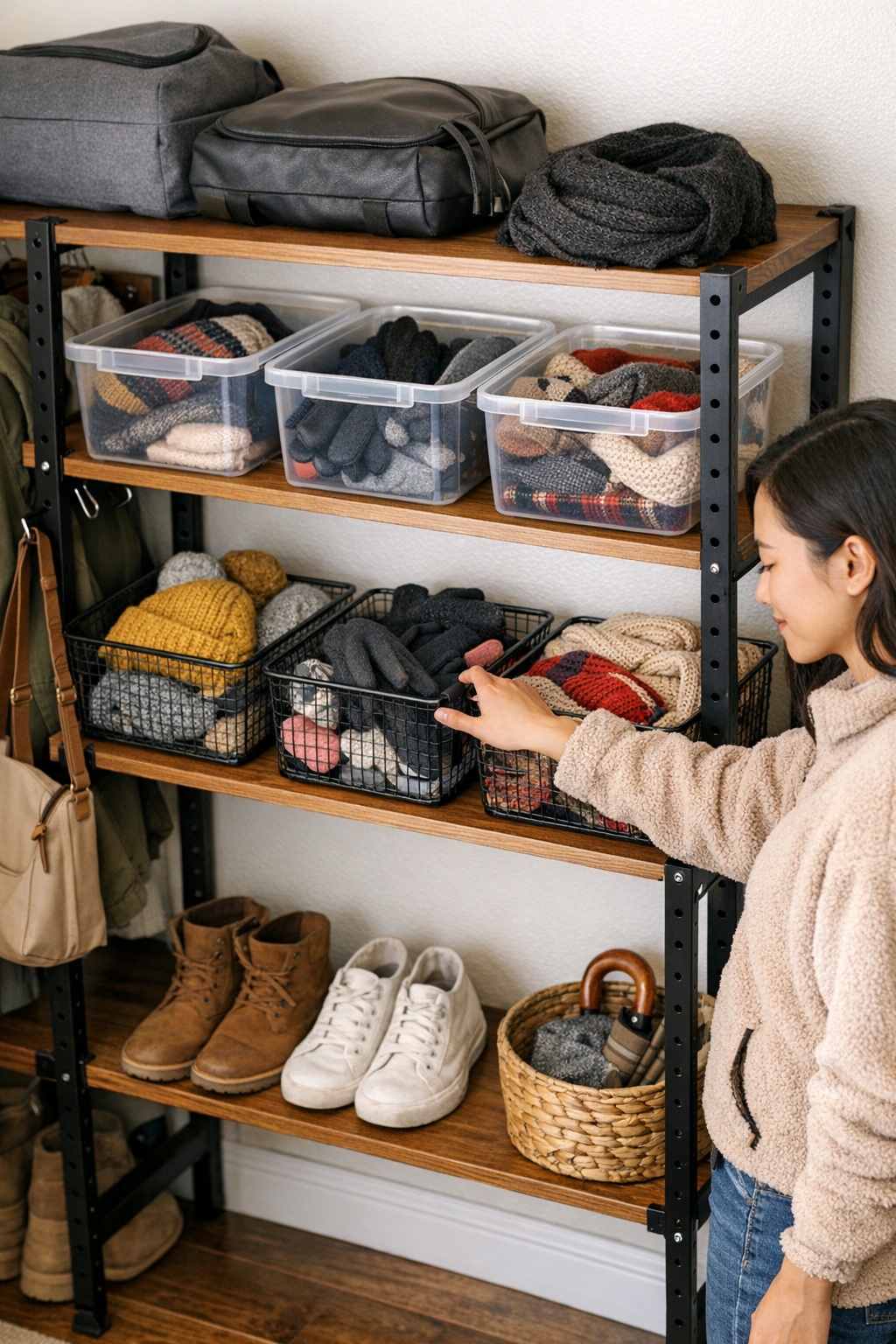
The moment I switched to open, shallow baskets, things changed. The actual limits were right in front of me. When a basket was full, the choice was clear: put something back, or take something out. There was no room to fudge it. Cleanup got faster, and mistakes grew smaller. The visible rim made a subtle but significant difference.
How Boundaries Invite Care
Over time, visible limits do something gentle but important—they encourage us to pay attention. Small edits become normal, so the big resets aren’t needed. I used to dread sorting those closet bins, letting categories drift and items blend together. Now, a quick glance is enough to know if something needs a little tidy up.
The upside shows up most where daily rhythms matter. A clear boundary—like a transparent bin or open shelf—quietly asks you to notice when it’s full. It’s not perfect, but it’s honest. And it shapes the way you use your home, nudging you to keep just what belongs.
Maybe that’s the real value of seeing the limits: it helps us to pause, reset, and return to daily life with a little more ease.
These thoughts came together while organizing our family hallway closet.