When Storage Fails: The Quiet Chaos of Unmarked Spaces
A workspace stays organized only when you define home spots for frequently used tools, preventing clutter and easing daily resets.
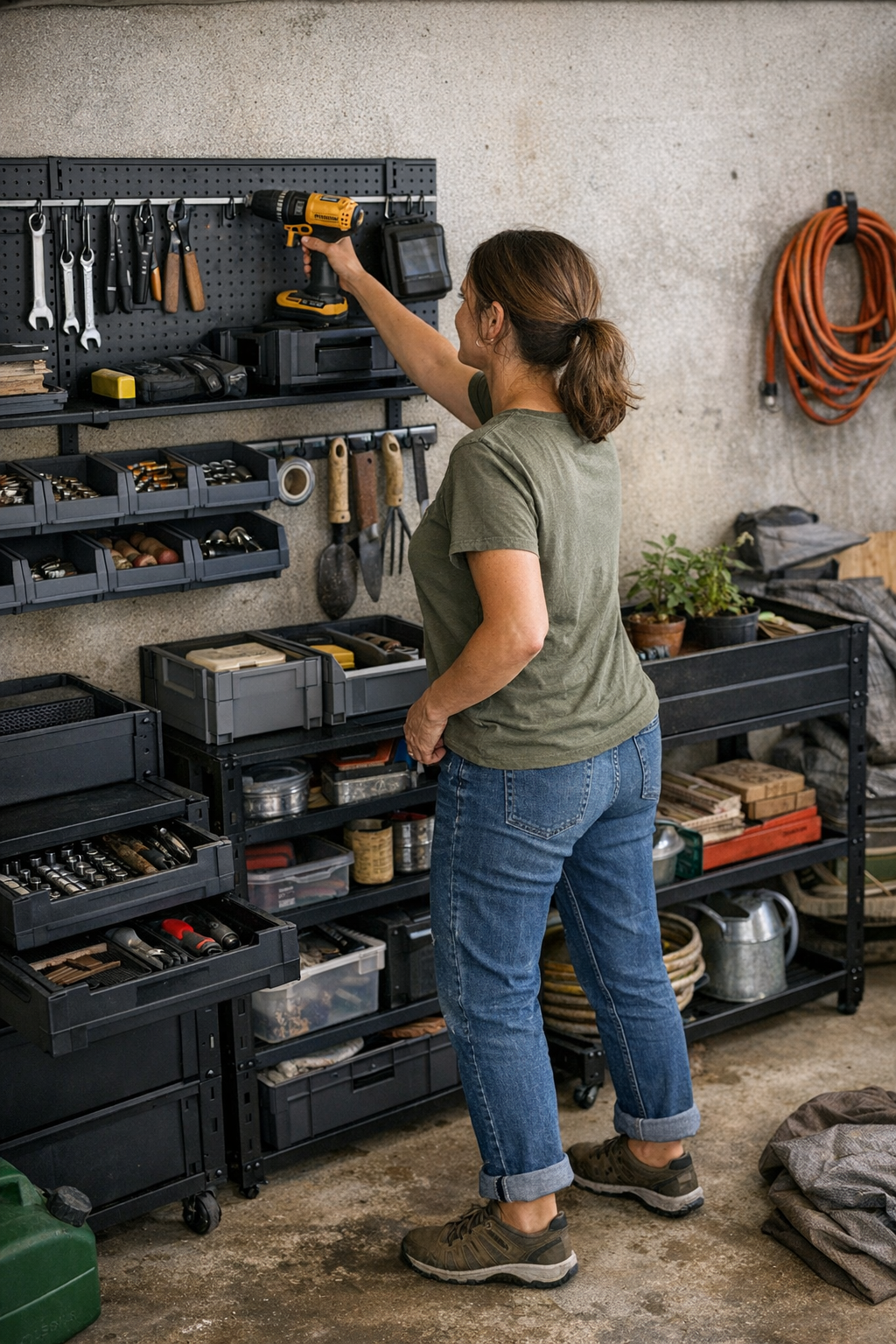
There’s a quiet promise in a new storage system—a sense that bins and shelves, lined in fresh rows, will finally tame the chaos of a garage, workshop, or backyard utility space. Modular shelving goes up, rails hug the walls, and for a moment, it all looks effortless. But after the first week or two, the clutter doesn’t really vanish. Instead, it shifts, sometimes settling in new places that feel even harder to clear. You don’t notice it right away, but you feel it in the daily flow of your workspace.
I kept circling this frustration after too many afternoons spent picking through piles that just days earlier had looked neatly contained. Whether a garage, workshop, pantry, or raised-bed setup, they all share this tendency to slide back into familiar messes despite the best organizing intentions. It begins small: a screwdriver perched on the wrong shelf, garden shears left among extension cords. Suddenly, those labeled bins and wall-mounted racks seem less like order and more like another obstacle in the way.
The Setup Looks Right—Until Routine Returns
At first, everything about a new storage system feels full of possibility. Similar items get stacked together with a spot assigned to each category. But real use reveals the patterns you don’t see at setup. You quickly learn that not all tools are used equally—some are grabbed multiple times a day, and others hardly move.
That’s when the problems creep in: an extra tape measure tossed beside drill bits, a charger hung by its cord because there’s no room left in its bin. The modular system that worked in theory begins to sag under the rhythms of daily use. Movement shifts—blocked walkways, surfaces filling up, and routines slowing. The effort to stay organized begins to feel like another chore rather than a helpful habit.
Clarity Comes from the Smallest Decisions
After several big resets, I realized it wasn’t about adding more bins or better labels. It was about where things naturally settled in the space. The smallest change—paying attention to what I reached for daily and giving those items an obvious, dedicated spot—made every return smoother. One corner of a shelf for screwdrivers, one low rail just for the garden tools that always wandered.
This tiny act of intention, creating clear “home spots,” made all the difference. There was less shuffling, less second-guessing. I stopped wasting time searching under piles or undoing the previous day’s disruption. The space felt lighter—almost capable of resetting itself. These home spots acted like gentle gravity, pulling things back to place after every project or errand.
It’s surprising how consistency starts with such a small, almost invisible change.
Not Everything Needs a Bin—But Everything Needs a Home
There’s a lot of talk about maximizing space with the right modular or mobile storage system, but what keeps things running smoothly is smarter landings, not just more structure. If a hammer always rests in the same groove, if scissors have a spot at arm’s reach, you feel the difference. There’s relief from the constant background question: “Where did I put it?”
Most modular setups adapt as habits change, but the real challenge is matching daily use with the return spot. If tools linger near the doorway or pile up in forgotten corners, it’s a sign the space needs clearer homes. The old saying, “a place for everything, and everything in its place,” isn’t about strict discipline—it’s about quietly aligning your daily rhythm with the design of your storage.
Over time, the reward is not just less clutter but mental clarity—a readiness to start fresh again. These thoughts came together while rethinking the arrangement in my own cluttered garage, fitting tools and supplies into wall-mounted rails, floor-based bins, and mobile carts to better match real use over time.