When Storage Reflects Real Life, Order Lasts
Storage setups improve by aligning with daily use, making items visible and preventing category mixing for faster resets and less clutter.
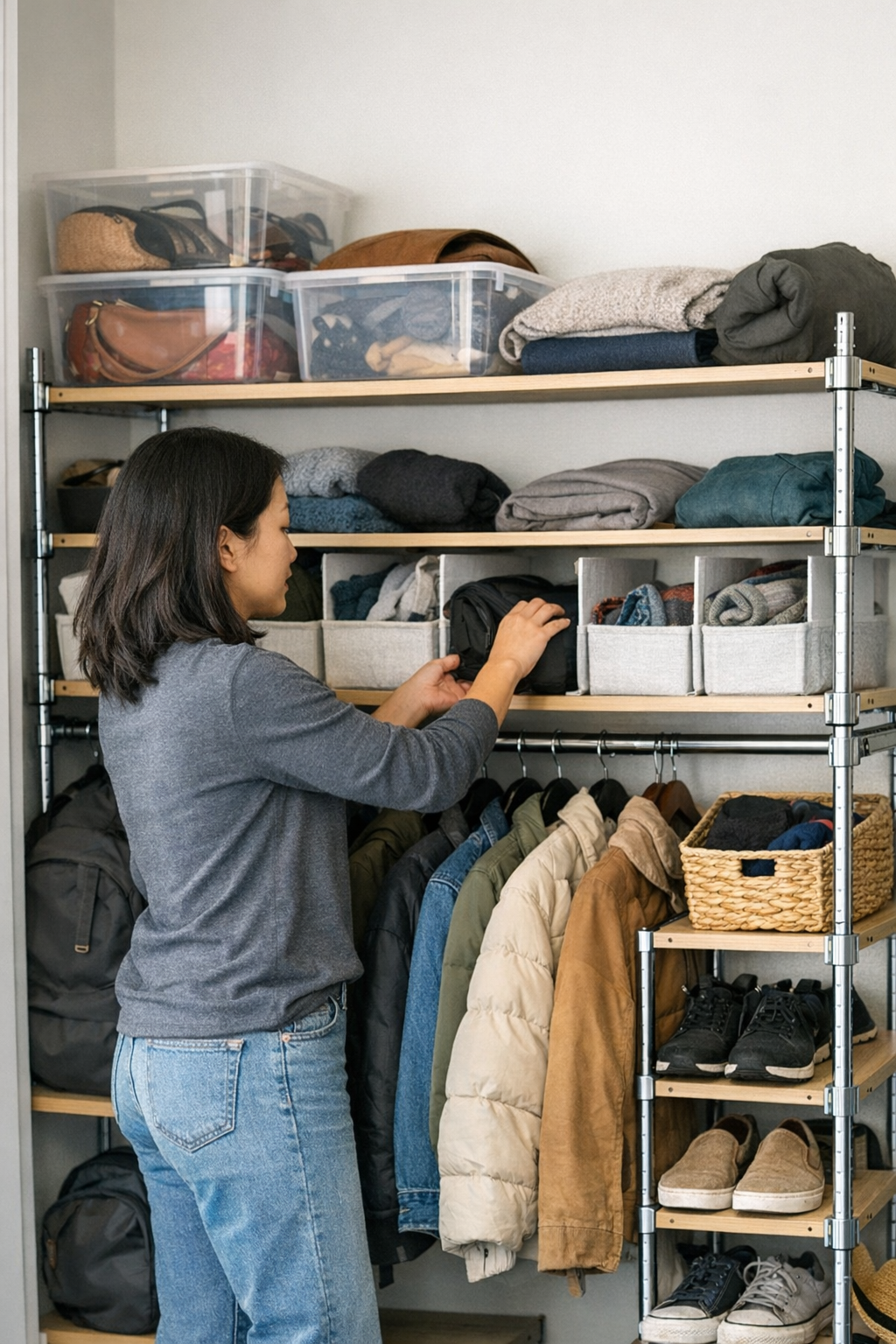
There’s a strange comfort in standing before a freshly organized closet. All the bins line up, shelf edges clear, everything tucked away just so. In that moment, it feels like chaos has been tamed for good.
But it’s usually not long before the seams start to show.
We tend to imagine that storage is all about having the right bins or baskets—maybe something sleek, maybe something that matches. But the real test never happens on the day everything’s put in place. It happens quietly, later, in the blur of everyday routines. That’s when the limits of traditional storage—the ones that only look organized—start to become clear.
Where Order Starts to Unravel
At first, it’s subtle.
A bin labeled for scarves now hides an odd glove or two. Shoes migrate across shelves. Items you thought had a permanent home begin drifting, little by little, every time you reach in a hurry.
You don’t notice it immediately.
But you feel it.
Soon, resetting the space takes longer. Grabbing what you need means rummaging through jumbled piles, guessing which bin now holds what. The organized surface hides a slow decay underneath: categories blending, boundaries dissolving. It’s not just about mess. It’s how frustration quietly creeps in.
Seeing What’s Really There
The interesting thing is, storage only works when it matches real life.
There was a time I thought opaque baskets would solve everything—tucked high on a shelf, they created clear lines at first glance. But as schedules grew busy, I found myself pulling down three bins just to find a missing hat. Routine shifted things faster than any “system” could keep up.
Imagine gently reaching for one item, only to move five others out of the way first. It’s not a disaster—just a small friction, repeated over and over. Real organization isn’t the absence of clutter. It’s the relief of finding what you need, exactly where you expect, even after a long week.
Sometimes, the solution is simpler than we assume: swapping big catchall bins for open, divided trays where each category gets its own visible spot quietly changed everything. Suddenly, gloves didn’t drift among scarves, and returns were easy, almost thoughtless. The shelf didn’t hold more, but it held better.
When Storage Feels Like Support
That’s the real difference—when storage supports your habits, not just your hopes.
With clear dividers, I noticed I wasn’t resetting the closet as often. Things stayed in place, not because I worked harder, but because the boundaries made sense with the way I actually moved through the day. There’s a quiet satisfaction in reaching for something and finding it—no searching, no re-sorting, no silent sighs or second guesses.
Maybe that’s all real organization is: giving everything a place that fits its rhythm in your life.
After a while, you can feel the difference. Resetting becomes a pause, not a project. Categories hold, routines fit, and surfaces stay clear almost on their own.
It’s easy to think storage is about aesthetics or strict systems. But the truth is, the best storage simply tells the truth about how things are used. When it does, a space feels honest. Lighter.
These thoughts came together after I quietly reorganized a hallway closet—details here.