When Storage Shapes the Rhythm of Shared Spaces
Living room storage cabinets work best with clear compartments, keeping resets quick and reducing clutter from mixed daily use.
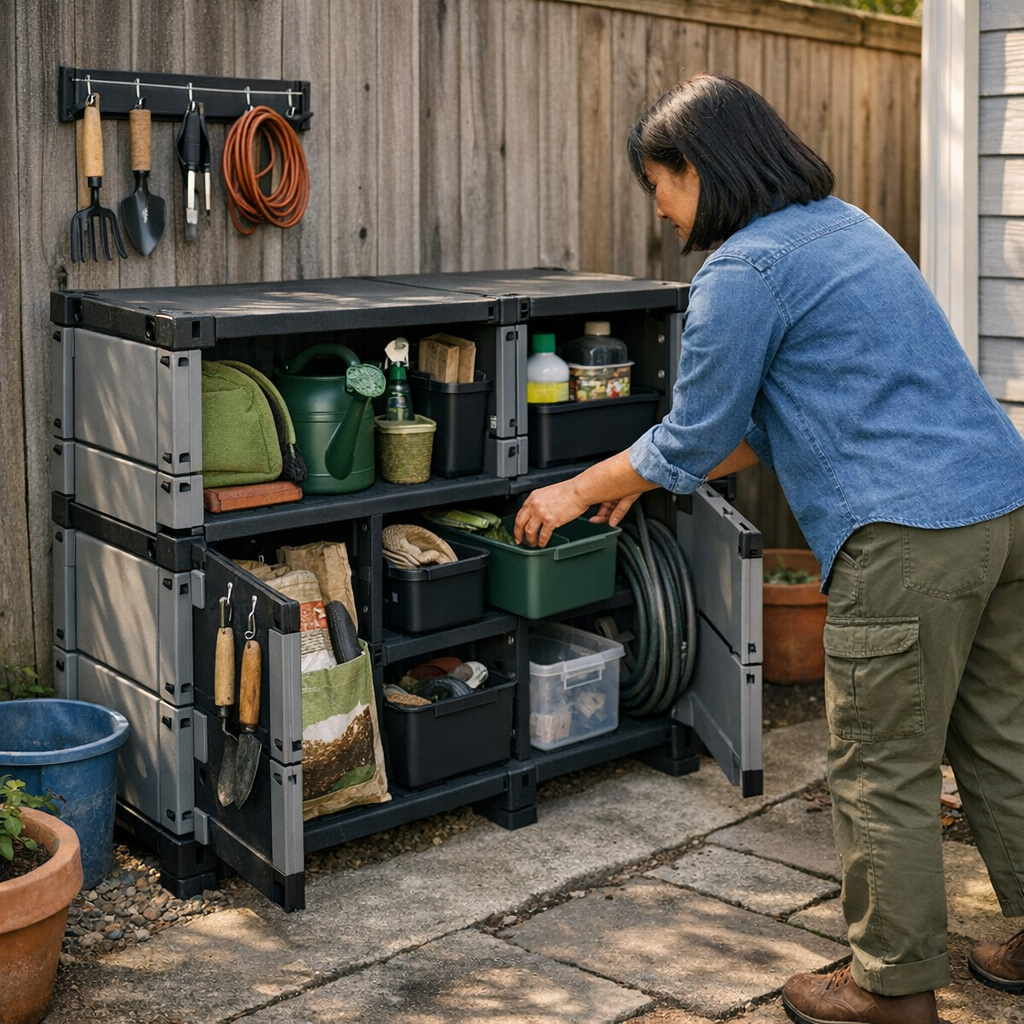
Most days, the cabinet looks like order is the default—neat rows, smooth doors, and a calm surface. But living with storage systems is quieter and more complex than that. What starts as clean lines shifts day by day, and the difference between workable storage and wishful thinking often shows up in small daily routines: reaching for the remote, returning charger cables, or squeezing one more mail envelope beside board game cards and dice. You don’t notice the invisible work a storage cabinet does—or fails to do—until daily life begins to press on its edges.
Boundaries Are Really About Ease, Not Control
I used to think storage success was about how much a cabinet could hide. And for a while, it mostly worked. Guests saw a living room that looked ready. The trouble was always under the surface. After a few days, categories blurred together—chargers tangled with game controllers, yesterday’s mail leaning into TV remotes. Each quick return became a slow search.
You feel it, this low-level resistance. The cabinet isn’t fighting clutter so much as quietly hosting it, letting items drift from place to place. Then one afternoon, after the third search for a missing remote, I added simple dividers inside—nothing fancy, just enough to guide each item back to its own spot. Suddenly, resets got shorter. Retrieval was easier. That was the part I kept coming back to. The tidiness lasted only because the structure made putting things away almost automatic.
The Hidden Cost of Weekly Drift
Open shelves look great when nothing’s in motion and the room is quiet. But once normal routines start, those shelves fill up with out-of-place things. Deep drawers without clear separation turn into hiding spots. By the end of the week, even a closed cabinet can’t disguise the slow collapse of categories.
The real cost isn’t the mess itself; it’s the time lost resetting everything. In a house where three people use the same cabinet for separate needs—TV at night, craft supplies on weekends, work chargers during the day—that cost adds up fast. A quick tidy becomes thirty minutes of sorting, silently arguing with a pile of stray items that never belonged together. It isn’t dramatic, just quietly inconvenient and disruptive to storage logic.
When Resetting Becomes Its Own Rhythm
After sorting out internal boundaries, I stopped thinking of resets as a chore. Remotes, media, chargers—all returned to their small sections without drama. It became easier to keep to those invisible lines when the cabinet’s internal structure made the logic obvious.
There’s relief in seeing a modular system or slim cabinet work with real life, not just hide unfinished business behind smooth doors. Living room order began to survive the week instead of collapsing by midweek. Sometimes I’d open the cabinet and just pause, noticing how quickly everything could go back in place. Not perfect—but enough to keep resets quick and keep the space usable even on busy days.
If you’re curious, Gridry has more here: http://www.gridry.myshopify.com