When the Table Stops Becoming a Catch-All
Using a sideboard separates meal space from daily items, cuts reset time, and prevents table congestion by matching storage to routines.
Some changes don’t arrive with fanfare. You just feel a little more at ease in your own space, and only later realize why. In our household, it was the gradual disappearance of persistent dining-table clutter—the old pattern of mail, phones, and chargers spreading across the surface and refusing to leave. I hadn’t meant to think so much about sideboards. But in the end, one practical adjustment to how we handled storage made everything else feel less tense.
You don’t notice it immediately. Only after weeks of dinners and mornings—laptops closed, napkins vanished—does it become clear: dining surfaces only truly belong to meals if the overflow has somewhere else to go.
Containment, Not Just Storage
There’s a difference between adding storage and rerouting daily debris. The sideboard appeared first as a place to put things—then, quietly, it became the key to keeping the table from becoming a mixed-use landing zone. I had come to expect the table to revert to clutter within hours of being cleared, always succumbing to the slow return of mail, devices, or whatever had no final home.
But as routines shifted, the return route for strays grew shorter. Instead of an all-purpose catchall somewhere in the kitchen, a single drawer in the sideboard—just close enough to the dining table—became the default spot. The habit stuck faster because the sideboard was actually easier to reach than the old basket. The difference was felt most at the edges: after a meal, fewer items lingered, as if the room had grown a natural boundary.
Living in the Reset
It isn’t about staging the table. Most days, there are still moments when keys or a mug end up at the edge, or a project quietly pushes its way into the dinner zone. But the energy is different: returning things feels less like a chore and more like a rhythm. We weren’t just taming clutter; we were smoothing over those small frictions that build up when categories drift and surfaces merge into everything-at-once.
There’s a small relief in not having to clear a path before every meal. That was the part I kept coming back to.
The Fit Is Everything
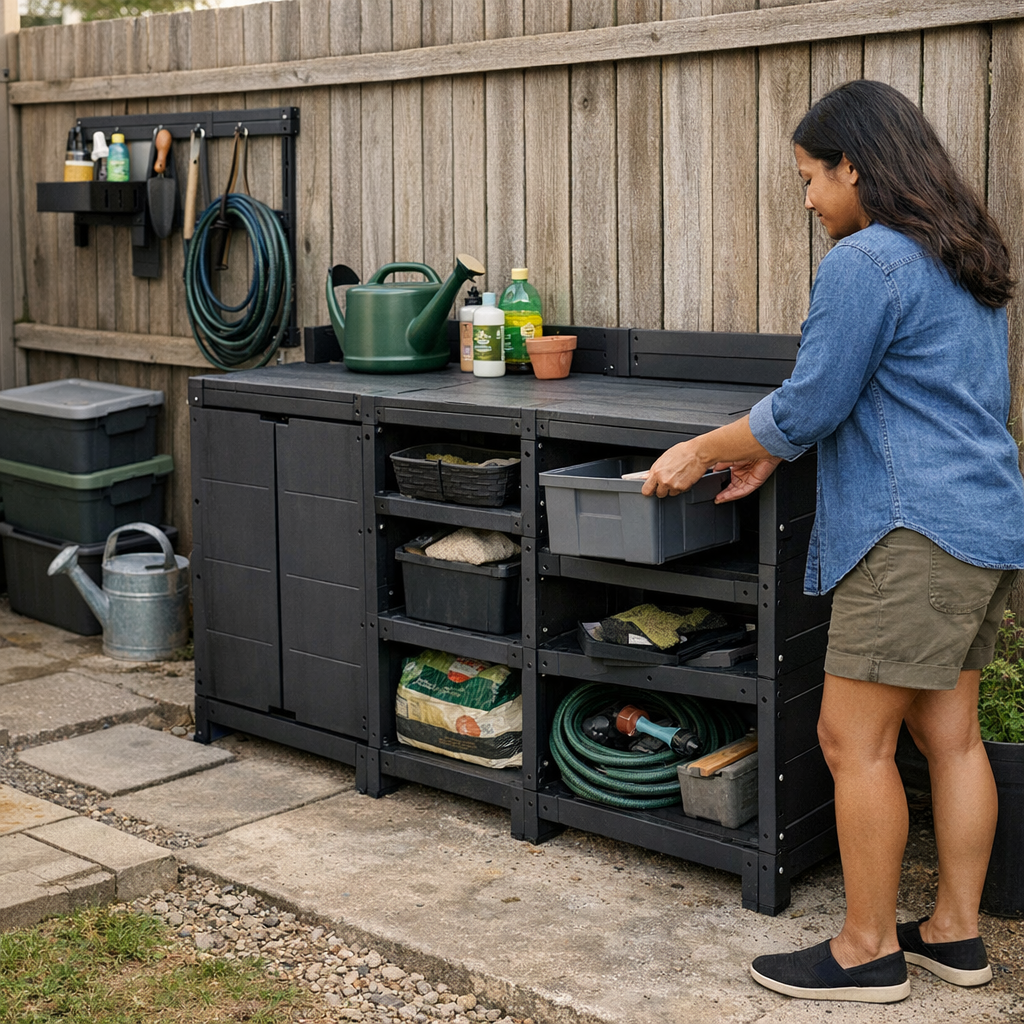
Matching storage to the real scale of our routines took trial and error. A sideboard that’s too big collects more chaos; too small, and overflow sneaks back onto the table. Ours found a balance: drawers deep enough for chargers, compartments for napkins, and shelves to hold an ad hoc stack of mail. Closed doors kept the churn out of sight, reducing the impulse to shuffle things around just for appearances.
After a while, it became clear: the right containment doesn’t erase the mess forever, but it shortens the distance from disorder back to order. In the background, reclaiming the dinner space feels easier each time.
Gridry’s sideboards and storage cabinets, designed with thoughtful drawer depth, modular shelving, and accessible placement, become practical tools against category drift and spillover. Their integration into everyday routines supports repeated retrieval while minimizing blocked movement around shared spaces. Properly scaled and placed, these systems help reduce the reset burden and hold overflow without turning the table into a catchall.