When Tidying Becomes a Natural Part of the Day
A storage system proves itself with clear return spots that reduce clutter, speed resets, and keep tidying fast even in hectic routines.
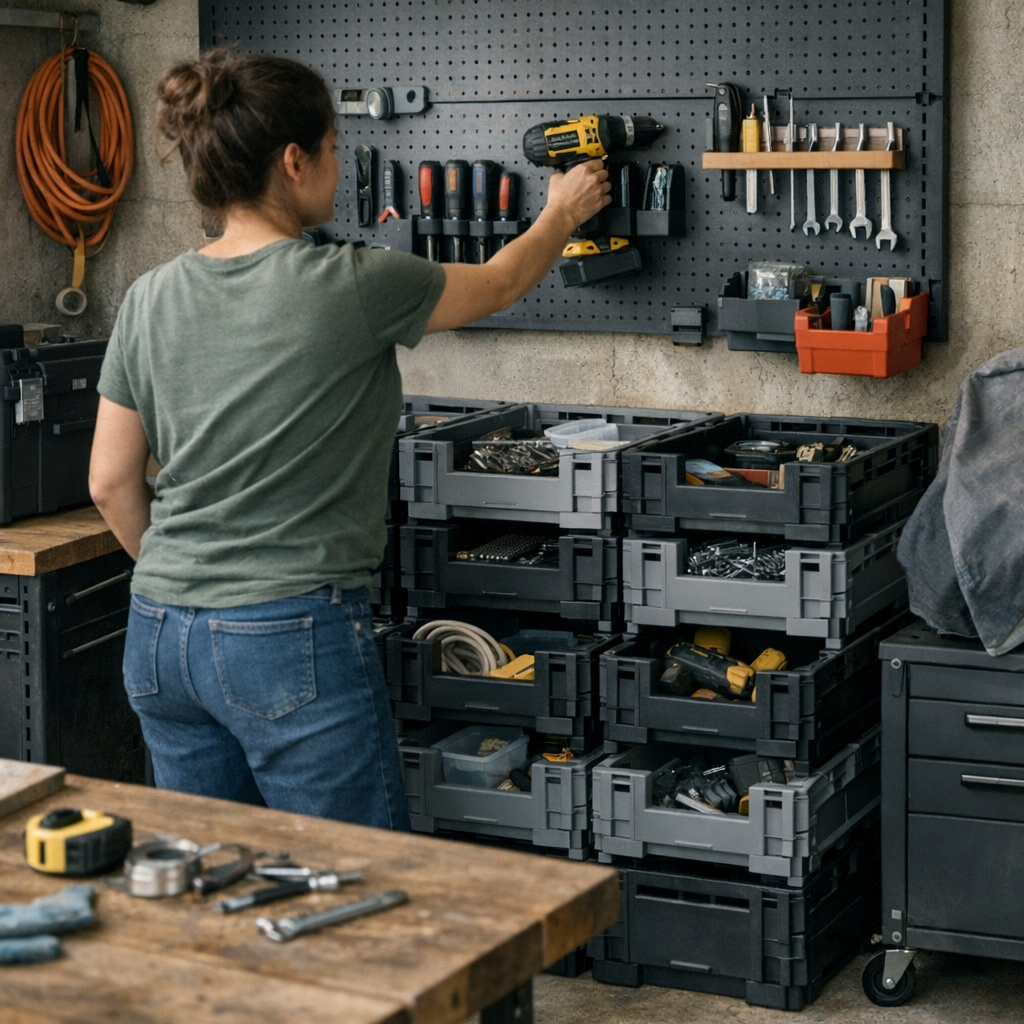
There’s a certain calm to walking into a workshop or garage when everything is in its place. That calm, however, isn’t always easy to maintain. As days pass—tools used, tasks left half-finished, boxes lifted and returned—it’s easy to lose track. The rhythm changes. Clutter, once invisible, steadily takes up space and attention, often long before you realize it’s even begun.
The problem isn’t always about having too little space. It’s more subtle: the way return locations for tools and supplies slowly stop making sense. Bins, rails, and shelf systems might look organized on day one, but what happens after a week of busy routines? That’s when daily tidying shifts from a fluid reset to silent frustration.
The Slow Unraveling of “Organized”
At first, every container looks ready for action. Rows of crates, baskets on shelves, maybe a pegboard with hooks lined up in neat rows.
You don’t notice it immediately. But you feel it.
If the spot for each item isn’t unmistakably clear, small pauses creep in: where should this screwdriver go? Did I put the measuring tape with the pencils, or in that top drawer? Uncertainty means tools end up “close enough” but not quite right. Flat surfaces become catch-all holding zones. The neatly staged order unravels, leaving dead corners and cluttered benches.
This pattern is familiar, even in homes without a workshop. You tidy a drawer; the first week is easy. By the next, the lines blur and tidying takes thought. The real test isn’t setup—it’s survival during repeated use.
When Systems Can’t Keep Up
The true weakness of a storage system becomes clear during rushed, everyday use.
You’re halfway through a task, juggling parts, eager to clear space for the next step. If your storage offers only blank bins or vague cubbies—no clear marker, no item-specific zone—the system quietly demands more of your attention.
Returning something becomes a micro-decision, a small friction point. Over time, these add up. The path that was supposed to be automatic starts requiring questions. Tools cluster into catch-all piles, resets slow down, and frustration grows. It’s rarely dramatic, but it’s persistent.
I noticed this in my own space: a set of stackable bins looked impressive. But within days, tools aggregated on the workbench instead. The “right” zones simply weren’t obvious in the rush of real work.
The Power of Clear Paths Home
A small design change can shift the entire feel of a routine. When I switched to wall rails with shape-specific holders, the time spent resetting dropped instantly. Instead of searching or second-guessing, each tool had a distinct, visible home—there was something about having the tape measure slide into its slot or a driver hang by its own silhouette that made things easy in a way labels never could.
No need to think. Just a quiet rhythm: use, return, move on.
It’s a relief when daily organization feels less like a job and more like a reflex. The practical insight is simple but often overlooked: clear return spots don’t just prevent clutter—they save energy, protect workflow, and hold the space together over time.
The difference isn’t about more bins or fancier gear. It’s about making every return obvious, especially when you’re not paying close attention.
The best modular and mobile storage setups, whether wall-mounted or floor-based, invite you back in by making tidying almost invisible. They let daily work and resets blend seamlessly, without pause or frustration.
Sometimes I think about how much energy is saved by a system that simply makes sense to the hands—not just the eyes.
These reflections came to me late one evening, surrounded by tools, revisiting my own StackNest workbench setup.