When Tools Drift: The Quiet Trouble of Impact Wrench Calibration
Impact wrench calibration only shows its value under heavy cycles—missed checks cause under-tight fasteners, misalignment, and rework.
There’s a certain trust we place in our tools—a quiet confidence that, with each press of the trigger, everything is working as it should. It’s easy to overlook details like calibration. Out on the job, surrounded by heavy parts and metal clatter, torque feels like something you can simply count on. Until, suddenly, it doesn’t. The moment is subtle, but unmistakable. A bolt that should feel snug moves. Seams that usually fit tight begin to shift. Impact wrench calibration can slip into the background, unnoticed, until it begins to quietly shape the outcome.
The Silent Drift
Calibration rarely announces its departure. Instead, it fades—so gradually that the signs are easy to miss. An impact wrench, fresh from the box, feels responsive and strong. Run it through dozens of bolts, especially on stubborn steel or painted metal, and tiny differences start emerging. You don’t notice it immediately.
But you feel it.
On lighter work, everything appears fine. But push into heavier assemblies, where precise tension really matters, and the cracks begin to show. Calibration drift doesn’t shout. It shows up in small ways: a seam that needs an extra tap, bolts that don’t hold as tightly, complaints about vibration. It’s not obvious, not at first. But over time, the difference becomes real.
A Familiar Scene
I think of a technician cycling quickly through wheel changes in a busy shop. Each wheel starts out feeling the same, but midway through the round there’s a pause—one doesn’t seat quite right. The sound from the wrench changes, just slightly, from a crisp thud to something softer. Checking the bolt with a torque stick reveals a shortfall. Maybe a dozen pounds. Not enough to ring alarms, but—over days, over weeks—it matters.
It’s easy to move past these moments. There’s always another job, another round of bolts waiting. Yet this is exactly where reliability quietly unravels. Small calibration slips, repeated over time, add up. There’s a certain humility that comes from realizing you can’t always trust the feel alone.
Quiet Adjustments, Real Results
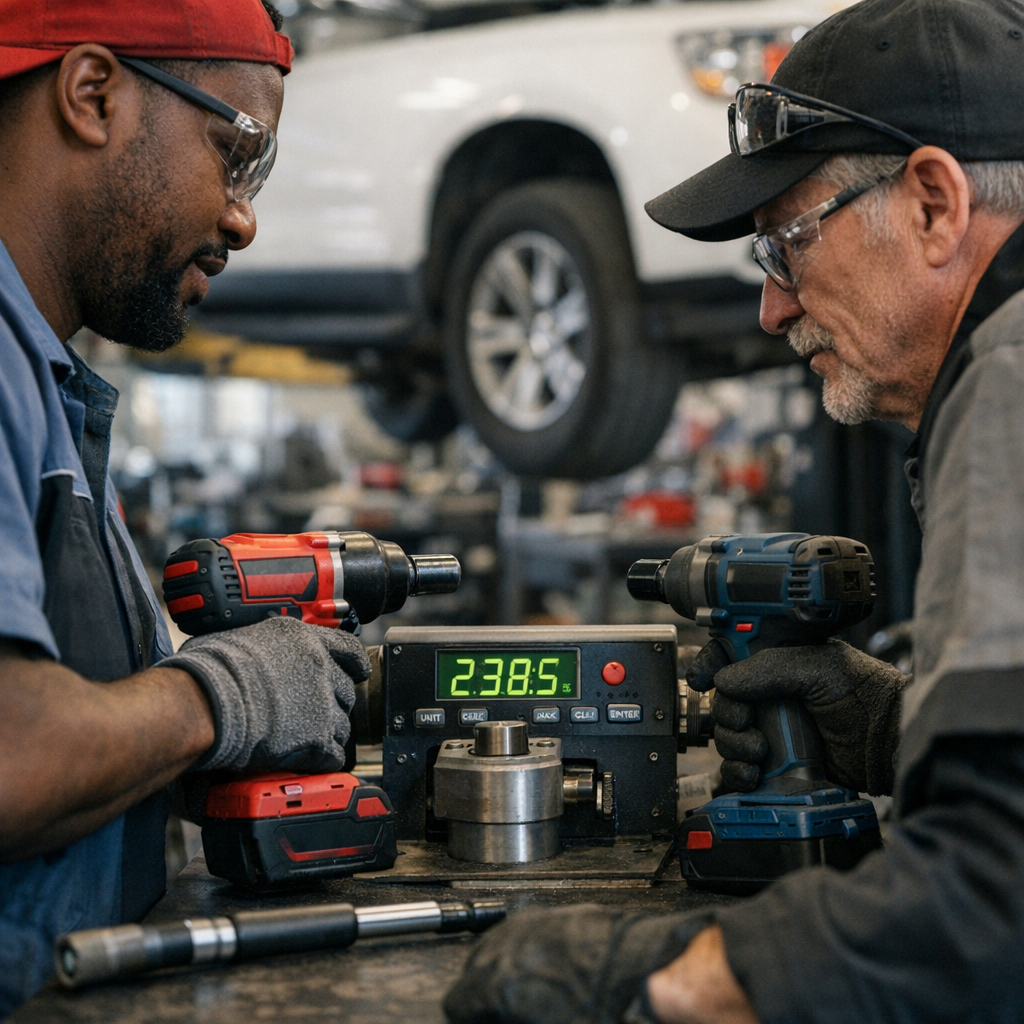
There was a period when troubleshoot calls for loose assemblies started coming in just a little too often. The answer wasn’t complicated. I set a schedule—every six weeks, each impact wrench would get a quick run on a torque checker. No drama, no big overhaul, just a rhythm. Very quickly, I noticed the difference. Seams lined up, bolts held, the odd sense of “play” disappeared.
It didn’t feel like a big change at first. More like a slight realignment. But fastening became steady, predictable—a relief, really. It was proof that sometimes, the fix is just a gentle nudge back to center, rather than an overhaul.
I’ve found that when a tool becomes part of your daily routine, building in this kind of small check frees you from chasing odd problems down the line. Not as a rule, just as a quiet habit.
Looking back, I realize those little variances in calibration matter more than specs on a page suggest. Sometimes, the difference between frustration and flow is just a traceable check away.
These reflections took shape while working on a side project and reviewing some surprising results in my shop—more on that here.