When Travel Bags Reflect Real Moments of Use
Grouping carry-on items by real use moments reduces delays, confusion, and repeated shuffling during security, boarding, and in-flight phases.
The Small Shift That Quietly Changed How I Move With My Carry-On
I used to think I had my carry-on routine down perfectly—every pouch zipped, every cable coiled, toiletry kit squared away. At least that was the plan. But once on the move, that neat order started to fall apart. It never unraveled all at once. The friction showed up in small ways during boarding or security checks—like a passport slipping under a deodorant stick or having to rummage through multiple pockets to find one charger.
After a few transitions, what looked tidy at home felt slower and less intuitive in motion. The clock was ticking, lines were moving, and I wasn’t. The issue wasn’t how the bag looked, but how often I had to dig for the same essentials, always in a different pocket than expected.
When Visual Order Stops Being Useful
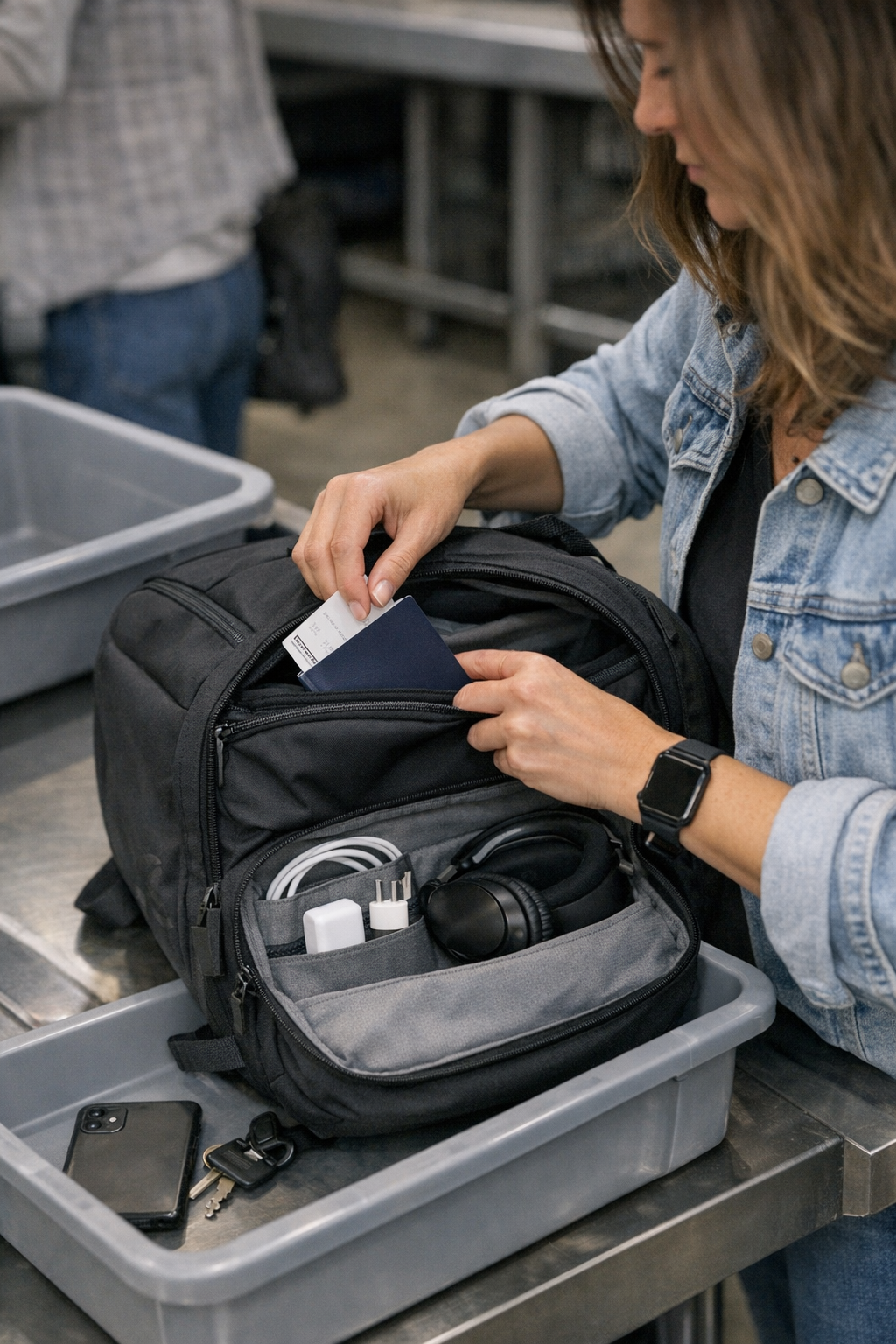
Color-coded packing cubes and neatly rolled socks bring satisfaction. But a setup that looks perfect at rest can make travel itself messy. The problem became clear when I had to break the surface of the bag—unzipping a pouch meant for tech just to find a pen for a customs form, or pushing past snacks to grab a passport mid-line.
Initially, the bag looked fine. The catch was that unrelated items seemed to cluster at the worst moments. Those repeated delays—awkward pauses at the security tray, fumbling for ID at the gate—weren’t painful on their own, but they kept recurring. Small stutters added up, making the trip feel heavier than the bag itself.
Real Movement, Not Just Organization
The slowdowns didn’t start with packing. They showed up in the in-between moments—gate checks, boarding lines, the shuffle before the overhead bin. That was where the false clarity of categories faded. What I really wanted was simple: to reach once, not twice, for the right essential at the right time.
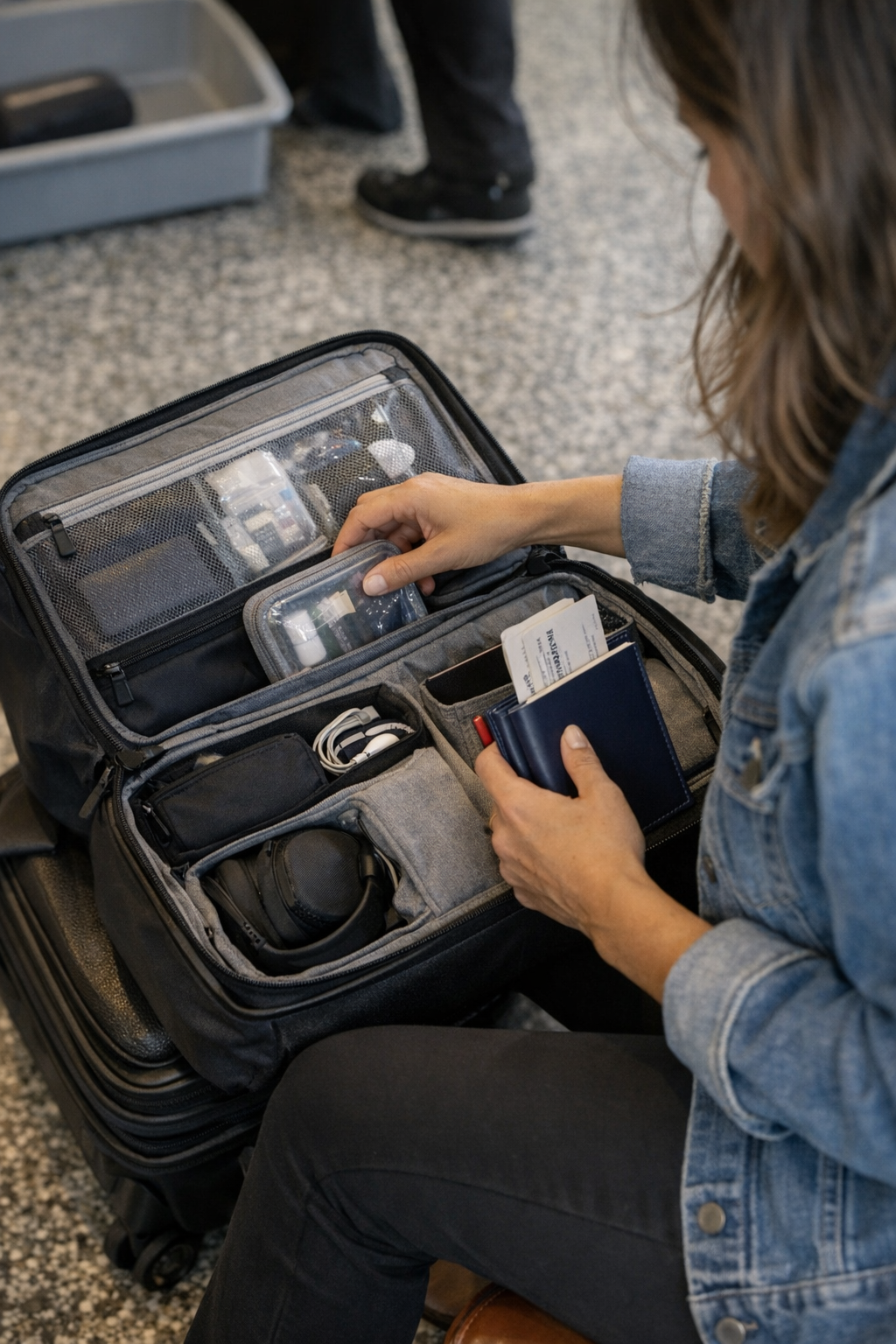
The quiet shift was grouping items by when I’d need them, not just by what they were. Travel documents went in an easy outer pocket, a cable and pen found a spot in the in-flight pouch, and the rest stayed tucked away until arrival. Just enough separation so I could pull a passport or charger with one smooth motion—and put it back without opening the whole bag. It wasn’t perfect, but moments of friction started fading.
The Quiet Payoff of Access
The real test was use—not only in the airport, but in how the bag asked less of me, letting me focus more on the trip itself. When something was missing after security, I’d realize it had drifted to the wrong pocket, a reminder the system only works if it travels with me. Stick to that rhythm, and small hesitations don’t follow you down the jetway.
It was one small tweak: giving every key travel moment a distinct home—not by color code, but by ready access. The payoff wasn’t just saved seconds, but fewer small obstacles during boarding, security, and unpacking. Less digging. Fewer reminders that the bag was another thing to manage.
It’s a small relief to have fewer interruptions from your own gear. And sometimes, that alone is enough.
For anyone still reshuffling their setup, I’ll just leave this here: http://www.carryonsupply.myshopify.com