When Travel Chaos Meets Carry-On Reality
Carry-on setups that feel organized at rest often break down during travel; accessible outer pockets cut interruptions, speed transitions, and reduce stress.
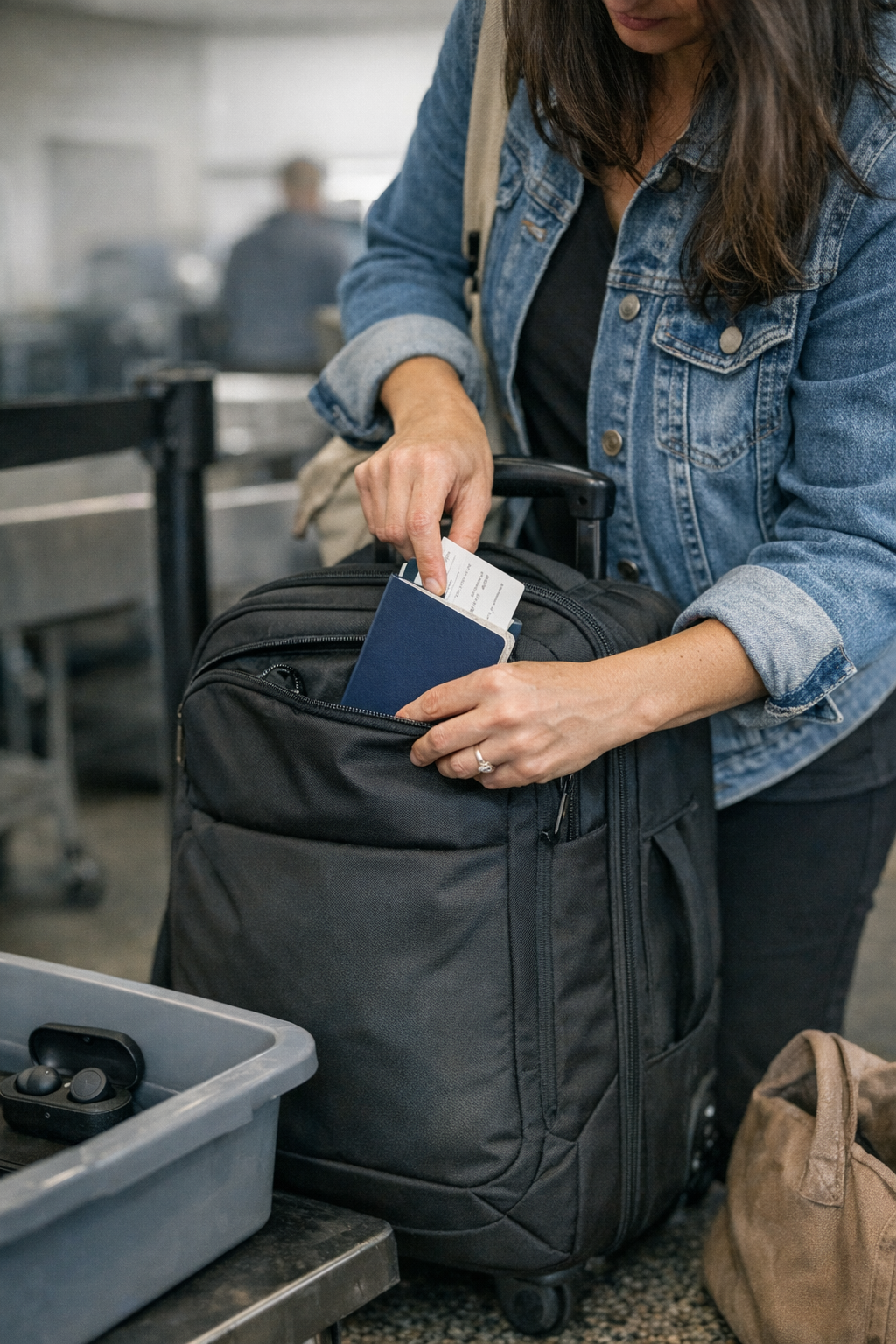
It doesn’t reveal itself right away. You think the organized carry-on—everything slotted, pouches stacked, folders lined up—will keep the whole trip running smooth. It feels reassuring, zippers closed and compartments tidy, as you leave home. The real test comes somewhere after the first checkpoint or out in the shuffle right before your boarding group is called.
You notice it after a few transitions. The setup that looked handled on the bed at 5 a.m. starts pushing back as soon as you need a passport or headphones without stopping everything. A sleeve that seemed so secure in a static room now means fishing three layers deep under pressure, half-wedged between bags and elbows in a live, jostling line.
Neatness That Stalls Out
It looked fine at first. Pouches fit in a perfect grid, chargers tucked underneath, a document holder snapped smartly into place. But a system organized for its own reflection—rather than for how hands and habits move through a day—quietly resists real-world flow.
The first time I had to fumble under a fleece to find my ID mid-security, I realized: order on a table isn’t the same as order in movement. Each extra layer becomes another point of friction—especially if you’re opening the main compartment at each stop. You keep thinking maybe you just packed wrong, but the pattern repeats anyway.
That was the part that kept coming back.
Transition Moments Reveal Everything
Fast, pressured moments sharpen every small friction. A boarding pass is suddenly not where your hand expects it; you’re balancing on one knee, main zipper open, searching by feel through layers that aren’t giving way. Meanwhile, the line flows on.
Repeated movement amplifies these details. What seemed organized now shuffles with each reach—pouches slide, documents re-settle, and even a minor tray-table rummage means half the bag gets re-stacked, always slightly less neat than before.
It’s not dramatic, just quietly wearing. You start to notice the mental pause every time you need to retrieve something on the go and have to disturb the whole setup.
A Small Change at the Edge
A gentle refresh came after moving my main essentials—passport, boarding pass, noise-canceling earbuds—from a neat inner sleeve to an exterior pocket. One zipper, side reach. Suddenly, there was no need to set the bag down or break rhythm during boarding or a seat transfer. The bag felt a little less symmetrical, but access was clean; the flow picked up.
The practical difference kept showing up: fewer pauses, less rummaging, and no more need to go digging for the one thing I always needed twice as often as planned. The whole routine just moved with me, not against.
Packing for visual order had to give a little for true in-transit usability. That’s what made it feel right in use, not just in photos. The setup evolved—less perfect, but more reliable. And that made all the difference every time I moved through another crowded gate.
If you want to see what I mean, it’s quietly illustrated here: http://www.carryonsupply.myshopify.com