When Travel Chaos Reveals Hidden Packing Flaws
A tidy carry-on helps only if essentials are easy to access repeatedly; prioritizing quick-reach items reduces delays during travel transitions.
In the beginning, everything looked fine. The packing felt satisfyingly zipped and squared away—the kind of tidy you imagine will carry you through a dozen airports without a hitch. But after a few transitions, small snags began to show up. Minor pauses, a half-minute fumble for a boarding pass, or how a neatly packed cable pouch suddenly blocks the item you need right then. It wasn’t chaos, but it was enough interruption to make you rethink what order really means when you travel with a carry-on that’s constantly in motion.
At Rest, Everything Makes Sense
Sitting at home, packing follows a logic that gives quiet confidence. Pouches stacked, cubes lined up, single-purpose pockets zipped. But once you’re moving—getting through security, rushing to an unexpected gate, repacking at a crowded aisle—that balance shifts. Neatly nested layers that look smooth can turn frustrating. A setup that looks organized is only efficient until you need to grab a document without digging through half the bag. That was the issue that kept coming back.
The Small Delays Add Up
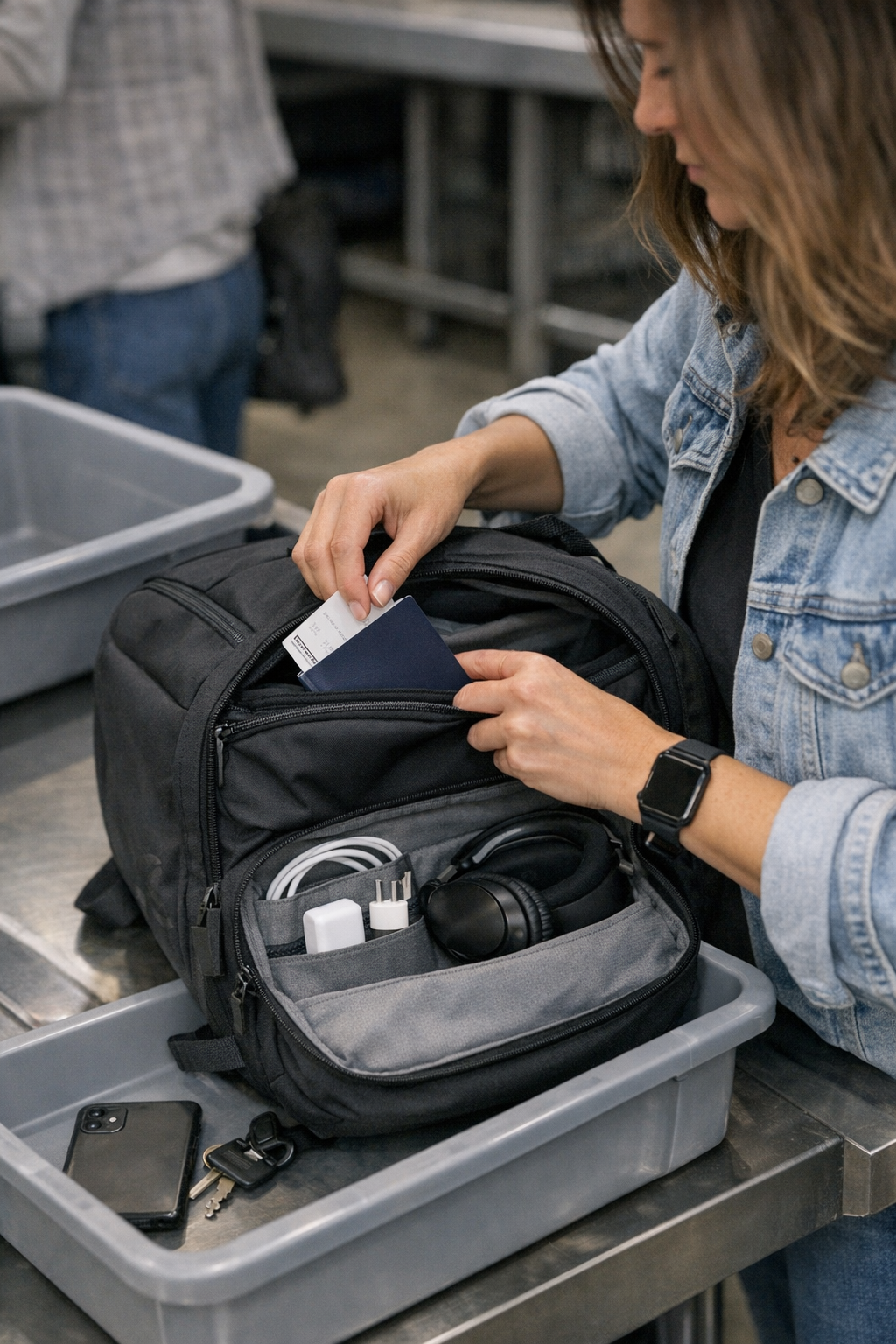
After a few trips, it’s the small moments that linger—pulling out headphones only to have your charger sink deeper beneath a packing cube, or hastily stashing your passport in the wrong pouch. I noticed this most after my second trip with the same arrangement. The visual order had traded off too much speed. Every time the bag opened under pressure—at the security tray, by the airplane seat, or in a crowded line—those perfect layers slowed me down. The difference wasn’t dramatic, but it repeated: extra motions, quiet awkwardness, and the feeling of holding up my own progress.
Making Space for What Happens Most
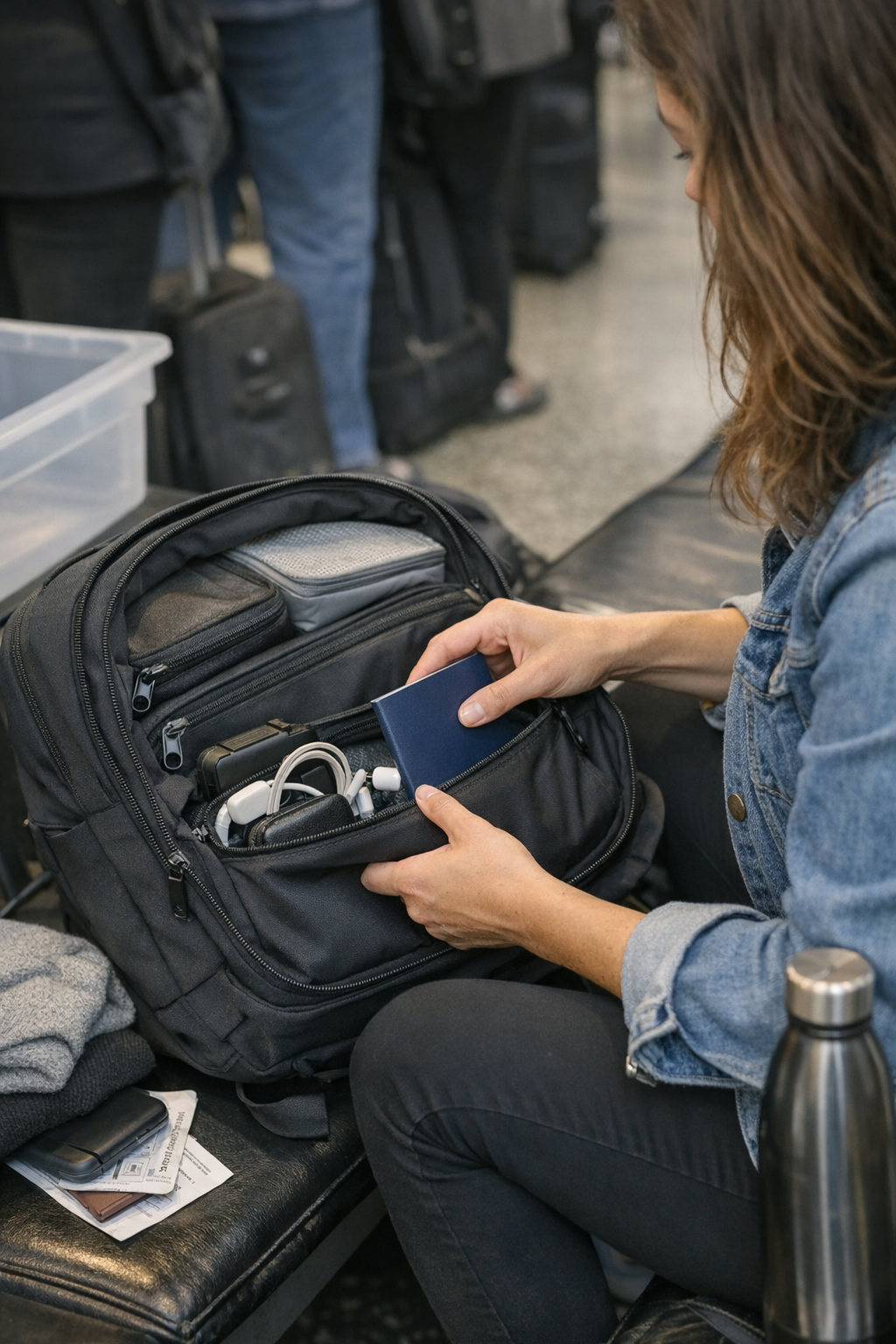
The realization came: it’s easier to live with a touch of apparent disorder if it means items you reach for most are always within easy reach. Moving headphones, passport, and charger into a shallow outer pocket—messier to look at but never buried—removed the friction. No more unzipping two layers for a single item. No more soft embarrassment searching for what was supposed to be “organized.” Access felt lighter, and—more than once—returning items on the move became effortless again. Real use over a few flights made it clear that the smartest packing structure isn’t the prettiest, it’s the one you stop noticing because it just works.
Sometimes, a softer version of order is what you need to travel a little lighter.