When Travel Flow Meets Everyday Carry-On Realities
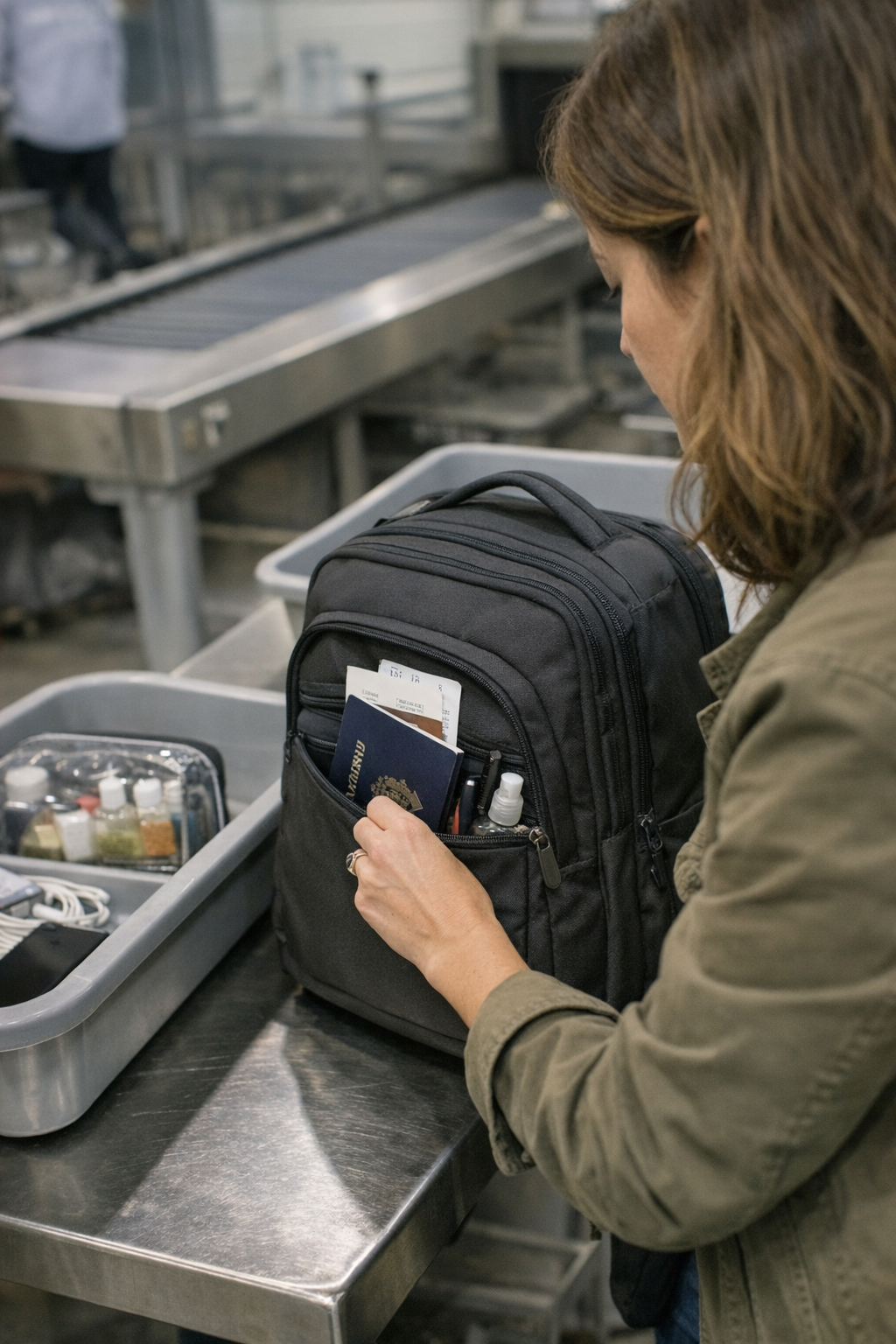
A carry-on may appear well-packed, but real movement exposes friction when essentials are buried; direct-reach pockets reduce time and stress.
There’s a pleasing calm to a hotel room where every travel pouch sits just so, ready before a flight. That familiar feeling—that this time, everything will go smoothly—starts the trip on the right foot. But that sense of order often dissolves the moment you need to reach for something while in motion.
You notice it after a few transitions. What looked like efficient packing—each item zipped into the “right” pouch or organizer—turns into a soft kind of gridlock when it’s time to grab your passport in line, pull out a charger mid-aisle, or find your face mask between stops. The structure that worked perfectly at rest feels off-balance as soon as you’re moving faster than your own system allows. That was the part that kept coming back for me.
The Reality of In-Transit Access
My bag always seemed fine when I packed it, with everything nested in its own travel pouch, document holder, or sleeve. But the difference showed up once I was on the move, especially in tight spaces like security lines or cramped overhead bins. Digging for a travel document shouldn’t require upending a whole pouch or spreading out multiple organizers across an airport tray.
You learn the friction points by living through them: the pause at security while someone behind you waits, the shuffle of toiletry bags that looked perfectly arranged until you have to repack by the x-ray machine, the quiet frustration of undoing zippers layered too deep under time pressure. Moving between gate changes and shuttle seats, these repeated motions stack up—layers aren’t just tidy, they become obstacles.
The Complications of Over-Order
It looked fine at first. My stack of zip pouches, flat document wallets, and neatly bundled cables felt satisfying in the hotel room. In use, though, the logic started to collapse. Retrieving a passport meant jostling currency or boarding passes nearby. Fishing a charger from a matching pouch took too long when the boarding call was already on. More than once, I repacked things into the “wrong” place just to move faster.
That was the catch: an organized setup isn’t the same as a usable one. Weak points became clear in seat rows and security lines—anywhere someone else’s timeline overlaps yours. All that stacking and compartmentalizing slowed access exactly when I needed smooth flow, not more order.
The Small Shift That Changed Things
The change was simple: move high-frequency items like passport, tickets, and pen into an outside pocket that’s always accessible, with nothing blocking the zipper or the grab. Nothing fancy, just a reset. Suddenly, the cycle of repacking slowed. Instead of unzipping half the bag in the aisle, I could reach for a document one-handed, drop it back, and keep moving. The rhythm of transit softened. It’s such a slight adjustment but quietly rewrites the journey.
I still start with neatness—but find more calm in a setup that loosens the trip, not just the bag. If you’ve noticed small patterns that keep you from moving the way you want, I kept finding more solutions at CarryOnSupply.