When Travel Pauses Reveal Hidden Frustrations
Repeated handling delays expose flaws in pet travel setups; placing frequently used items in one open pocket reduces interruptions for smoother trips.
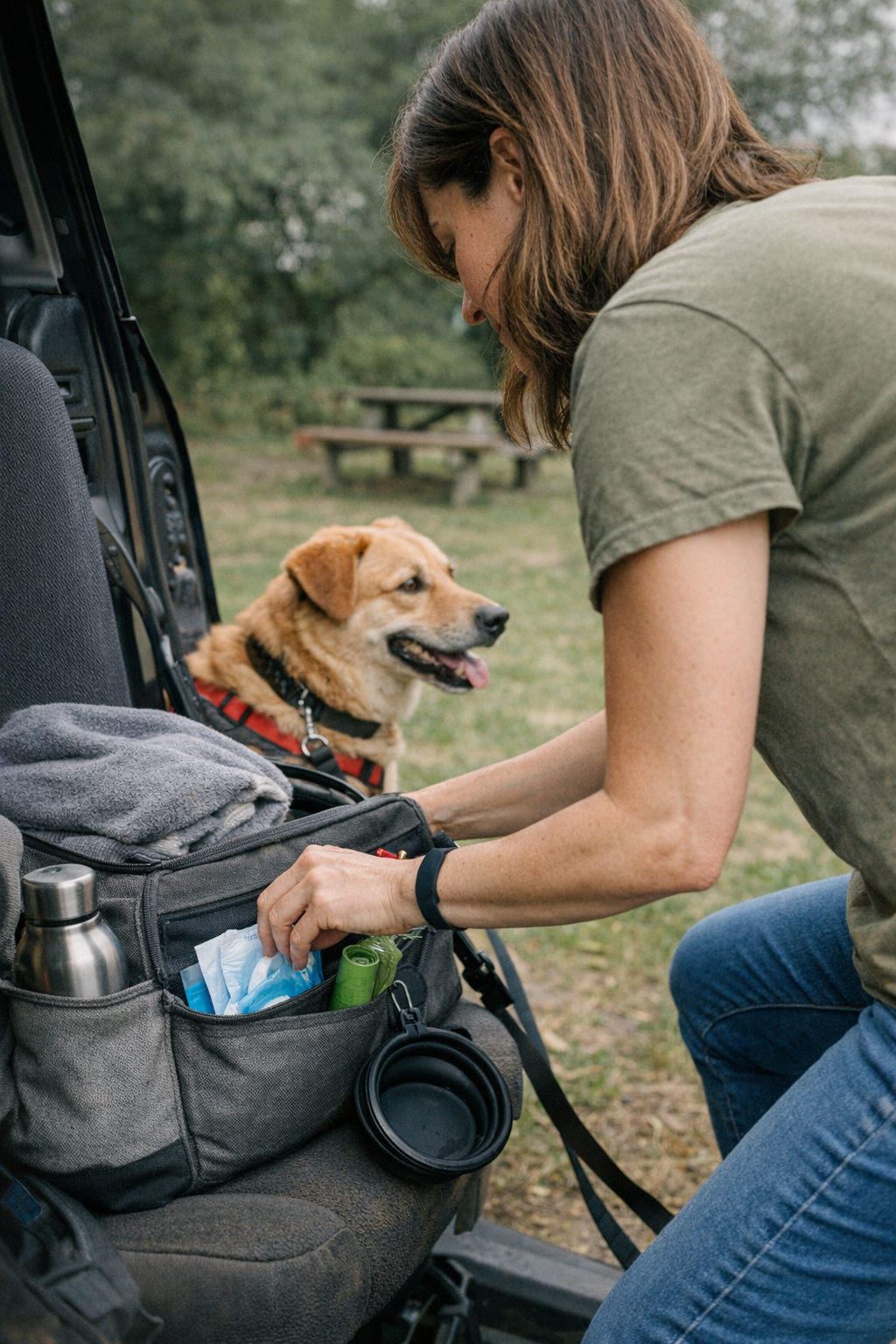
You only really notice it after the third or fourth stop. The moment when your pet looks up at you, ready to keep moving, and you realize you’re still untangling wipes or fishing for a crumpled waste bag. At home, the kit looked neat: everything slotted in, every pouch zipped, every item “in its place.” But on the road—even with the best intentions—some part of the setup always seems just out of reach or hidden under something else. It’s not chaos, just a persistent, quiet friction—a gentle resistance that slows you both down more than expected.
Where Neatness Turns Slippery
It looked fine at first. Everything had its compartment. But there’s a shift—often gradual—when organization for its own sake starts working against you. Packed bags that sit flat in the trunk don’t always translate well to real movement. A collapsible bowl sits behind a soft blanket, the leash slides under bulky comfort gear, and wipes you thought were on top slip to the side pocket you can’t reach with one hand.
You notice it after a few trips. That was the part that kept coming back, especially when moving between your seat and the exit. The “ideal” order on paper had nothing to do with how often you’d be reaching for the same handful of items.
Reaching for Routine
It’s always the little repetition—pausing for water, grabbing a bag, cleaning off paws before jumping back in—that makes you realize what your setup actually asks of you. The dog waits, leash taut, and the whole rhythm stutters while you dig through layers meant to look organized. It happens quietly, almost every time: a moment lost, the awkward shuffle, pet increasingly impatient to move again.
At some point, you start unpacking less and reshuffling more. The supposed convenience begins to slow both routine and return. Not overwhelming, just always present—a weight at the edge of an otherwise simple stop.
Practiced Reach
The one change that lasted was moving the most-used items—wipes, bags, bowl—into a loose, external pocket. No more deep unzipping, no more shifting bulky things aside mid-trip. Reaching became almost automatic; the small habits fell back into place, like they were always meant to. It’s not always visually perfect, but it fits the repeated stops in a way a too-neat setup never did.
That practical difference—one-motion access instead of three—added up slowly, over days and borderlines and pickup routines. If anything, it made the idea of “organized” feel quieter, less about compartments and more about return flow. There’s relief in knowing precisely where your fingers should land, even when the trip’s rhythm gets interrupted.
It’s a lesson the bag taught me, not the other way around.
If you want to see how others build around that everyday rhythm, there’s more here: http://www.pawgotravel.myshopify.com