When Travel Routine Turns From Order to Frustration
The structure of your carry-on fails when repeated access needs more than one reach; reducing overlap minimizes delays and stress in travel.
The promise of order is a quiet kind of comfort before a trip begins. Everything zipped up, compartments lined, pouches assigned in the carry-on. I used to believe that level of organization was enough—a bag so precisely arranged it almost looked like a display. But as flights added up and routines repeated, a familiar frustration crept in around the edges. Not dramatic, but persistent. The bag looked orderly from the outside. Moving with it felt different.
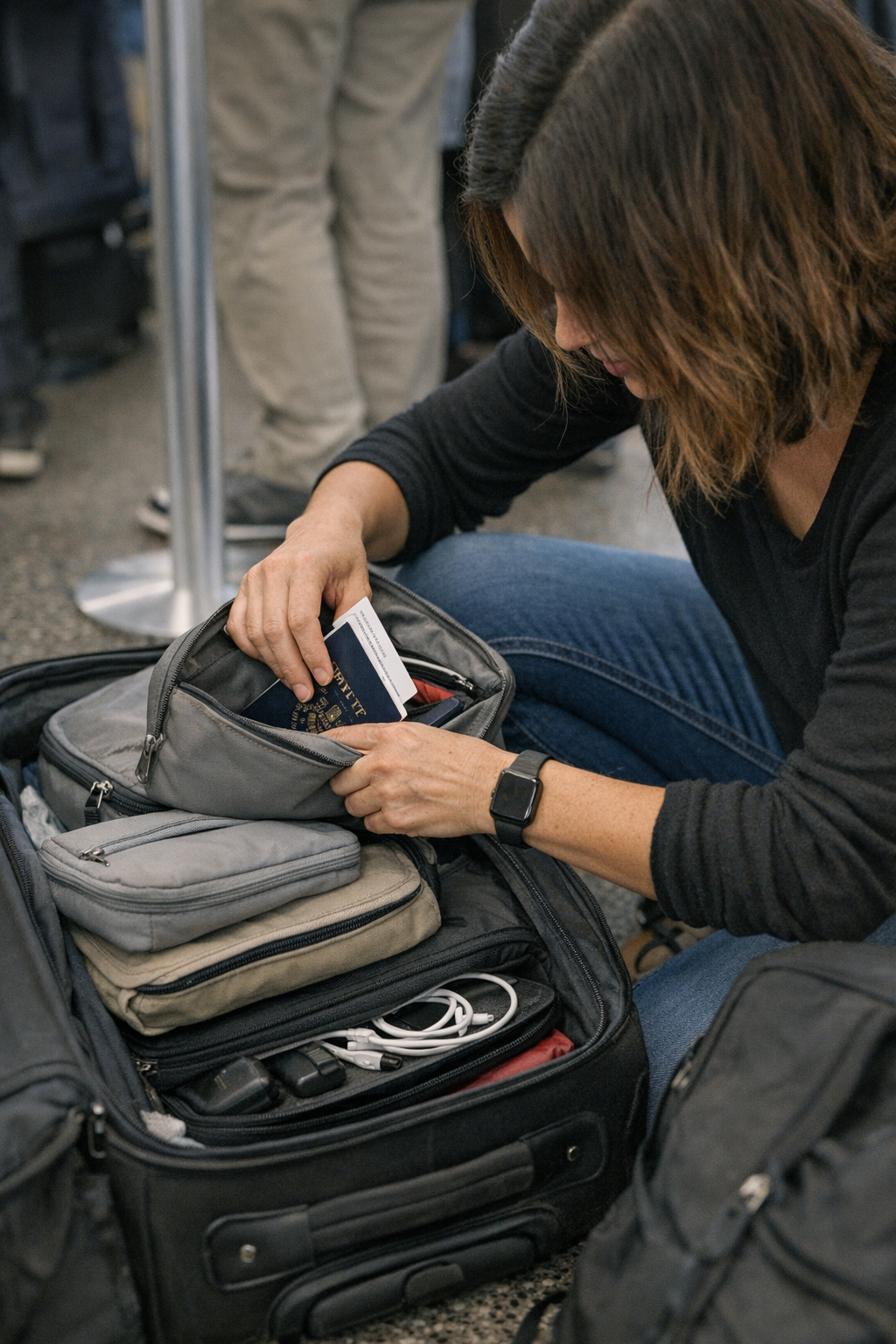
You notice it after a few transitions. The third security check, or the second time you fumble for a charger at the gate. Rooting past neatly nested organizers, pulling out a small pouch to reach something just beneath it. At first, the setup looked fine. But the difference kept surfacing: each layer meant another movement, another small snag in the flow.
Most setups reward stillness, not motion. Dividers and zipped mesh keep cables and documents visible and everything in its place. Yet in the hurry of a transfer or while half-seated, those layers show small inconveniences: a boarding pass hidden below a power bank, a passport pressed between two other pouches. The friction builds quietly—an extra reach, a quick repack before squeezing past a seatmate. The bag doesn’t fall apart; it just doesn’t quite move with you the way you imagined.
After enough repeated moments like this, something shifted. I started rebuilding the setup based on what I actually reach for, and how often. Instead of the lowest-friction arrangement when at rest, it became about fastest access in the moment. Passports moved out of the zipped interior and into the shallow top pocket. The one charger I always need, the same. Less nesting, more immediate—even if it means a stray cable tucked into a side compartment now and then. That was the part that kept coming back: not the neat appearance, but the ease with which you can slip something out, return it without thinking, and move on.
This creates a quieter kind of order, and it doesn’t always look tidy. But after enough rushed transfers and crowded bin lifts, the value becomes clear. You remember it most when you only have one hand free or just a moment to spare.
If you’re curious how others arrange their essentials for real movement, there’s a snapshot here: http://www.carryonsupply.myshopify.com