When Wet Shoes Turn Entryways Into Daily Challenges
A drip edge channels water away in entryways, keeping floors dry, speeding resets, and preventing damage from repeated wet use.
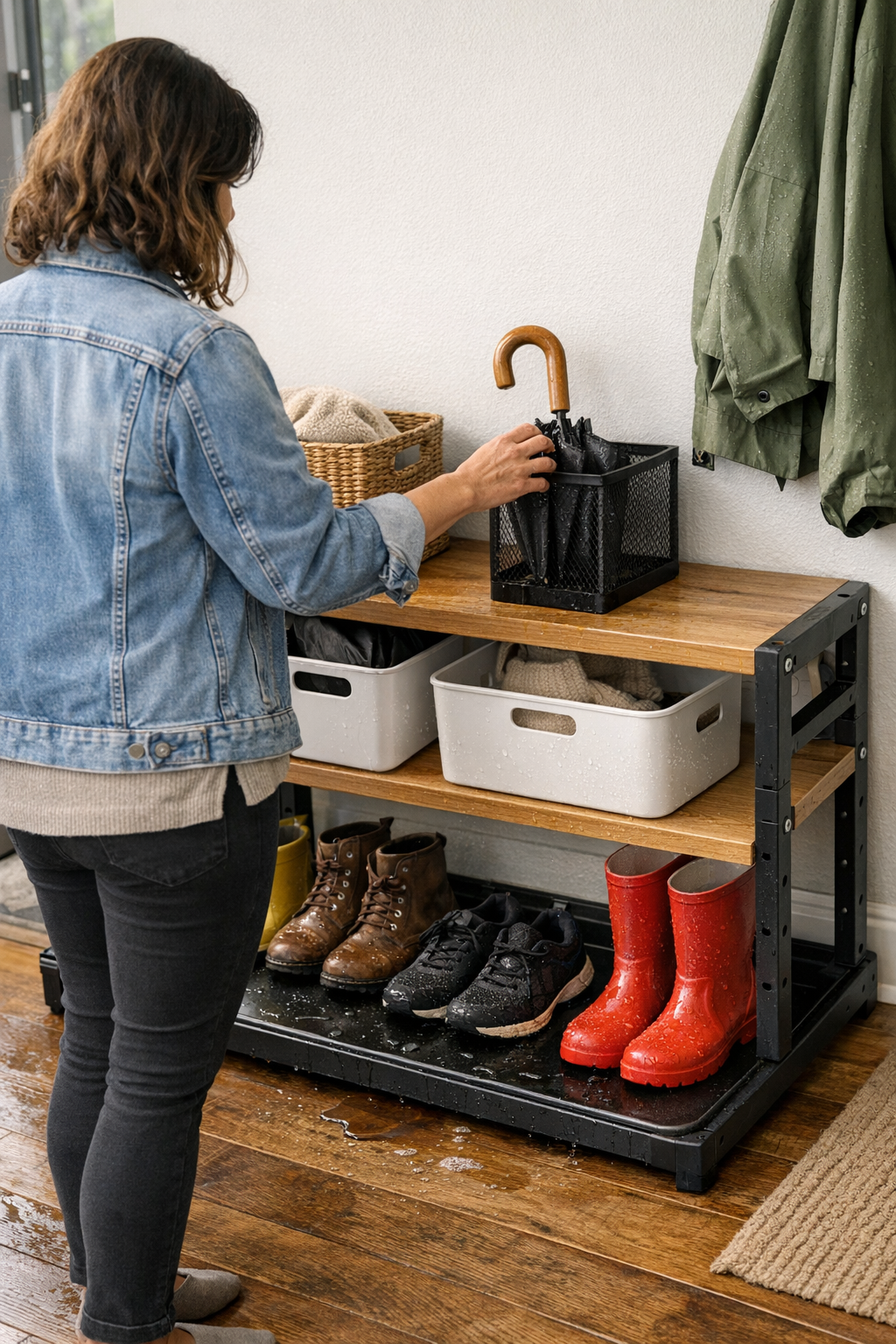
It’s curious how a small, often overlooked detail can shape the flow and feel of a whole space. Most days, moving between inside and out happens in a blur—bags shuffled, shoes kicked off mid-step, and a quiet tension at the threshold where wet and dry collide. Only after a week of soggy arrivals do you begin to notice how water spreads and pools. That’s when the edges along a storage bench, designed to hold back water, stop being just a detail and start feeling like a real relief. It turns out, the simple act of coming and going depends more on these subtle boundaries than I’d expected.
The Slow Unraveling of Order
You don’t see it right away. For the first few days, a little runoff under shoe trays or along bench edges is easy enough to wipe up. But when bad weather sets in, the pattern repeats: puddles quietly creep into new corners, and what once was occasional mopping becomes daily. I realized the drop zone wasn’t as tight as it looked on the surface. Sharp lines and slim shelving gave a sense of order, but wet edges blurred those boundaries.
This became the part I kept thinking about. After a while, even small dirt, warped seams, and faded marks build up. The line between organized and merely managed thins out—more something you chase than something you hold onto.
Invisible Tensions at the Threshold
In a lived-in transition space, pressure builds quietly but persistently. Shoes rarely stay contained in their trays—especially with kids, guests, and a constant flow of in-and-out traffic. Wall hooks fill up, coats and umbrellas spill onto benches, and water pools in the worst spots. Some mornings, half-awake, I’d step in and notice damp patches stretching further than before.
Still, there’s always the idea that order is possible. Wall-mounted racks and utility bins promise a system, but water outpaces any effort at tidiness. Each arrival nudges the boundaries—a bag placed just over a damp patch, a shoe corner leaking past the ledge. I began to see these small failures as part of the space’s natural rhythm. No one talks about them much, but everyone sidesteps the problem.
A Quiet Shift Once the Edge Holds Firm
That changed when I swapped in a tray with a molded drip edge—a subtle lip, barely noticeable unless you look for it. Suddenly, water stayed contained, pooling where it was meant to rather than slipping underneath storage. The difference wasn’t dramatic upfront, but the background effort—the frequent, often mindless mopping—diminished.
You notice it especially on days with back-to-back rain or when heavy gear piles up in a rush. Somehow, clutter feels less stressful when moisture stays put. Resetting the zone no longer means wrestling with the whole layout. Floors dry before the next round of shoes hits the mat. The realization stuck: a tiny redirection—a raised edge along the margin—softens much of the hidden friction at the door.
In the details, the routine settles into something close to ease. For anyone interested in how these entryway and drop zone pieces hold up in real life, I keep thinking about that edge quietly doing its work—there’s more to see here, if you want to look: http://www.betweenry.myshopify.com